Creating a Calming Space: Making Your Environment Dementia-Friendly
Why a Dementia Friendly Environment Matters for Your Loved One
A dementia friendly environment is a space thoughtfully designed to support independence, safety, and comfort for people living with dementia. Understanding how to create these spaces can make an enormous difference in your loved one’s daily life.
Key Elements of a Dementia Friendly Environment:
- Lighting – Bright, even, natural light without glare or shadows (minimum 300 lux)
- Safety – Non-slip flooring, secure grab rails, and unobtrusive risk reduction
- Color Contrast – High contrast between walls, floors, and furniture to aid visibility
- Signage – Clear, bold signs with pictures at eye level for easy navigation
- Noise Control – Reduced background noise using soft materials like carpets and cushions
- Familiar Layout – Simple floor plans with consistent object placement
- Memory Aids – Labels, photos, and landmarks like paintings or plants
- Outdoor Access – Safe gardens with flat paths, handrails, and sheltered seating
People living with dementia can experience their surroundings as confusing, disorienting, and even dangerous. Small changes in the home environment – from improving lighting to using contrasting colors on toilet seats – can help reduce anxiety, prevent falls, and maintain abilities far longer than you might expect.
The impact is real. Research shows that up to 25% of people with mild or moderate dementia experience sleep disturbances, and depression affects 20 to 30% of those living with the condition. A well-designed environment addresses these challenges by supporting natural circadian rhythms, reducing confusion, and creating a sense of calm and familiarity.
The good news? You don’t need a complete home renovation to make meaningful improvements. Simple adaptations like adding handrails, removing reflective surfaces, and placing clear signs on doors can transform daily life for someone with dementia.
I’m Jason Setsuda, a Board Certified Emergency Medicine Physician and CFO of Memory Lane Assisted Living, with over 10 years of medical experience and 5 years in medical administration focused on creating dementia friendly environments that prioritize holistic, person-centered care. Through my work with Memory Lane and as Medical Director for multiple healthcare organizations, I’ve seen how thoughtful environmental design enables people with dementia to maintain their independence and dignity.
Dementia friendly environment helpful reading:
Understanding the Importance of a Dementia Friendly Environment
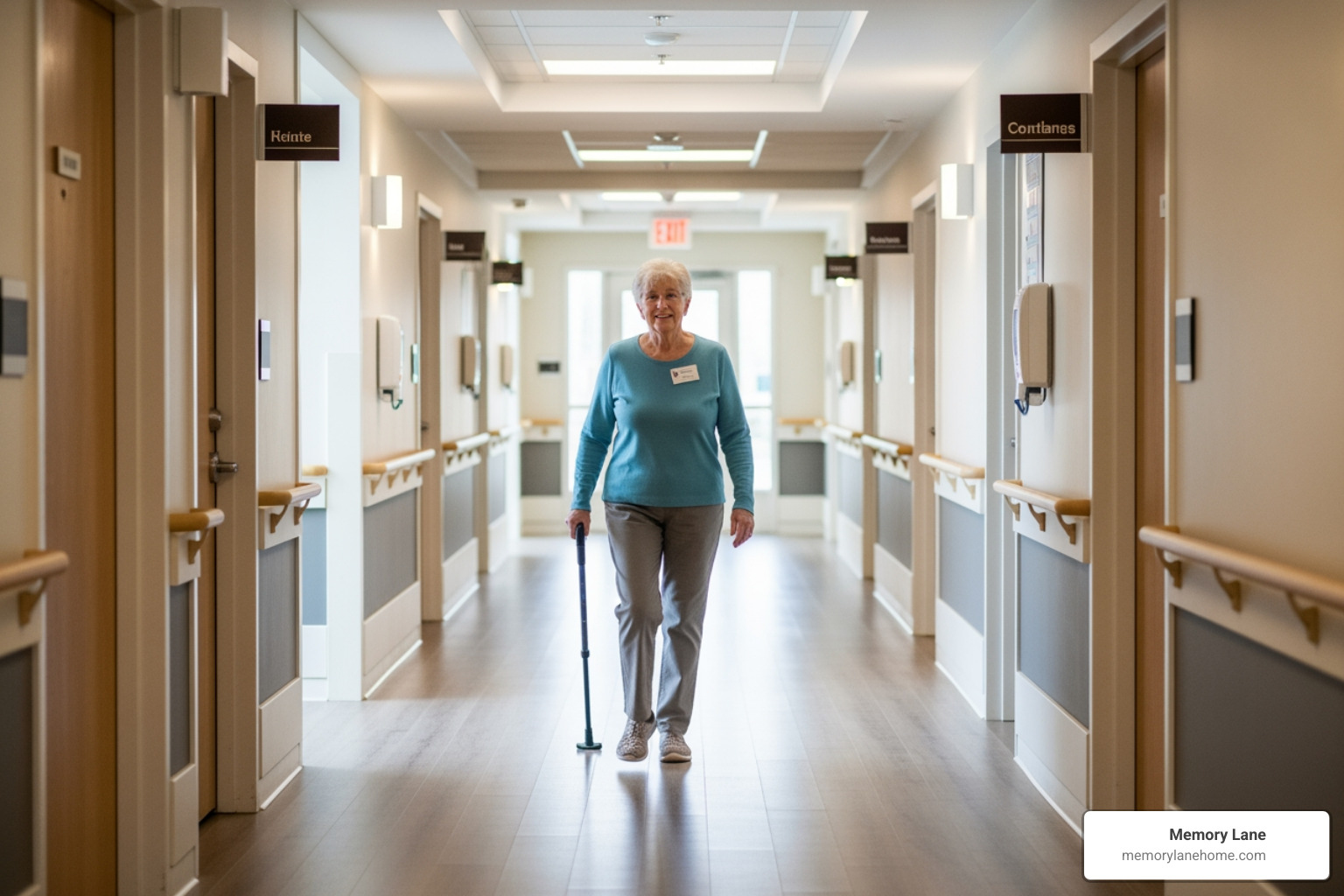
When we talk about a dementia friendly environment, we aren’t just talking about safety locks and grab bars. We are talking about a fundamental shift in how a space “speaks” to the person living in it. As dementia progresses, the brain’s ability to process sensory information changes. A hallway that once seemed simple can become a dark, bottomless pit if the lighting is poor, or a shiny floor can look like a sheet of ice or a pool of water.
By creating a dementia-friendly environment, we provide essential cognitive support. This helps with orientation—knowing where they are and what time of day it is—and significantly reduces the anxiety that comes from being lost in one’s own home. When a person can find the bathroom without help or recognize their bedroom by a familiar photo on the door, their self-esteem remains intact.
At Memory Lane, we believe that a person is only as restricted as their environment causes them to be. Our dementia care philosophy centers on the idea that the right surroundings can actually “enable” a person, allowing them to use the skills they still have rather than focusing on what has been lost. This directly correlates to a higher quality of life and lower rates of depression, which is estimated to be three to four times more common in older adults with dementia than those without.
Core Principles of Dementia-Enabling Design
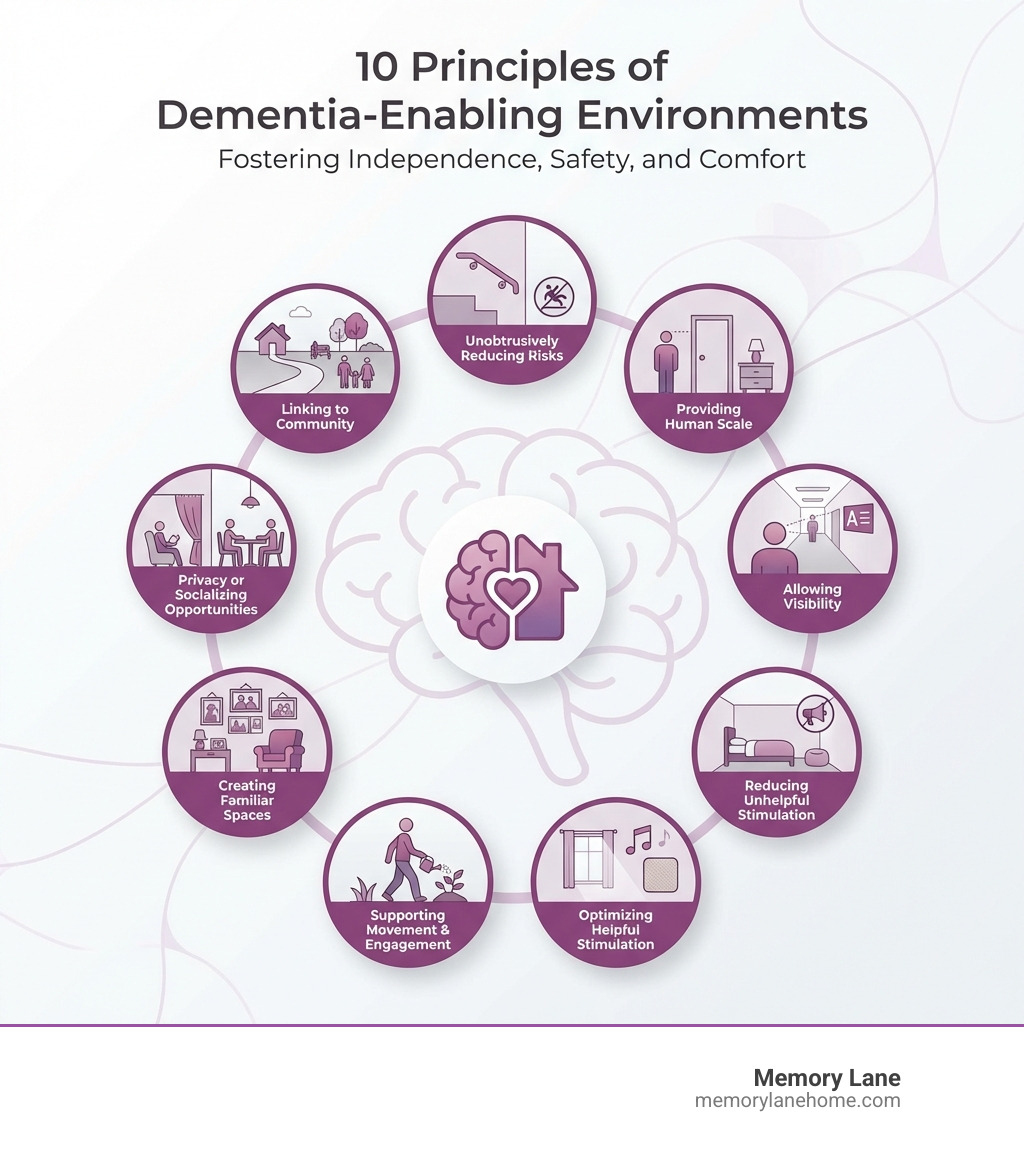
Designing for dementia is a science and an art. We often look to experts like Dementia Training Australia to refine the principles that govern our spaces. The goal is to balance safety with a “human scale”—ensuring the environment feels like a home, not an institution.
Here are the 10 core principles we use to guide our designs:
- Unobtrusively Reduce Risks: Safety features like grab rails should blend into the decor where possible to maintain a home-like feel.
- Provide a Human Scale: Large, echoing spaces can be overwhelming. Smaller, intimate rooms feel more secure.
- Allow People to See and Be Seen: Open sightlines help residents see their destination (like the dining room) and help caregivers monitor safety.
- Reduce Unhelpful Stimulation: Minimize glare, loud background noises, and busy patterns that cause “sensory overload.”
- Optimize Helpful Stimulation: Use cues like the smell of baking bread to signal the kitchen or high-contrast colors to highlight a door handle.
- Support Movement and Engagement: Create clear walking paths that lead to interesting destinations, like a garden or a hobby area.
- Create a Familiar Space: Use furniture and items from the person’s past to tap into long-term memory.
- Provide Opportunities to Be Alone or With Others: Everyone needs a “quiet space” sometimes, but social areas should be easy to join.
- Provide Links to the Community: Views of the street or visits from local groups help residents feel connected to the world.
- Respond to a Vision for Way of Life: The environment should support the person’s unique personality and history.
Practical Adaptations for the Home
Changing a house into a memory care home starts with a thorough safety audit. We recommend using a dementia-friendly environment checklist to identify high-risk areas.
The kitchen is often the heart of the home, but it presents unique challenges. Consider installing automatic shut-off devices on stoves and lowering the temperature of the hot water heater to prevent accidental burns. In many cases, we don’t want to stop a loved one from participating in chores; instead, we adapt the task. For example, if someone enjoyed woodworking, they might move from using power tools to sanding or painting pre-cut pieces.
Room-by-Room Guide to a Dementia Friendly Environment
- Kitchen: Use see-through cupboard doors or tape photos of what’s inside (e.g., a picture of a mug) to the cabinet face. This removes the “out of sight, out of mind” barrier.
- Bathroom: Bathroom adaptations are critical for dignity. Use a toilet seat in a contrasting color (like blue or red against a white floor) so it is easy to see. Ensure grab rails are secure and non-slip mats are in place.
- Bedroom: Keep the layout consistent. Use “PIR” (Passive Infrared) night lights that turn on automatically when the person steps out of bed, lighting a path to the bathroom.
- Laundry: Simplify the process by grouping items. Clear, bold labels on the washer and dryer can help.
- Dressing Area: Simplify choices. Offer two outfits instead of a full closet. Providing dressing and grooming support means setting out clothes in the order they are put on to reduce frustration.
Outdoor Spaces and Community Inclusion
Nature is a powerful healer. A dementia friendly environment should extend to the outdoors. We encourage the use of secure, enclosed gardens where residents can walk freely without the risk of getting lost.
Inspiration can be found globally, such as the Japan’s Ninchisho Supporters program, which trains millions of “Dementia Friends” to support people in public spaces. On a local level, programs like the Dementia Friends programme in the UK remind us that community inclusion is just as important as the physical fence.
Ensure garden paths are level and made of non-reflective materials. Raised garden beds allow for easy planting without bending, and sheltered seating provides a place to rest while watching birds or enjoying the breeze.
Optimizing Sensory Elements: Lighting, Sound, and Color
Sensory processing is often where dementia-related confusion begins. If the environment is too loud or too dark, the brain works overtime to make sense of it, leading to exhaustion.
Lighting and Sleep We know that sleep disturbances affect up to 50% of people with severe dementia. To support a healthy sleep-wake cycle, maximize natural light during the day. Trim hedges that block windows and keep curtains open. For indoor lighting, aim for at least 300 lux to ensure the space is bright enough to eliminate shadows, which can be mistaken for holes or people.
Sound and Noise Background noise from a TV or radio can be physically painful or deeply confusing for someone with dementia. Use “soft” decor—like rugs (secured to the floor), cushions, and curtains—to absorb sound. Turn off electronics when they aren’t being used to create a calming atmosphere.
Color and Patterns Avoid bold, busy patterns on carpets or upholstery. To someone with dementia, a floral pattern on the floor might look like actual objects to step over, leading to trips. Use high-contrast colors for function: a dark door handle on a light door, or a brightly colored plate that contrasts with the food to encourage eating.
Enhancing Orientation in a Dementia Friendly Environment
Wayfinding—the ability to find one’s way from point A to point B—is often lost early in dementia. To combat this, we use orientation and wayfinding aids that go beyond standard signs.
Landmarks and Visual Cues A long, plain hallway is a nightmare for orientation. Instead, use “landmarks.” A large, unique painting at a turn in the hallway or a bright yellow chair next to the dining room entrance serves as a visual anchor. Memory boxes—small wall-mounted cases filled with personal items like childhood photos or hobby tools—placed outside a bedroom door help a resident recognize “their” room much faster than a room number would.
Signage Clarity Signs should be placed at eye level (or slightly lower, as many seniors tend to look down). Use a combination of bold text and a realistic picture or pictogram. For example, a sign for the bathroom should have the word “TOILET” and a picture of a toilet.
Utilizing Assistive Technology for Daily Support
Modern technology offers incredible tools for maintaining independence. Using technology for everyday life can be as simple or as high-tech as needed.
We often recommend:
- LCD Day/Date Clocks: These clearly state “Friday Morning” or “Tuesday Evening” to help with time orientation.
- Big-Button Phones: Telephones with pre-programmed photos of family members make calling a loved one a one-touch process.
- Reminder Devices: Simple audio prompts can remind someone to take their medication or check the front door.
- Dementia-Friendly Household Items: You can find specialized products at the Alzheimer’s Society online shop designed specifically for ease of use.
Frequently Asked Questions about Dementia-Friendly Spaces
How do I reduce confusion with flooring?
Flooring is a major source of falls and confusion. Stick to matt, non-reflective surfaces. Shiny floors can look wet or slippery, causing the person to hesitate or change their gait. Avoid dark rugs on light floors, as they can look like a hole in the ground. Ensure all transitions between rooms are flush to prevent trips. For more details, check safer flooring tips.
Why are reflections and mirrors problematic?
As dementia progresses, a person may no longer recognize their own reflection. Seeing a “stranger” in the mirror can cause significant distress and confusion. If this happens, it is best to cover mirrors or remove them. Similarly, large windows can become reflective at night, so closing curtains at dusk is a simple way to maintain a calm environment.
What role does color contrast play in safety?
Color contrast is one of the most effective tools for designing for visibility. If everything in a bathroom is white—the floor, the walls, and the toilet—it becomes a “white-out” zone where nothing is distinguishable. By using a contrasting color for the toilet seat, grab rails, and even the soap dish, you provide the visual cues needed for the person to steer the space safely and independently.
Conclusion
Creating a dementia friendly environment is about more than just physical safety; it is about providing a space where your loved one feels seen, understood, and capable. Whether you are making small changes at home in Ann Arbor or Saline, or looking for a more structured environment, these principles remain the same.
At Memory Lane, we specialize in providing this level of personalized care and support. Our facilities in Ypsilanti and throughout Michigan are designed from the ground up to be calming, secure, and engaging. We understand that every individual is unique, and our goal is to improve their quality of life through compassionate, expert care. If you need help navigating this journey, we are here for you.