Find the best assisted living near me within 5 mi. Discover local benefits, essential services, costs, and financial aid for optimal care.

Beyond the Basics: Understanding Long-Term Care and Senior Accommodation
What is LTC: Essential 2025 Planning
Understanding Long-Term Care: A Clear Definition for Families
What is LTC? LTC stands for Long-Term Care, which refers to a variety of services designed to meet health and personal care needs when someone can no longer perform everyday activities independently. This care can be provided at home, in community settings, or in residential facilities like assisted living or nursing homes.
Quick Answer:
- LTC Definition: Medical and non-medical services for people with chronic illness, disability, or cognitive decline
- Who Needs It: About 70% of Americans over 65 will require some form of long-term care
- Core Services: Help with Activities of Daily Living (bathing, dressing, eating), medical care, and social support
- Where It’s Provided: Home, community programs, assisted living, nursing homes, or specialized memory care facilities
The need for long-term care often emerges gradually. A parent who once managed everything independently starts struggling with medication management. Simple tasks like bathing or dressing become challenging. For many families, recognizing these signs marks the beginning of a difficult but important journey.
Long-term care isn’t just about medical treatment. It’s about maintaining dignity, independence, and quality of life when chronic conditions, disabilities, or cognitive decline make daily living harder. Whether someone needs a few hours of help each week or round-the-clock nursing care, understanding the full spectrum of LTC options helps families make informed decisions.
Statistics show that most people turning 65 will need some form of long-term care. Women often require care for longer periods than men. While commonly associated with aging, younger adults may also need these services following an accident, stroke, or early-onset condition like dementia.
I’m Jason Setsuda, a Board Certified Emergency Medicine Physician and CFO of Memory Lane Assisted Living, with over 10 years of medical experience and 5 years as a Medical Director, helping families steer what is LTC and find compassionate care solutions for their loved ones. My work across emergency medicine, hospice, and senior living has shown me that understanding long-term care options early makes all the difference when families face difficult decisions.
Must-know what is ltc terms:
Defining Long-Term Care: What is LTC and Who Needs It?
When we talk about what is LTC, we’re referring to a broad spectrum of medical and non-medical services for people who can no longer perform everyday activities on their own due to chronic illness, disability, or cognitive decline. It provides consistent support to promote independence and quality of life. For a concise overview, see Long-term care.
So, who needs this kind of care? While often associated with aging, LTC can be needed at any age. According to the U.S. Department of Health and Human Services, nearly 70% of people turning 65 today will require some form of long-term care. This need may arise gradually as someone becomes frailer or suddenly after an event like a heart attack or stroke.
Several factors influence the likelihood of needing long-term care:
- Age: Need rises with age; about two-thirds of people 90+ live with a disability.
- Gender: Women live longer and are more likely to need care for longer periods.
- Chronic Conditions: Illnesses like diabetes, heart disease, or Parkinson’s often require ongoing support.
- Disability: From birth, injury, or illness can necessitate long-term assistance.
- Living Arrangements: Living alone increases the likelihood of needing paid care.
LTC isn’t just for the elderly or severely ill; it’s a flexible spectrum of support custom to maintain independence.
The Core Components of LTC
- Personal Care (Activities of Daily Living – ADLs): Bathing, dressing, eating, transferring, and toileting.
- Medical Care: Skilled services such as medication administration, wound care, and therapies (physical, occupational, speech).
- Non-Medical Support: Homemaker services (shopping, laundry, light cleaning) and transportation.
Recognizing the Signs: When is LTC Necessary?
- Increasing Frailty or Health Decline: More falls, missed medications, progression of chronic illness.
- Post-Hospitalization Needs: Recovery from a major event (heart attack, stroke, surgery) reveals ongoing support needs.
- Safety Concerns at Home: Leaving appliances on, wandering, or inability to respond to emergencies.
- Inability to Live Alone Safely: Poor nutrition, hygiene decline, or neglected home indicate the need for help.
The Spectrum of LTC Services and Housing Options
Long-term care is not a one-size-fits-all solution. A rich spectrum of services and housing options is available to cater to varying needs and preferences, from minimal assistance to round-the-clock medical supervision.
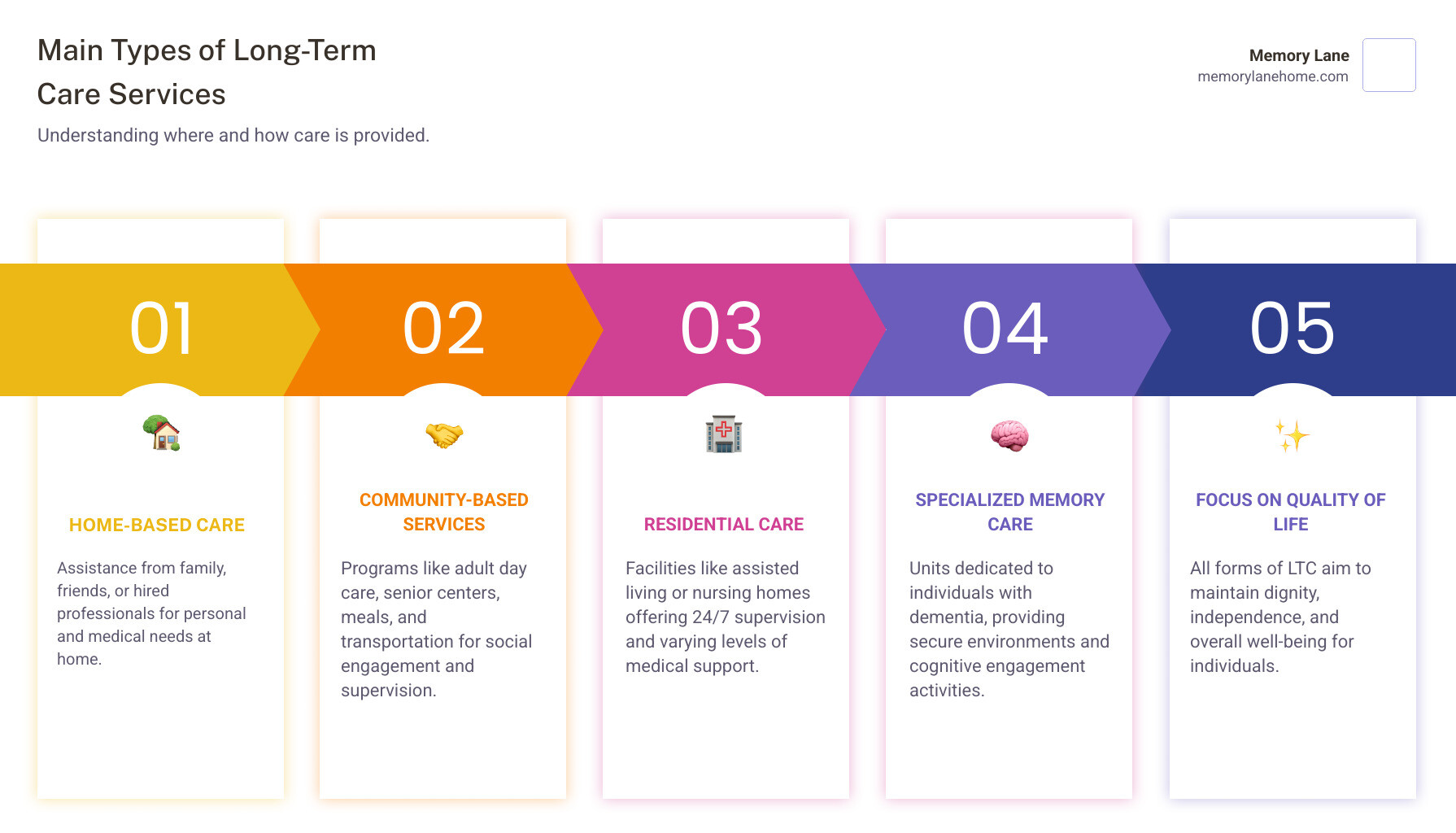
The primary categories of LTC services include:
- Home-Based Care: Support provided directly in an individual’s home.
- Community Services: Programs and resources available outside the home, often during daytime hours.
- Residential Care: Living arrangements in dedicated facilities that provide varying levels of support and supervision.
- Specialized Care: Custom programs for specific conditions, such as dementia.
Care in the Comfort of Home
Many prefer to “age in place,” and home-based care makes this possible by providing support directly in their residence. This can involve:
- Informal Caregivers: Family and friends are often the first line of support. While an act of love, this can lead to caregiver burnout.
- Formal Caregivers: When more support is needed, professionals can help. These include:
- Home Health Aides: Provide personal care, assistance with ADLs, and light household tasks.
- Skilled Nurses: Offer medical services like medication management, injections, and wound care.
- Therapists: Physical, occupational, and speech therapists can provide in-home rehabilitation.
Home-based care offers familiarity and comfort but requires careful planning to ensure safety and effectiveness.
Community-Based Support
Community-based services offer a middle ground, providing support and social engagement while allowing individuals to live at home. These options are particularly valuable in areas like Ann Arbor, Ypsilanti, and Saline, Michigan, where strong community networks exist.
- Adult Day Programs: These centers provide a safe, engaging environment during the day with meals, activities, and supervision, offering respite for family caregivers.
- Senior Centers: These are hubs for social interaction, recreation, and learning, helping seniors stay active and connected.
These services help combat isolation and provide a structured routine, contributing to mental and physical well-being.
Residential Facilities: From Assisted Living to Nursing Homes
When living at home, even with support, becomes unsustainable, residential facilities offer a continuum of care. The choice between them depends heavily on the level of care and medical support required.
| Feature | Assisted Living Facilities | Nursing Homes (Skilled Nursing Facilities) |
|---|---|---|
| Level of Care | Assistance with daily activities (ADLs), medication management, and personal care. | 24/7 skilled nursing care and medical supervision. |
| Independence | High. Residents often live in private apartments and have significant autonomy. | Lower. The environment is more structured and clinical due to the high level of care. |
| Medical Support | Basic health monitoring and coordination with external healthcare providers. | Comprehensive medical care, including post-hospital rehabilitation and complex condition management. |
| Social Environment | Focus on community, with planned social events, dining, and recreational activities. | Social activities are available but may be more limited; the focus is on medical care and rehabilitation. |
Understanding What is LTC for Dementia
For individuals with Alzheimer’s or other forms of dementia, specialized memory care is often the best option. These programs, which can be part of an assisted living community or a standalone facility, offer:
- Secure Environments: Designed to prevent wandering and ensure resident safety.
- Specially Trained Staff: Caregivers are trained in dementia care techniques to manage behavioral changes and provide compassionate support.
- Cognitive Engagement: Activities are custom to stimulate memory and cognitive function, such as music therapy, art, and sensory activities.
Memory Lane specializes in this type of dedicated, personalized dementia care, creating a supportive and engaging environment for our residents.
Introduction
Defining Long-Term Care: What is LTC and Who Needs It?
Long-term care (LTC) is ongoing help with daily activities and health-related needs when chronic illness, disability, or cognitive change makes independent living difficult. Needs can develop gradually or after a sudden event. Risk increases with age, living alone, chronic conditions, and disability; women often require care longer due to longevity.
The Core Components of LTC
- Personal Care (ADLs): Assistance with bathing, dressing, eating, transferring, and toileting.
- Medical Care: Medication administration, wound care, and rehabilitative therapies as needed.
- Non-Medical Support: Homemaker help (meals, laundry, light cleaning) and transportation.
Recognizing the Signs: When is LTC Necessary?
- Worsening frailty, falls, or difficulty managing medications
- Post-hospitalization recovery revealing ongoing needs
- Safety concerns at home (wandering, leaving appliances on)
- Declining ability to live alone safely (poor hygiene, weight loss)
The Spectrum of LTC Services and Housing Options
Long-term care spans services from minimal help to 24/7 medical support. The primary categories include:
- Home-Based Care: Support delivered in the home.
- Community Services: Daytime programs and resources outside the home.
- Residential Care: Assisted living or nursing homes with varying support levels.
- Specialized Care: Programs for specific conditions, such as dementia.
Care in the Comfort of Home
- Informal Caregivers: Family and friends are often first to help, but burnout is common.
- Formal Caregivers: Home health aides (ADLs, light tasks), skilled nurses (meds, wound care), and therapists (PT/OT/speech) provide in-home support.
Community-Based Support
- Adult Day Programs: Safe, engaging daytime care with meals and supervision; respite for family caregivers.
- Senior Centers: Activities, learning, and social connection that reduce isolation.
Residential Facilities: From Assisted Living to Nursing Homes
| Feature | Assisted Living Facilities | Nursing Homes (Skilled Nursing Facilities) |
|---|---|---|
| Level of Care | Help with ADLs and meds | 24/7 skilled nursing |
| Independence | Higher; apartment-style living | Lower; structured, clinical |
| Medical Support | Basic monitoring; care coordination | Comprehensive care; rehab |
| Social Environment | Robust activities and dining | Activities available; care-focused |
Understanding What is LTC for Dementia
For Alzheimer’s and other dementias, memory care provides secure settings, trained staff, and purposefully designed cognitive engagement to support safety and quality of life.
Introduction
Defining Long-Term Care: What is LTC and Who Needs It?
LTC encompasses medical and non-medical services that help people manage daily life when independent function declines. It may be needed at any age but becomes more likely with advancing age, chronic conditions, disability, and when living alone. Women typically need care longer due to longer lifespans.
The Core Components of LTC
- ADLs: Bathing, dressing, eating, transferring, toileting
- Medical Care: Skilled nursing and therapies, as needed
- Non-Medical Support: Homemaker help and transportation
Recognizing the Signs
- Rising fall risk or medication mismanagement
- Post-hospital needs that persist
- Safety concerns at home or inability to maintain nutrition/hygiene
The Spectrum of LTC Services and Housing Options
LTC options range from at-home help to comprehensive residential care. Common categories:
- Home-Based Care
- Community Services
- Residential Care
- Specialized Care (e.g., dementia)
Care in the Comfort of Home
Informal caregivers (family/friends) and formal providers (home health aides, nurses, therapists) can support aging in place when planned for safety and consistency.
Community-Based Support
Adult day programs and senior centers offer structure, socialization, and respite while individuals remain at home.
Residential Facilities: From Assisted Living to Nursing Homes
| Feature | Assisted Living Facilities | Nursing Homes (Skilled Nursing Facilities) |
|---|---|---|
| Level of Care | ADL and medication support | 24/7 skilled nursing |
| Independence | Higher autonomy | Lower autonomy |
| Medical Support | Basic monitoring/coordination | Comprehensive care/rehab |
| Social Environment | Community activities, dining | Activities; clinical focus |
Related Posts