Find the best assisted living near me within 5 mi. Discover local benefits, essential services, costs, and financial aid for optimal care.
Dementia Care: Weighing Your Options Between Home and Residential Facilities
Dementia care at home vs nursing home: Top 3 Options
Making a Critical Decision for Your Loved One’s Care
Deciding between dementia care at home vs nursing home is a profound challenge many families face. The choice involves balancing safety, specialized support, quality of life, and family involvement during a difficult transition.
Quick Answer: The Three Main Options
-
In-Home Care: Professional caregivers provide support in the home. Best for early-stage dementia when the home is still a safe environment.
-
Memory Care Communities: Specialized residential facilities with 24/7 supervision and dementia-trained staff. Best for mid-to-late-stage dementia when safety and specialized care are priorities.
-
Nursing Homes: Medical facilities with round-the-clock skilled nursing. Best for individuals with dementia who also have complex medical conditions.
While 73% of seniors with dementia receive care at home, safety concerns often lead families to choose residential memory care. The right choice depends on the stage of dementia, medical needs, and your family’s ability to provide sustainable support.
Research shows that in early stages, staying home can offer a higher quality of life. However, as dementia progresses, specialized memory care communities provide purpose-built environments that maximize safety and independence, which becomes difficult to replicate at home.
I’m Jason Setsuda, a Board Certified Emergency Medicine Physician and CFO of Memory Lane Assisted Living. With over a decade of experience, I’ve guided many families through the dementia care at home vs nursing home decision. This guide will provide the information you need to make a confident choice for your loved one.

Glossary for dementia care at home vs nursing home:
Understanding the Core Dementia Care Options
When facing the dementia care at home vs nursing home decision, it’s crucial to understand what each option entails. This knowledge will empower you to make the best choice for your loved one.
In-Home Dementia Care
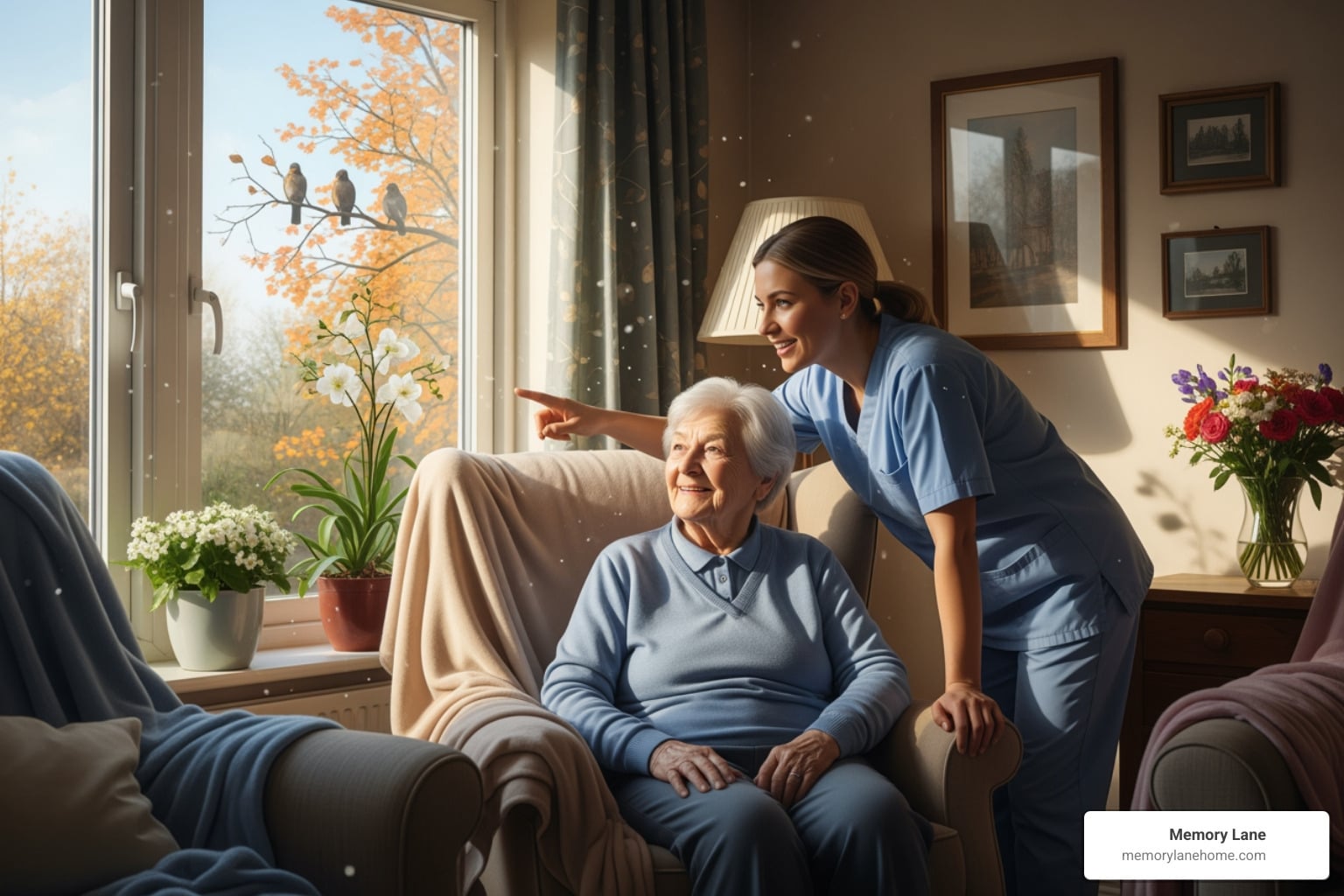
In-home care allows a person to age in a familiar, comforting environment. Professional caregivers come to the home to provide a range of services, from companionship and supervision to hands-on assistance with Activities of Daily Living (ADLs) like bathing, dressing, and eating. They can also help with Instrumental Activities of Daily Living (IADLs), such as meal preparation, light housekeeping, and medication reminders.
This option is highly flexible and can be scaled from a few hours a week to full-time support. For those with complex health issues, skilled nursing services can also be provided at home. The primary goal is to maintain safety and independence in the place they love most.
Memory Care Communities
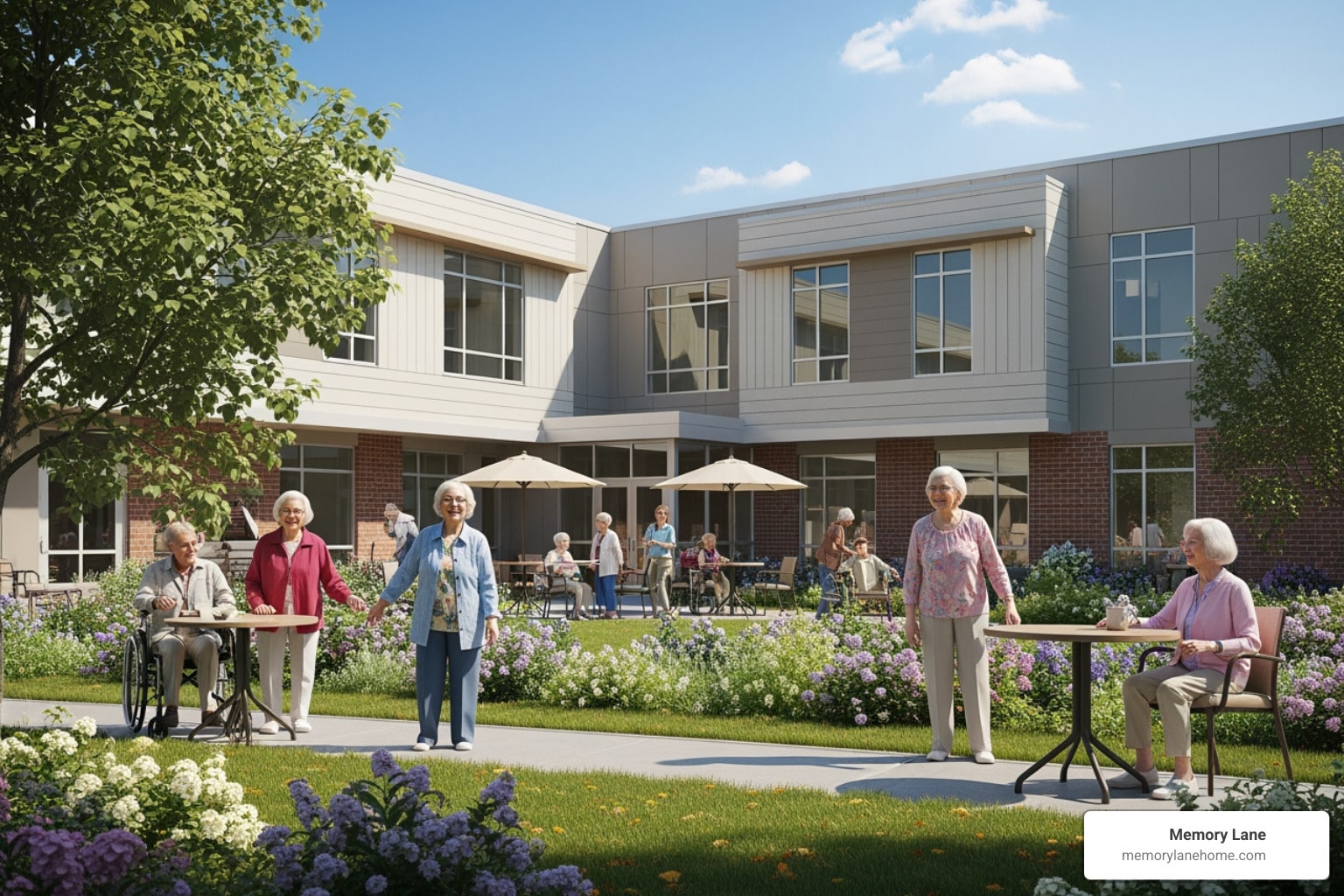
Memory care communities are residential facilities designed specifically for people with Alzheimer’s and other forms of dementia. At Memory Lane, we provide 24/7 supervision and support in a secure, dementia-friendly environment. Our staff are not just caregivers; they are specialists trained in dementia communication and behavior management.
The physical environment is a therapeutic tool, with easy-to-steer layouts, color-coding, and secured exits to prevent wandering. Beyond assistance with daily activities, these communities offer structured programs like music therapy, art, and gentle exercise, all adapted for cognitive needs. The higher staff-to-resident ratio ensures personalized attention, promoting what we call “sheltered freedom”—maximizing safety while fostering independence.
Nursing Homes
Nursing homes, or skilled nursing facilities, are medical facilities for individuals needing 24/7 medical care and supervision. They are suited for those with complex health conditions, significant disabilities, or severe mobility limitations.
A nursing home provides round-the-clock access to registered nurses (RNs), licensed practical nurses (LPNs), and on-site physical, occupational, and speech therapy. The environment is more clinical, focusing on medical needs. While some nursing homes (about 15%) have dedicated dementia units that blend medical care with specialized programming, their primary function is to address complex health issues alongside dementia.
Dementia Care at Home vs Nursing Home and Memory Care: A Detailed Comparison
Understanding how each option impacts daily life is key to choosing the right care. Let’s compare what matters most when weighing dementia care at home vs nursing home and memory care.

Level of Care and Staff Expertise
- In-Home Care: Offers personalized, one-on-one attention. However, caregiver training varies widely, and dementia-specific certification is not always required. It’s crucial to ask agencies about their staff’s training and experience.
- Memory Care Communities: Staff receive extensive, ongoing dementia-specific training. At Memory Lane, we use consistent assignments, so the same caregiver works with your loved one, building trust and understanding their personal needs and history.
- Nursing Homes: Provide comprehensive medical expertise with RNs and therapists on-site 24/7. The focus is on broad medical care, and staff may lack the specialized dementia training found in memory care unless it’s a dedicated unit.
Environment and Safety
- At Home: The familiar environment is comforting but can become hazardous as dementia progresses. Modifications like door alarms and grab bars are often necessary, but risks like wandering and falls remain, and social isolation can be a concern.
- Memory Care Communities: These are purpose-built for safety and independence. Features like secure perimeters, easy-to-steer layouts, and ample natural light reduce confusion and anxiety, creating an environment of “sheltered freedom.”
- Nursing Homes: Prioritize medical safety with hospital beds and clinical equipment. The environment is secure but can feel institutional and may not be optimized to reduce the confusion associated with dementia.
Activities and Social Engagement
- With In-Home Care: Activities are highly personalized but can lack variety and peer interaction. It can be costly to bring in specialized therapists, and social isolation is a risk.
- At Memory Lane: We offer evidence-based therapeutic programs like music, art, and pet therapy. These structured activities and opportunities for peer socialization are designed to maintain cognitive function and emotional well-being.
- Nursing Homes: Offer general recreational activities like bingo or movie nights. These are not typically designed for the specific cognitive needs of individuals with dementia, except in specialized units.
Cost Comparison and How to Pay
The financial aspect of care is a major factor. Here are average costs in Michigan, where Memory Lane serves families in Ann Arbor, Ypsilanti, and Saline:
| Care Option | Average Monthly Cost (Michigan) | Care Level | Environment | Ideal Candidate |
|---|---|---|---|---|
| Memory Care | $5,213 | Specialized, 24/7 care for dementia. | Secure, purpose-built environment. | Individuals with mid-to-late-stage dementia who need specialized care, supervision, and engaging activities in a secure environment. |
| Nursing Home | $10,887 | 24/7 medical care, skilled nursing. | Clinical, structured environment. | Individuals with severe medical conditions, complex health needs, or significant physical disabilities requiring constant medical attention, often alongside dementia. |
| In-Home Care | $5,270 (for 44 hrs/wk) | Flexible, personalized care, non-medical to skilled. | Familiar home environment. | Individuals with early-to-mid-stage dementia who prefer to remain at home, have manageable safety risks, and benefit from one-on-one attention. |
Note: These are median monthly estimates for Michigan and can vary. 24/7 in-home care costs significantly more, often exceeding residential care rates.
How to Pay for Dementia Care
- Private Pay: Using personal funds like savings, pensions, or home equity.
- Long-Term Care Insurance: Can cover costs for in-home or residential care if a policy is in place. Check the policy for specific coverage details.
- VA Benefits: Veterans and their spouses may be eligible for Aid and Attendance benefits to help fund long-term care.
- Medicare: Covers short-term, medically necessary care after a hospital stay. It does not cover long-term custodial care (daily assistance with bathing, dressing, etc.).
- Medicaid: A state-federal program for eligible low-income individuals. Rules vary by state, and consulting an elder law attorney is recommended.
For more help, The National Council on Aging’s Benefits Checkup is an excellent resource for finding financial assistance programs.
Making the Right Choice: Key Decision Factors
Deciding to transition care is complex. This section breaks down when to consider a change and who is best suited for each option.

When is it time for a change in dementia care at home vs nursing home?
A transition is often a gradual realization that the current situation is no longer safe or sustainable. Watch for these clear warning signs:
- Safety Concerns: Frequent falls, wandering, or forgetting to turn off appliances indicate the home is no longer a safe environment.
- Caregiver Burnout: Over half of dementia caregivers (52%) experience burnout. If you are exhausted, resentful, or your own health is declining, it’s time to seek help. Taking care of yourself is part of taking care of them.
- Increasing Medical Needs: When conditions require skilled nursing care that can’t be managed at home, a higher level of care is necessary.
- Decline in Hygiene and Self-Care: A noticeable decline in personal care often signals the need for more hands-on assistance.
- Social Isolation: Loneliness is linked to faster cognitive decline and other health risks. A community setting can improve quality of life.
- Aggression or Behavioral Changes: When behaviors become difficult or dangerous to manage, a facility with trained staff can provide a safer, more structured environment.
Who is the Ideal Candidate for Each Option?
- In-Home Care: Best for individuals in early to mid-stages with manageable safety risks, a strong desire to stay home, and a solid family support system.
- Memory Care Communities: Ideal for those in mid-to-late stages where wandering, safety, or behavioral issues are prevalent. They benefit from 24/7 supervision, structured activities, and peer socialization. This is also a solution for families experiencing caregiver burnout.
- Nursing Homes: Suited for individuals with complex medical needs or severe physical disabilities requiring constant skilled nursing care and on-site therapies alongside their dementia.
Questions to Ask When Evaluating Care Options
Asking the right questions is key. Here are some essentials for each setting:
For In-Home Care Agencies:
- What is your caregiver hiring and screening process?
- Do your caregivers have specialized dementia training?
- How do you handle caregiver absences to ensure continuity of care?
- How is the care plan developed and updated?
For Memory Care Communities:
- Is the facility specifically designed and secured for dementia care?
- What is the staff-to-resident ratio, especially on nights and weekends?
- What kind of dementia-specific training does your staff receive?
- How do you manage challenging behaviors like wandering or agitation?
- Can I review your latest state inspection report?
For Nursing Homes:
- What is the ratio of registered nurses to residents?
- What medical services and therapies are available on-site?
- Do you have a dedicated dementia unit? If so, what makes it different?
- How do you approach medication and pain management?
- Can I review your latest inspection reports? Use Medicare’s official Nursing Home Checklist for a comprehensive guide.
Trust your instincts and ask plenty of questions. The right choice is the one that provides safety, dignity, and the best possible quality of life for your loved one.
The Benefits and Drawbacks of Each Dementia Care Setting
Every care decision involves trade-offs. Here’s a straightforward look at the pros and cons of each option to help you decide between dementia care at home vs nursing home and memory care.
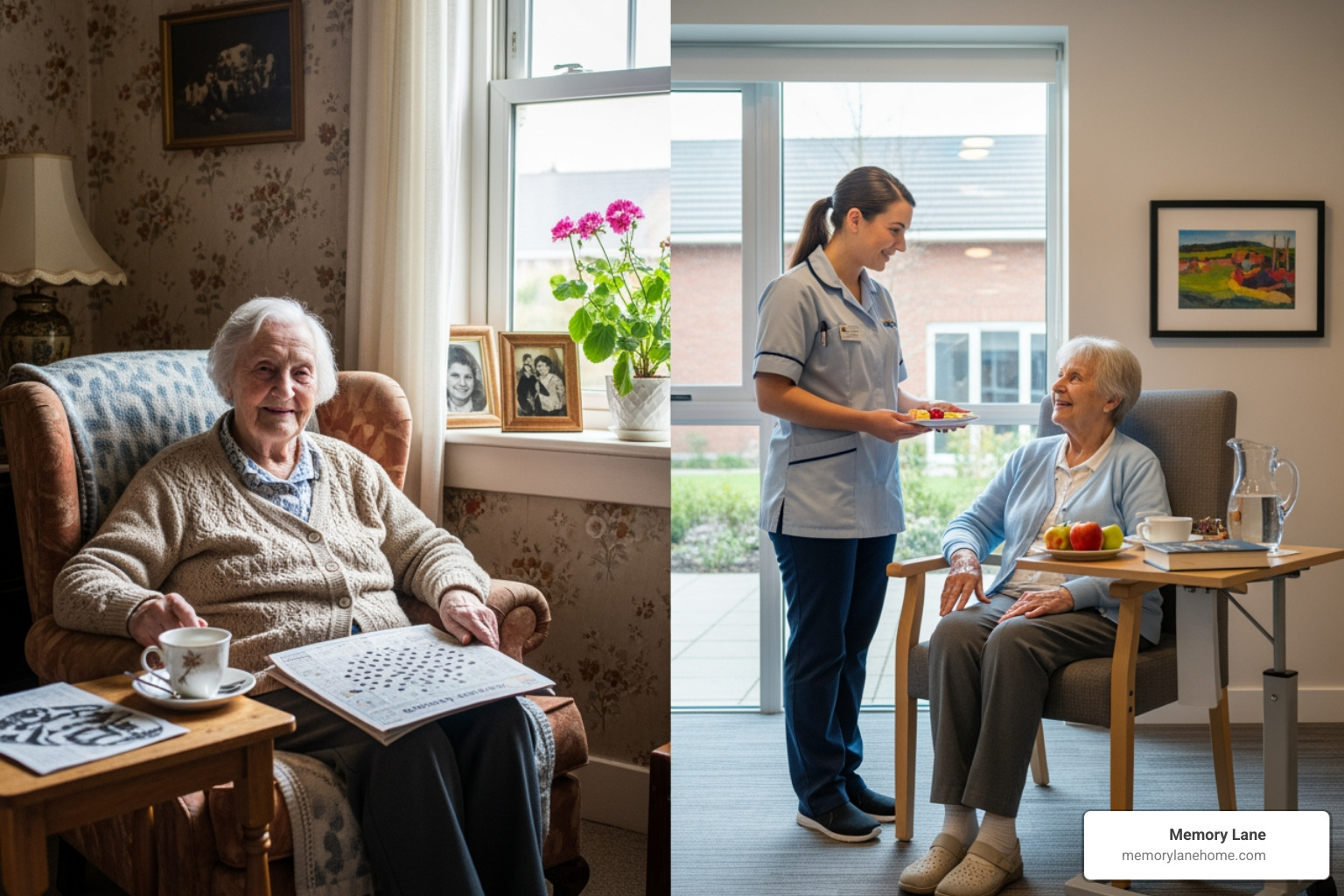
Pros and Cons of Dementia Care at Home
Pros:
- Familiarity and Comfort: Remaining in a known environment can reduce confusion and anxiety.
- One-on-One Attention: Care is completely personalized to your loved one’s routines and preferences.
- Maintained Independence: Greater control over daily choices and schedules.
Cons:
- High Cost for 24/7 Care: Round-the-clock supervision is often prohibitively expensive.
- Caregiver Stress and Burnout: The emotional and physical toll on family caregivers is immense.
- Safety Risks: As dementia progresses, the home can become unsafe due to risks of falls, wandering, and other accidents.
- Social Isolation: Limited opportunities for peer interaction can lead to loneliness and depression.
Pros and Cons of Memory Care Communities
Pros:
- Specialized Staff and Environment: Staff are trained in dementia care, and the facility is purpose-built for safety and to reduce confusion.
- 24/7 Safety and Security: Secure perimeters and constant supervision prevent wandering and other safety incidents.
- Socialization and Engagement: Structured activities and peer interaction improve quality of life and can slow cognitive decline.
- Respite for Family: Relieves the burden of caregiving, allowing families to focus on their relationship.
Cons:
- Transition Stress: Moving to a new environment can be difficult and requires an adjustment period.
- Cost: While often less than 24/7 home care, it is still a significant financial commitment.
- Less Freedom: Structured routines and security measures mean less personal spontaneity.
- Not for Complex Medical Needs: May not be equipped for serious health conditions requiring skilled nursing.
Pros and Cons of Nursing Homes for dementia care at home vs nursing home
Pros:
- Highest Level of Medical Care: 24/7 access to skilled nursing staff for complex health conditions.
- On-Site Therapies: Physical, occupational, and speech therapies are readily available.
- Comprehensive Assistance: All medical and personal care needs are met in one location.
Cons:
- Clinical Environment: The hospital-like setting can be disorienting and distressing for someone with dementia.
- Less Dementia-Specific Focus: Care and activities may not be custom to cognitive needs unless in a dedicated unit.
- Highest Cost: Typically the most expensive long-term care option.
- Quality of Life Concerns: The institutional setting may offer less personal engagement and activity compared to memory care.
Frequently Asked Questions about Dementia Care
Are dementia patients better off at home?
It depends on the stage of dementia. In the early stages, the familiarity of home is often best, as it can reduce confusion and maintain independence. However, as the disease progresses, safety risks like wandering and falls increase. At that point, the specialized, secure environment of a memory care community like Memory Lane can provide a better quality of life and greater safety than is possible to maintain at home.
At what point do dementia patients need 24-hour care?
24-hour care becomes necessary when safety is a constant concern. Key signs include:
- Wandering, especially at night.
- Frequent falls or significant mobility issues.
- Inability to perform daily tasks like bathing, dressing, or eating without constant help.
- Behavioral changes like aggression or severe agitation that are difficult to manage safely.
- Severe caregiver burnout, where the family caregiver’s health is at risk.
When these signs appear, it’s time to consider 24/7 in-home care or transitioning to a residential facility.
How long can a person with dementia live in a residential care setting?
Life expectancy with dementia varies widely, from 3 to 20 years after diagnosis, depending on the type of dementia, overall health, and quality of care. For Alzheimer’s, the average is 8 to 10 years. The goal of a residential care setting is not just to extend life, but to improve the quality of life that remains. In a supportive community like Memory Lane, residents can live comfortably and meaningfully for many years, with access to care that adapts to their changing needs, engaging activities, and vital social connections.
Conclusion: Taking the Next Step with Confidence
Choosing the right care setting is one of the most profound decisions you’ll make for your loved one—and it’s not one you have to face alone. The truth is, there’s no universal “right answer” when weighing dementia care at home vs nursing home or memory care. The best path forward depends entirely on your loved one’s unique needs, the stage of their dementia, their safety concerns, and what your family can realistically provide and sustain.
Throughout this guide, we’ve explored how in-home care can offer the comfort of familiar surroundings and one-on-one attention, particularly in early stages. We’ve looked at how memory care communities provide specialized, secure environments with staff trained specifically in dementia care—often the safest choice as the disease progresses. And we’ve examined how nursing homes deliver the highest level of medical care for those with complex health conditions alongside dementia.
The decision ultimately comes down to honest assessment. Can your loved one’s home be made truly safe as their condition progresses? Is your family support system sustainable without leading to caregiver burnout? Does your loved one need the specialized environment and social engagement that only a memory care community can provide? Or do complex medical needs require the clinical capabilities of a nursing home?
By taking the time to research your options thoroughly, consulting with healthcare professionals who know your loved one’s medical history, and honestly evaluating both your loved one’s needs and your family’s circumstances, you can make a confident choice that prioritizes safety, well-being, and quality of life above all else.
At Memory Lane, we understand how difficult this transition can be. That’s why we’ve created communities throughout Ann Arbor, Ypsilanti, and Saline, Michigan that feel like home—because they are home for our residents. We provide personalized care plans that adapt as needs change, compassionate support from staff who genuinely care, and a secure yet engaging environment designed to help residents thrive. Our focus is on extending independence, creating opportunities for success, and fostering meaningful connections and engagement every single day.
If you’re considering memory care for your loved one, we’d be honored to walk alongside you in this journey.
Related Posts