
From Chelsea to the Coast: Discovering Michigan’s Premier Assisted Living Options
Finding the Right Senior Care in Michigan: Your Complete Guide
Assisted living Michigan offers families a wide range of options when caring for aging loved ones who need support with daily activities while maintaining their independence. Whether you’re in Ann Arbor, Detroit, Grand Rapids, or smaller communities throughout the state, understanding your choices can help you make the best decision for your family.
Quick Answer: Key Facts About Assisted Living in Michigan
- Average Cost: $4,111 per month (2023), with costs varying by city
- Licensing: Regulated by Michigan’s Department of Licensing and Regulatory Affairs (LARA)
- Types: “Homes for the Aged” (21+ residents) and “Adult Foster Care” facilities
- Financial Help: MI Choice Waiver Program, Veterans Benefits, Long-Term Care Insurance
- Services: Personal care, medication management, meals, activities, housekeeping
- Memory Care: Specialized support available for dementia and Alzheimer’s
Michigan has become an increasingly popular state for senior living. With over 750 assisted living facilities statewide, the options can feel overwhelming—especially when you’re concerned about finding the right level of care for memory loss or cognitive decline.
The state doesn’t use the term “assisted living” in its regulations. Instead, Michigan licenses Homes for the Aged (serving 21 or more individuals) and Adult Foster Care homes. Both provide personal care services, but the structure and oversight differ. Understanding these distinctions is crucial as you begin your search.
Between 2022 and 2023, Michigan’s assisted living costs rose 12.5%, exceeding the national average increase. This makes financial planning more important than ever. The good news? Multiple assistance programs exist to help families afford quality care.
As Jason Setsuda, CFO of Memory Lane Assisted Living and a board-certified Emergency Medicine Physician with over 15 years of experience in healthcare and business management, I’ve helped countless Michigan families steer the complexities of assisted living Michigan options. My work in emergency medicine and as a visiting physician has given me insight into the critical importance of finding the right care environment for seniors with cognitive decline.
Similar topics to assisted living michigan:
Understanding the Landscape of Assisted Living in Michigan
Navigating senior care can feel like learning a new language, especially when state regulations use different terminology than what we commonly hear. In Michigan, understanding the specific definitions and oversight bodies is crucial to finding the right assisted living Michigan facility for your loved one.

What is Assisted Living in Michigan?
When we talk about assisted living Michigan, we’re referring to residential settings that provide support for daily tasks for seniors who need some help but don’t require the intensive medical care of a nursing home. Michigan’s administrative rules don’t officially recognize the term “assisted living.” Instead, the state licenses two primary types of facilities that offer these services:
- Homes for the Aged (HFA): These facilities generally serve 21 or more individuals who are 60 years or older. They provide personal care, supervision, protection, and room and board. The care provided focuses on assistance with activities of daily living (ADLs) and incidental activities of daily living (IADLs), but not 24-hour skilled nursing care. Think of it as a community living environment with a dedicated staff to help residents maintain their independence.
- Adult Foster Care (AFC) Homes: These homes can serve any adult in need of foster care services, not just seniors, though many cater specifically to older adults. AFC homes come in various sizes: family homes (up to 6 residents, with the licensee residing on-site), small group homes (1-12 residents), and large group homes (13-20 residents). They also provide personal care, supervision, and protection, often in a more homelike, intimate setting.
The key distinction from nursing homes is the level of medical care. Assisted living facilities (whether HFA or AFC) are designed for individuals who need help with tasks like bathing, dressing, eating, or medication management, but are generally stable and don’t require continuous medical treatment or monitoring. Nursing homes, on the other hand, provide 24-hour skilled nursing care for those with more complex medical needs. We often see families choose assisted living Michigan when their loved one needs support to remain safe and engaged, but isn’t ready for a hospital-like environment.
The Role of Licensing and Oversight
Ensuring the safety and quality of care in assisted living Michigan facilities is paramount. The Michigan Department of Licensing and Regulatory Affairs (LARA), through its Bureau of Community and Health Systems (BCHS), licenses and regulates these facilities to ensure they meet state standards.
LARA sets forth detailed requirements covering facility structure, resident care, and staff qualifications. This includes:
- Annual Inspections: Facilities undergo regular inspections to ensure compliance with state regulations.
- Staffing Requirements: Michigan requires facilities to have adequate, trained staff on duty at all times to meet resident needs, including an awake supervisor on every shift. Specific staff-to-resident ratios are not mandated.
- Background Checks: All employees with resident access must pass state and federal criminal background checks. Certain convictions prohibit employment in these roles.
- Reporting Abuse: Facilities are required to report suspected abuse or neglect. The Michigan Elder Abuse Hotline is available 24/7 for reporting.
- Admission Contracts: These contracts must clearly outline services, fees, rate increase policies, refund policies, and resident rights. They should be updated annually or when care needs change.
If you have concerns that a facility is in violation of governing rules, you can file an anonymous complaint with the BCHS using their online form or paper form, or by calling their complaint hotline. This robust oversight helps ensure that our loved ones receive the compassionate and professional care they deserve.
Key Organizations Supporting Michigan Seniors
Beyond state regulations, several organizations support providers and residents within the assisted living Michigan landscape, offering advocacy, resources, and crucial information.
- Michigan Assisted Living Association (MALA): MALA is a vital nonprofit that serves as Michigan’s “The Leader in Advocacy, Education and Resources for Providers.” As the state affiliate for Argentum, it supports providers of assisted living and other community-based services. MALA’s work helps ensure providers have the resources to offer high-quality care, benefiting over 30,000 residents statewide.
- Michigan Long-Term Care Ombudsman Program: This program advocates for the rights and welfare of seniors in long-term care. Funded by federal and state governments, ombudsmen ensure residents’ voices are heard and concerns are addressed. We recommend families contact them at 866-485-9393 with unresolved issues or questions about resident rights.
- Area Agencies on Aging (AAAs): Michigan has 16 regional, non-profit AAAs serving older adults. These invaluable local resources offer services like nutritional programs, transportation, support groups, and information and assistance (I&A) specialists. They connect families to local services and guide long-term care planning. Find your local agency through the Michigan Area Agencies on Aging.
This network of support ensures that both providers and residents in assisted living Michigan facilities have access to the information and resources needed for a high quality of life.
Services, Amenities, and a Continuum of Care
When we consider assisted living Michigan, it’s not just about a place to live; it’s about a lifestyle that supports independence, promotes well-being, and adapts to changing needs. The services and amenities offered are designed to ease the burdens of daily life while fostering a vibrant community.

Typical Services in Michigan Assisted Living Facilities
The core purpose of assisted living Michigan is to support residents with Activities of Daily Living (ADLs). While offerings vary, a comprehensive suite of services typically includes:
- Personal Care: Assistance with daily tasks like bathing, dressing, grooming, and mobility, provided with dignity and respect.
- Medication Management: Medication reminders, supervision, or administration by trained staff to ensure adherence to physician orders.
- Dining Services: Three daily, chef-prepared meals served in a communal setting, with accommodations for special diets. Snacks and beverages are also available.
- Housekeeping and Laundry: Regular housekeeping and laundry services for linens and personal items.
- Social and Recreational Activities: A full calendar of social, recreational, and educational activities like fitness classes, games, and local outings. In our Ann Arbor, Ypsilanti, and Saline communities, we focus on creating meaningful engagement.
- Transportation: Scheduled transportation for appointments, shopping, and community outings.
- Health Monitoring: Regular wellness checks and coordination with healthcare providers.
- Emergency Call Systems: 24/7 emergency call systems in all resident living spaces for immediate assistance.
These services improve residents’ quality of life, allowing them to focus on social engagement and personal interests.
The Importance of a Seamless Continuum of Care
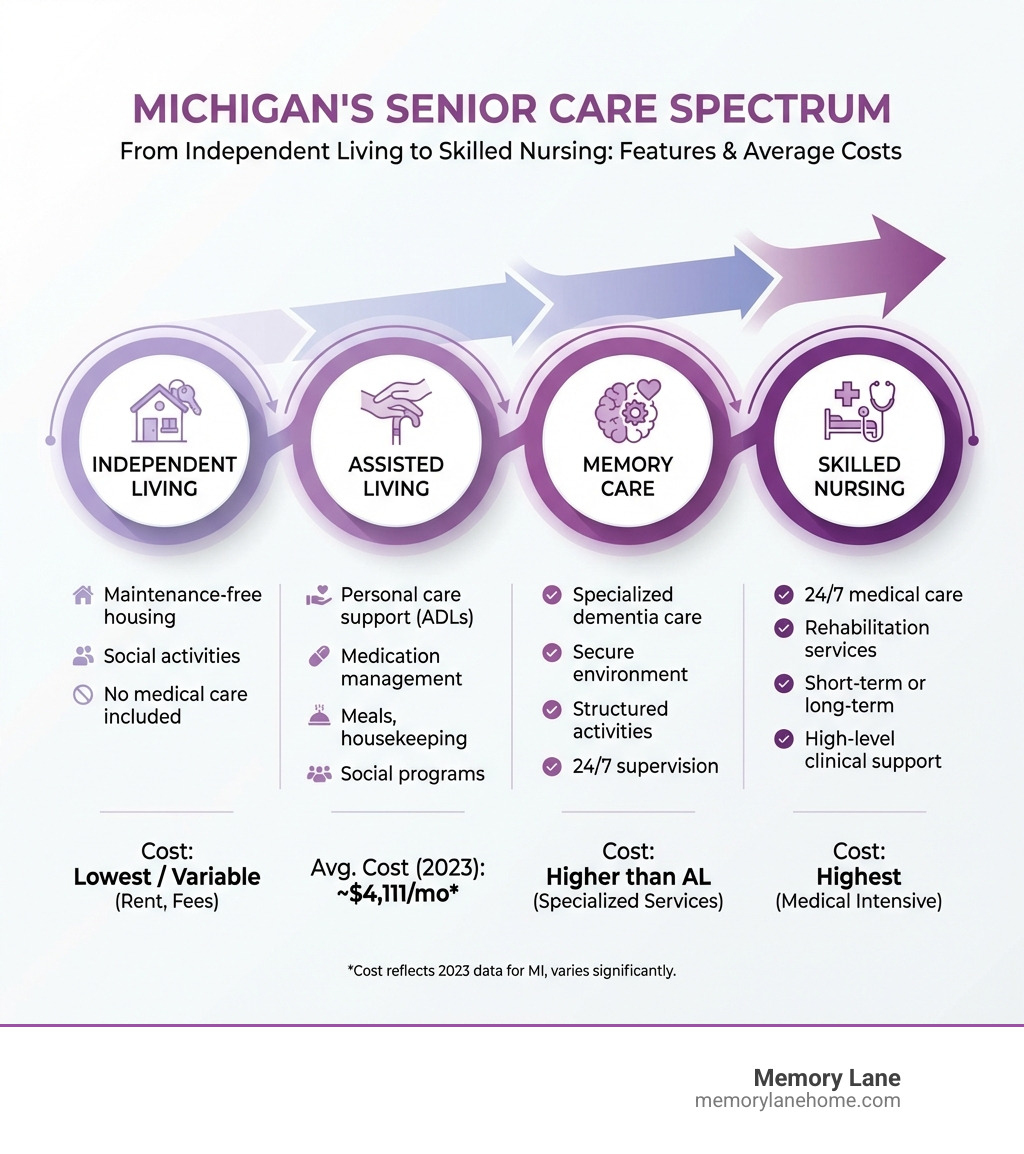
One of the most significant advantages for families choosing assisted living Michigan is the concept of a “seamless continuum of care.” This means that a senior living community can offer multiple levels of care, from independent living to assisted living, and specialized memory care, all within the same campus or organization.
Why is this so important? As individuals age, their needs can change. A resident who initially thrives in an assisted living setting might, over time, require more specialized support due to the progression of dementia or other health conditions. In a community with a continuum of care, this transition can happen smoothly, without the disruption and stress of moving to an entirely new facility.
The benefits are profound:
- Aging in Place: Residents can remain in a familiar environment with familiar faces (both staff and fellow residents) as their care needs evolve. This continuity is especially beneficial for those with cognitive changes.
- Peace of Mind: Families gain reassurance knowing that if their loved one’s needs increase, they won’t have to restart the daunting search for a new care provider.
- Familiarity and Trust: Long-standing relationships with caregivers and staff contribute to a greater sense of security and well-being.
- Integrated Care: Different care teams can coordinate more effectively when they are part of the same organization, ensuring a holistic approach to resident health and happiness.
For communities like ours in Ann Arbor, Ypsilanti, and Saline, offering a continuum of care, particularly with specialized memory care, is a cornerstone of our philosophy. It allows us to truly partner with families for the long term, adapting our support as their loved one’s journey unfolds.
Specialized Care Options
Many assisted living Michigan facilities offer specialized programs to meet specific needs, ensuring residents receive the most appropriate and effective care.
- Memory and Dementia Care: For individuals with Alzheimer’s or dementia, specialized memory care provides a secure, supportive, and engaging environment. Our programs offer 24/7 personalized support, custom care plans, and activities designed to improve quality of life. These communities feature secure perimeters, cognitive stimulation activities, and staff trained in dementia care. The Alzheimer’s Association Greater Michigan Chapter and the Michigan Alzheimer’s Disease Center are excellent resources for families.
- Respite Care: Respite care offers a safe, supportive environment for short-term stays. It’s a fantastic option for caregivers who need a break or for seniors recovering from a hospital visit. It provides all the benefits of assisted living and allows a senior to experience a community before a permanent move.
- Hospice Coordination: Many facilities work closely with hospice providers to offer comprehensive end-of-life care. This collaboration allows residents to receive specialized comfort care from hospice professionals while remaining in their familiar assisted living environment, prioritizing dignity and quality of life.
These specialized options highlight the adaptability of modern assisted living Michigan communities, ensuring a wide range of senior needs can be met with expertise and compassion.
Navigating the Costs and Financial Aid for Assisted Living in Michigan
Understanding the financial aspects of assisted living Michigan is a critical step for families. Costs can vary significantly, and exploring all available financial assistance options can make quality care more accessible.
How to Pay for Assisted Living in Michigan
The average monthly cost for assisted living Michigan was $4,111 in 2023, representing a 12.5% increase from 2022. This is higher than the national average increase of 10% during the same period. However, costs can vary considerably based on location, the level of care required, and the specific amenities offered by the facility. For instance, in our service areas:
| City (Michigan) | Average Assisted Living Cost (2023) |
|---|---|
| Ann Arbor | $4,707 |
| Ypsilanti | (often similar to Ann Arbor) |
| Saline | (often similar to Ann Arbor) |
| Detroit | $4,177 |
| Lansing | $4,809 |
Data primarily from Michigan Assisted Living Facilities source.
While private pay is the most common method, we encourage families to explore various avenues to cover these expenses:
- Long-Term Care Insurance: This type of insurance policy is specifically designed to cover the costs of long-term care services, including assisted living. If you or your loved one has a policy, it can be a significant financial resource. We recommend reviewing the policy details carefully and visiting longtermcare.acl.gov for more information on its benefits and drawbacks.
- Veterans Benefits: Eligible veterans and their spouses may qualify for various pension programs, such as the Aid and Attendance benefit, which can help offset the cost of assisted living. These benefits can provide crucial financial support. More information is available at benefits.va.gov.
- Reverse Mortgages: For homeowners aged 62 or older, a reverse mortgage allows them to convert a portion of their home equity into cash. These funds can then be used to pay for assisted living while the homeowner retains title to the property. The U.S. Department of Housing and Urban Development offers a federally insured reverse mortgage program.
- Life Insurance Policies: Even if a loved one hasn’t passed away, certain types of life insurance policies can be leveraged to pay for assisted living. This might involve selling the policy for its cash value or converting it into a long-term care benefit plan. You can find more details at longtermcare.acl.gov.
It’s important to explore these options early, as some require planning and can have specific eligibility criteria.
State and Federal Assistance Programs
Beyond personal assets and insurance, Michigan offers state and federal programs that can provide financial relief for assisted living Michigan costs.
- MI Choice Waiver Program: This is a crucial program for many Michigan families. While Medicaid generally does not directly cover the cost of assisted living room and board, the MI Choice Waiver program (funded by Medicaid) covers personal care services. This means it can help pay for assistance with daily tasks like bathing, dressing, and medication management, allowing individuals to receive care in an assisted living setting rather than a nursing home.
- Eligibility Criteria: To qualify, individuals must generally be 65 or older (or 18+ with a disability), meet specific financial eligibility for Medicaid (income and asset limits apply), and require a nursing home level of care but prefer to live at home or in an assisted living community. For example, in 2018, single residents could not have income greater than $1,012/month and assets of more than $2,000. The waiver has a limited number of enrollment slots, so there may be a waiting list.
- Application Process: To learn more and apply, you can contact an Area Agency on Aging I&A specialist at (800) 442-1713. If you haven’t applied for Medicaid yet, you can start by calling (855) 275-6424.
- Optional State Supplement (OSS): For Supplemental Security Income (SSI) recipients residing in a Home for the Aged, Michigan provides an Optional State Supplement (OSS). This supplement contributes to the cost of room and board. The monthly room and board payment for Medicaid-eligible residents in HFAs is often subject to state limits, with a portion covered by the resident’s SSI and the OSS making up some of the difference.
Navigating these programs can be complex, but their potential to significantly reduce the financial burden of assisted living Michigan makes them well worth exploring. We often help families connect with these resources to ensure they receive all the assistance they are entitled to.
How to Choose the Right Michigan Assisted Living Community
Selecting the right assisted living Michigan community for your loved one is one of the most important decisions you’ll make. It requires careful consideration, thorough research, and a clear understanding of your loved one’s needs and preferences.
Creating Your Assisted Living Checklist
To make an informed decision, we recommend developing a comprehensive checklist. This will help you compare different communities objectively and ensure all crucial aspects are covered:
- Needs Assessment: Begin by honestly assessing your loved one’s current and anticipated needs. Do they need help with all ADLs, or just some? Is memory care a consideration? What medical conditions need to be managed? This will narrow down your search to communities that can truly meet their requirements. For families considering memory care, assessing the stage of dementia and specific behavioral patterns is crucial for finding the most appropriate and secure environment.
- Location and Accessibility: Consider communities in areas convenient for family visits, such as Ann Arbor, Ypsilanti, or Saline. Also, think about proximity to hospitals, doctors’ offices, and familiar places that might bring comfort to your loved one.
- Level of Care Provided: Does the community offer a seamless continuum of care? Can they accommodate increasing needs, including specialized memory care, without requiring another move? This is particularly vital for conditions like dementia, where familiarity and routine are key.
- Staffing and Training: While Michigan doesn’t mandate staff-to-resident ratios, inquire about the typical ratio during different shifts. Ask about staff training, especially for memory care. Are they trained in dementia communication, emergency response, and personalized care techniques? We believe strongly in continuous training for our teams.
- Community Culture and Activities: Visit during different times of day to observe the atmosphere. Are residents engaged and happy? Is the staff warm and attentive? Review the activity calendar – does it offer a variety of options that align with your loved one’s interests? For memory care, look for structured, person-centered activities.
- Dining Options: Sample a meal if possible. Are meals nutritious, varied, and appealing? Can they accommodate dietary restrictions? Is the dining experience pleasant and social?
- Safety Features: What emergency systems are in place? Are common areas and individual living spaces secure, especially in memory care units? How do they handle emergencies like power outages or medical incidents?
- Cleanliness and Maintenance: Observe the overall cleanliness and maintenance of the facility, both inside and out.
- Resident Rights and Contracts: Carefully review the resident admission contract, ensuring it clearly outlines services, fees, and resident rights. Understand the admission, discharge, and refund policies.
When touring facilities, don’t hesitate to ask questions, speak with current residents and their families, and trust your instincts. Our experience has shown us that a warm, welcoming atmosphere and genuinely caring staff are just as important as the services offered.
Resources for Michigan Families
Making decisions about assisted living Michigan can be overwhelming, but you don’t have to do it alone. Several organizations offer invaluable support and guidance:
- Area Agencies on Aging (AAAs): As mentioned earlier, your local AAA is an excellent starting point. They can provide information on local services, financial aid, and long-term care planning. Contact an I&A specialist at (800) 442-1713.
- Michigan Long-Term Care Ombudsman Program: If you have concerns about the care or rights of a resident in an assisted living Michigan facility, the Michigan Long-Term Care Ombudsman Program (866-485-9393) can advocate on your behalf. They are a neutral party dedicated to protecting residents’ welfare.
- Elder Law of Michigan: This nonprofit organization (866-400-9164) provides free legal help to seniors, including pension and benefits counseling, financial legal advice, and assistance with elder abuse cases. Their services can be crucial for understanding legal rights and financial planning.
- Alzheimer’s Association Chapters: For families dealing with dementia, the Alzheimer’s Association Greater Michigan Chapter (800-272-3900) offers a wealth of resources, support groups, educational programs, and a 24-hour helpline. They can connect you with local services and provide caregiver training, which is invaluable.
Utilizing these resources can empower you with the knowledge and support needed to confidently choose the best assisted living Michigan community for your loved one.
Conclusion: Finding Your Ideal Senior Living Solution in Michigan
The journey to finding the right assisted living Michigan solution for your loved one is deeply personal, often filled with questions and emotional considerations. We understand that you want a place where your family member will not only receive excellent care but also thrive, feel respected, and enjoy a fulfilling life.
We’ve explored what assisted living Michigan truly means, distinguishing between Homes for the Aged and Adult Foster Care homes, and highlighted the rigorous licensing and oversight by LARA. We’ve also seen the broad spectrum of services offered, from daily personal care and medication management to engaging activities and delicious dining, all designed to support independence and well-being. The importance of a seamless continuum of care, especially for conditions like dementia, cannot be overstated – it provides peace of mind knowing that evolving needs can be met without disruptive transitions.
We’ve also digd into the financial landscape, acknowledging the rising costs but also illuminating the many pathways to assistance, including long-term care insurance, veterans’ benefits, reverse mortgages, life insurance policies, and critical state programs like the MI Choice Waiver. Our goal is always to empower families with the knowledge to steer these complexities.
Choosing the right community involves a thoughtful assessment of needs, careful research, and proactive engagement with facilities and support organizations. By using a comprehensive checklist and leveraging resources like Area Agencies on Aging and the Long-Term Care Ombudsman, you can make a confident and informed decision.
For families seeking dedicated support for dementia and Alzheimer’s, communities like ours at Memory Lane offer personalized care plans and secure environments, focusing on enhancing residents’ quality of life and independence. We believe that every day is an opportunity to create meaningful moments, ensuring that your loved one receives compassionate, expert care designed specifically for their unique journey.
If you’re looking for a place where specialized memory care is delivered with heart and expertise in a supportive community, we invite you to learn more.