
Detroit Senior Care: Top 4 Options 2025
Navigating Your Senior Care Journey in Detroit
Detroit senior care offers a comprehensive network of services for the city’s 89,334 residents aged 65 and older. The area boasts 82 senior living options, hundreds of care providers, and robust community programs through organizations like The Senior Alliance and Detroit Area Agency on Aging.
Quick Overview of Detroit Senior Care Options:
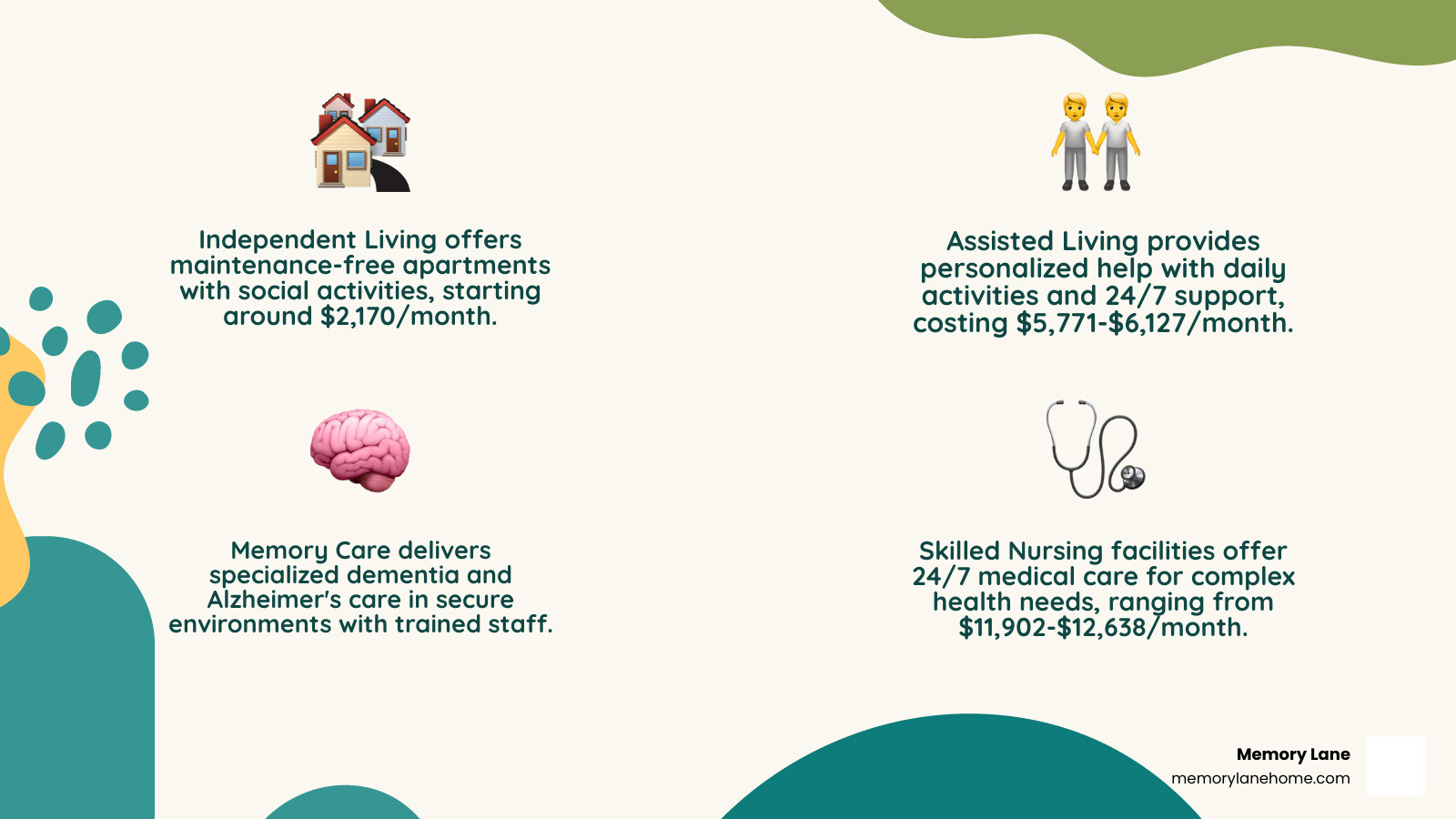
- Home Care: Non-medical support ($32-$33/hour) for daily tasks like meal prep and companionship
- Independent Living: Maintenance-free apartments with social activities (starting around $2,170/month)
- Assisted Living: Personalized care with 24/7 staff support ($5,771-$6,127/month)
- Memory Care: Specialized dementia and Alzheimer’s care in secure environments
- Skilled Nursing: 24/7 medical care for complex health needs ($11,902-$12,638/month)
Finding the right care for someone you love can feel overwhelming. As one family member shared, “My mother is happy and I can finally breathe knowing she’s cared for.” That sense of relief is what every family deserves.
Detroit’s senior care landscape has evolved to offer everything from aging-in-place solutions to comprehensive residential communities. In 2023, The Senior Alliance helped 760 individuals receive care at home through the MI Choice Waiver Program, while specialized services like DMC Harper University Hospital’s nationally ranked geriatrics program provide expert healthcare for older adults.
What matters most is finding care that addresses the whole person—medical needs, social connections, and independence. Whether you’re noticing early signs of memory loss or struggling with a loved one’s safety at home, Detroit offers resources to help.
I’m Jason Setsuda, CFO of Memory Lane Assisted Living and a Board Certified Emergency Medicine Physician with over 10 years of medical experience. Through my work providing Detroit senior care and serving as Medical Director for multiple care facilities, I’ve helped countless families steer these challenging transitions. This guide will walk you through your options, costs, and the support systems available to help you make the best decision for your loved one.
Understanding the Landscape of Detroit Senior Care
When families start looking into Detroit senior care options, the variety of choices means there’s likely a perfect fit for your loved one’s specific situation. Whether they need a few hours of help each week or round-the-clock medical attention, Detroit offers solutions for every stage of aging.

Levels of Care: From Independence to 24/7 Support
Let’s explore the spectrum of care to help you find the right fit.
Home care services offer flexible, non-medical support to help someone stay in their own home. A caregiver can assist with meal preparation, light housekeeping, companionship, or transportation. This allows seniors to get the help they need without leaving a familiar environment. In Detroit, home health services average $32-$33 per hour.
Independent living communities are for active seniors who want to shed the hassles of homeownership. These communities offer maintenance-free living with built-in social networks, including events, fitness classes, and dining options. It’s a lifestyle choice focused on convenience and community.
Assisted living facilities provide personalized, hands-on help with daily activities like bathing, dressing, and medication management. It strikes a balance between independence and support, with 24/7 staff available. Care plans are custom to the individual, ensuring residents receive the right level of assistance while maintaining their dignity and daily routines.
Memory care is a specialized form of assisted living for individuals with Alzheimer’s or dementia. At Memory Lane, we know these residents need more than just physical help; they need an environment designed for their cognitive challenges. Memory care provides secure spaces to prevent wandering, structured routines to reduce confusion, and staff trained in dementia care. The goal is to create moments of joy and connection despite memory loss. You can learn more about this specialized approach at What is Memory Care?.
Skilled nursing facilities (nursing homes) provide the highest level of medical care outside a hospital. This is for residents with complex health conditions requiring 24/7 medical supervision, such as advanced wound care, IV therapy, or intensive rehabilitation. Registered nurses are on staff around the clock.
Rehabilitation services, like those at the DMC Rehabilitation Institute of Michigan, offer inpatient and outpatient programs for recovery from brain injury, stroke, and other conditions. They also provide crucial support groups for patients and their families.
Two other valuable options are respite care, which gives family caregivers a temporary break, and adult day care, which provides supervised activities for seniors during the day.
Specialized Medical and Telehealth Services for Seniors
Detroit’s medical community offers impressive resources for older adults. The Detroit Medical Center (DMC) leads with comprehensive senior health programs.
DMC provides nationally recognized geriatric care, including specialized Acute Care for the Elderly (ACE) Units that allow direct admission, avoiding stressful emergency room visits. Their nurses are trained in geriatric-specific approaches, and DMC Harper University Hospital was recognized as High Performing in Geriatrics by U.S. News and World Report.
Geriatric assessments are thorough evaluations that identify health needs and provide education on preventive services. For immediate guidance, the Senior Health Line (888-264-0102) provides 24-hour access to nursing staff for health questions or physician referrals.
Telehealth has transformed senior healthcare. The Detroit Area Agency on Aging’s “Senior Telehealth Connect” program enables virtual appointments from home, which is life-changing for seniors with mobility or transportation issues. Remote monitoring also allows providers to track vital signs, catching potential problems early.
The Financial Realities: Costs of Senior Care in Detroit
Understanding the financial side of Detroit senior care is crucial for making a sustainable plan. Costs vary, but knowing the averages helps you prepare and find available resources.
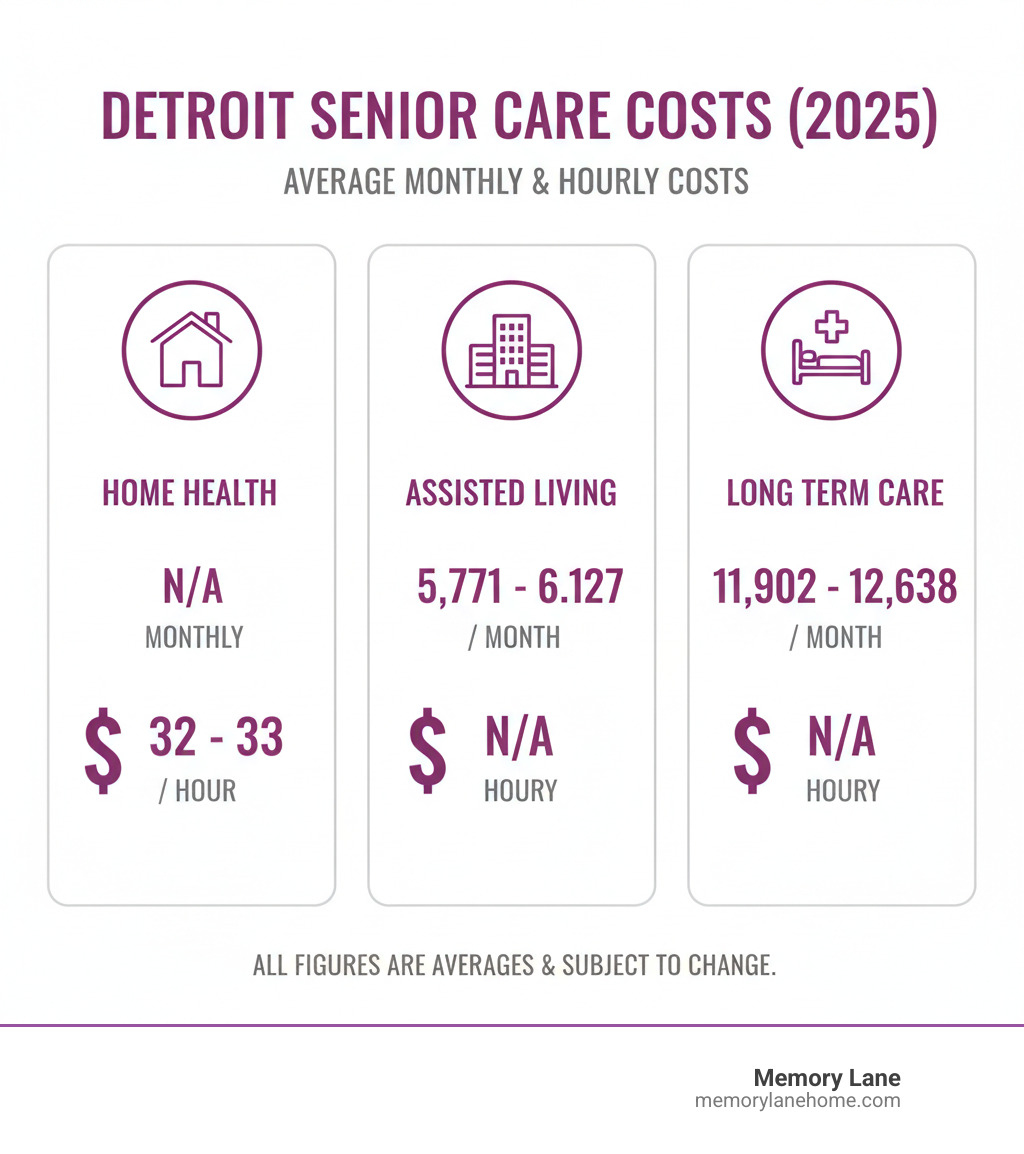
Here’s what families in Detroit are currently paying for different types of care:
| Type of Care | Average Monthly Cost | Average Hourly Cost |
|---|---|---|
| Home Health Services | Varies by hours used; billed hourly | $32 – $33 |
| Assisted Living | $5,771 – $6,127 | Not typically billed hourly |
| Long Term Care (Nursing) | $11,902 – $12,638 | Not typically billed hourly |
| Individual Care Provider | Varies by hours scheduled | $18 |
| Senior Living & Care | $8,140 (overall average) | Not applicable |
Actual costs depend on the level of care needed, location, and specific amenities. A provider with specialized training, such as in dementia care, may have higher rates, but that expertise is often invaluable.
How to Plan for the Costs of Detroit senior care
Most families use a combination of resources to pay for care. Here are the most common options:
- Private Pay: Using savings, retirement income, or proceeds from selling a home. It’s wise to have a long-term plan, as costs can increase over time.
- Medicaid: A federal and state program that can cover long-term care costs for eligible seniors with limited income and assets. Programs like the MI Choice Waiver allow seniors to receive Medicaid-funded care at home.
- Medicare: Typically covers short-term skilled nursing care after a hospitalization but not long-term custodial care (help with daily activities). However, programs like the Michigan Medicare Assistance Program (MMAP) can help seniors save significantly on prescription drugs.
- Long-Term Care Insurance: If your loved one has a policy, it can cover expenses for in-home care, assisted living, or nursing homes.
- Veterans’ Benefits: The Aid and Attendance benefit can help eligible veterans and their spouses pay for care. It’s often an overlooked resource.
- Paid Family Caregivers: Through some Medicaid programs, family members who provide care may be eligible for compensation. You can find information on getting paid as a caregiver to see if this is an option.
Financial Assistance and Waiver Programs
Michigan offers several programs to help seniors afford care. The MI Choice Waiver Program is a key resource that allows eligible seniors to receive Medicaid-funded services at home instead of in a nursing home.
Your local Area Agency on Aging coordinates services like Meals on Wheels, transportation, and adult day care, many of which are free or on a sliding scale. Home repair assistance, such as the Detroit 0% Home Repair Loans Program, can also help by making homes safer to prevent costly accidents. The Detroit Area Agency on Aging, The Senior Alliance, and AgeWays are excellent starting points for finding these resources.
Finding and Choosing the Right Care Provider
The journey to finding the ideal Detroit senior care provider is a personal one. We understand the mix of hope and worry you’re feeling.

Start by assessing your loved one’s current and future needs, from companionship to medical supervision. This will help focus your search. Use online resources and local referrals to find options, then schedule tours. During a tour, observe the environment, staff-resident interactions, and overall atmosphere to see if it feels like a good fit.
When speaking with potential providers, be prepared with questions. A good staff-to-resident ratio is important, as is specialized training for conditions like dementia.
Key questions to ask any potential provider: How do you personalize care plans, and how often are they updated? What training does your staff receive, particularly for dementia? What activities do you offer, and how do you encourage participation? How do you handle medical emergencies? What’s included in the monthly fee, and what costs extra? Can you provide references from current families?
How to Choose the Right Detroit Senior Care Provider
Choosing the right provider for Detroit senior care is about finding where your loved one will thrive. If they have specific medical needs, ask about on-site nursing and partnerships with local doctors. For memory care, the environment must be both secure and stimulating.
Don’t underestimate the importance of social connection. Loneliness can be detrimental to a senior’s health. Look for communities with active social calendars and a genuine sense of warmth.
Before making a decision, verify that any facility is properly licensed by the state of Michigan. For individual caregivers, look for certifications like CNA (Certified Nursing Assistant). Read all contracts carefully to understand payment schedules and included services. Most importantly, trust your instincts. After all the research, pay attention to how a place makes you feel.
For families facing the unique challenges of Alzheimer’s or dementia, we’re here to help. Contact Memory Lane for Detroit Senior Care Options to learn more about our personalized approach.
Utilizing Local Resources and Guidance
You don’t have to do this alone. Start with online research on general directories and the Wayne County senior services website. Ask for recommendations from trusted sources like friends, family, or your loved one’s doctor. If your loved one is in the hospital, the discharge planner is an expert resource for connecting you with follow-up care. Finally, check with local senior centers and community groups, which often have deep knowledge of reputable local providers.
Key Support Systems and Resources in the Detroit Area
When you’re navigating Detroit senior care options, you’re not alone. The city has a remarkable network of organizations dedicated to supporting seniors and their caregivers.

These resources are your partners in care, helping thousands of families find solutions to help their loved ones live life on their own terms.
The Role of Area Agencies on Aging (AAA)
Area Agencies on Aging are command centers for senior support. The Detroit Area Agency on Aging (DAAA) has been Detroit’s “Senior Solution” for over 40 years. Its Information & Assistance call center is the perfect starting point for families, offering referrals for long-term care, home healthcare, and more.
Key programs offered by DAAA and The Senior Alliance (another major AAA in the area) include:
- Detroit Meals on Wheels: Delivers essential nutrition to homebound seniors, providing not just food but also dignity and a friendly check-in.
- Transportation Services: Helps seniors get to doctor appointments and grocery stores, keeping them connected to healthcare and their communities.
- Medicare/Medicaid Assistance Program (MMAP): Provides free counseling to help beneficiaries steer the complexities of Medicare and Medicaid, saving them money on prescriptions and other costs.
The Senior Alliance’s website offers a comprehensive resource directory covering everything from meal delivery to in-home help.
Understanding the MI Choice Waiver Program
The MI Choice Waiver Program is one of the most powerful tools for Detroit senior care. It’s a game-changer for families who want to keep loved ones at home instead of in a nursing facility.
At its heart, MI Choice offers community-based care as an alternative to nursing homes. Operated by organizations like the DAAA, the program provides comprehensive services that prevent premature nursing home admissions and give seniors more control over their lives. As one participant shared, having a caregiver at home allows them to maintain their independence.
Eligibility is based on medical and financial need. Applicants must require a nursing home level of care and meet Medicaid’s income and asset limits.
Covered services are extensive and coordinated by a care management team. The program can provide homemaker services, respite care, adult day care, home modifications like wheelchair ramps, transportation, personal emergency response systems, and more.
To start the application process, contact the Detroit Area Agency on Aging. You can find detailed information and begin your journey at My Home Is MI CHOICE.
Frequently Asked Questions about Detroit Senior Care
When families reach out to us about Detroit senior care, we hear the same questions time and again. Here are clear, honest answers to the most common concerns.
What is the difference between assisted living and a nursing home?
The main difference is the level of medical care. Assisted living provides help with daily activities (bathing, dressing, meals) in a residential setting that promotes independence. Residents live in private rooms or apartments and enjoy social activities. Nursing homes (or skilled nursing facilities) provide 24/7 medical care from registered nurses and doctors. They are for individuals with complex health conditions who need constant medical supervision, IV therapy, or intensive rehabilitation.
What services are typically included in memory care?
Memory care provides specialized, 24/7 supervised care for individuals with Alzheimer’s or dementia. It’s a unique approach that includes:
- A Secure Environment: Features like alarmed doors and enclosed outdoor spaces prevent wandering and ensure safety.
- Structured Routines: Predictable daily schedules reduce anxiety and confusion for residents with memory loss.
- Engaging Activities: Cognitive therapies like reminiscence, music, and art therapy are used to stimulate residents and create moments of joy.
- Specially Trained Staff: Caregivers are trained in dementia care to manage behavioral symptoms with patience and compassion.
Care plans are highly personalized to maintain dignity and quality of life as the resident’s condition changes.
How do I know when it’s time for senior care?
This is a difficult question, but certain signs indicate it’s time to explore options. Trust your instincts if you are consistently worried about a loved one’s safety. Look for these red flags:
- Difficulty with Daily Tasks: Consistent struggles with basic self-care like bathing, cooking, or dressing.
- Poor Hygiene or Weight Loss: These can indicate a person is no longer able to care for themselves properly.
- Medication Mismanagement: Forgetting doses or taking incorrect amounts can be dangerous.
- Frequent Falls: Falls are a major risk and often signal mobility or balance issues that need to be addressed.
- Social Withdrawal or Memory Loss: Increasing isolation, depression, or memory issues that impact safety (e.g., getting lost, leaving the stove on) are serious concerns.
- Caregiver Burnout: If you are exhausted and overwhelmed, getting help is the best thing for both you and your loved one. It’s not giving up; it’s ensuring everyone gets the support they need.
Conclusion: Finding Compassionate Care in the Motor City
Navigating the complexities of Detroit senior care can feel overwhelming, but the city offers a strong support network. With numerous senior living options, care providers, and dedicated organizations like The Senior Alliance and the Detroit Area Agency on Aging, there is a solution for every need, from simple companionship to 24/7 specialized memory care.
Throughout this guide, we’ve covered the spectrum of care, the financial realities, and the expert medical resources available in Detroit. Making an informed choice is about finding a place where your loved one will feel safe, valued, and cared for—and where you can find peace of mind.
The goal is to help our seniors live well, find joy, and maintain their sense of purpose. For families facing the particular challenges of Alzheimer’s or dementia, this mission is even more critical. Specialized Detroit senior care facilities like Memory Lane focus on creating environments where residents with memory loss can thrive.
We understand that every person’s story is unique. Our approach is built on personalized care plans, a secure environment, and engaging activities led by specially trained staff. We work to improve quality of life and preserve independence for as long as possible.
If someone you love is struggling with memory loss, you don’t have to figure this out alone. We’re here to listen and help you find the right solution for your family. Learn more about our assisted living homes in Detroit and see how we approach memory care with the compassion and expertise your loved one deserves.