
Navigate memory care Howell. Discover top facilities, costs, and tips to select the perfect senior living for your loved one.

Memory Care Costs: A Comprehensive Breakdown for Families
Memory Care Facility Costs: 2025 Ultimate Guide
Understanding the True Cost of Memory Care
Memory care facility costs are a primary concern for families facing dementia. The financial aspect is significant, but understanding what you’re paying for—and what payment options exist—can make the process manageable.
Quick Facts:
- National Median Cost: $6,450 per month ($77,400 annually)
- Cost Range: $4,000 to $11,000+ per month
- Key Difference: Memory care typically costs 20-30% more than standard assisted living due to specialized staff, security, and programming.
This guide will walk you through the costs, what’s included, and every financial avenue available to help you find a safe, dignified, and caring place for your loved one.
I’m Jason Setsuda, a Board Certified Emergency Medicine Physician and CFO of Memory Lane Assisted Living. With experience in both medicine and management, I’ve seen that transparent financial guidance is as crucial as quality care when navigating memory care facility costs.
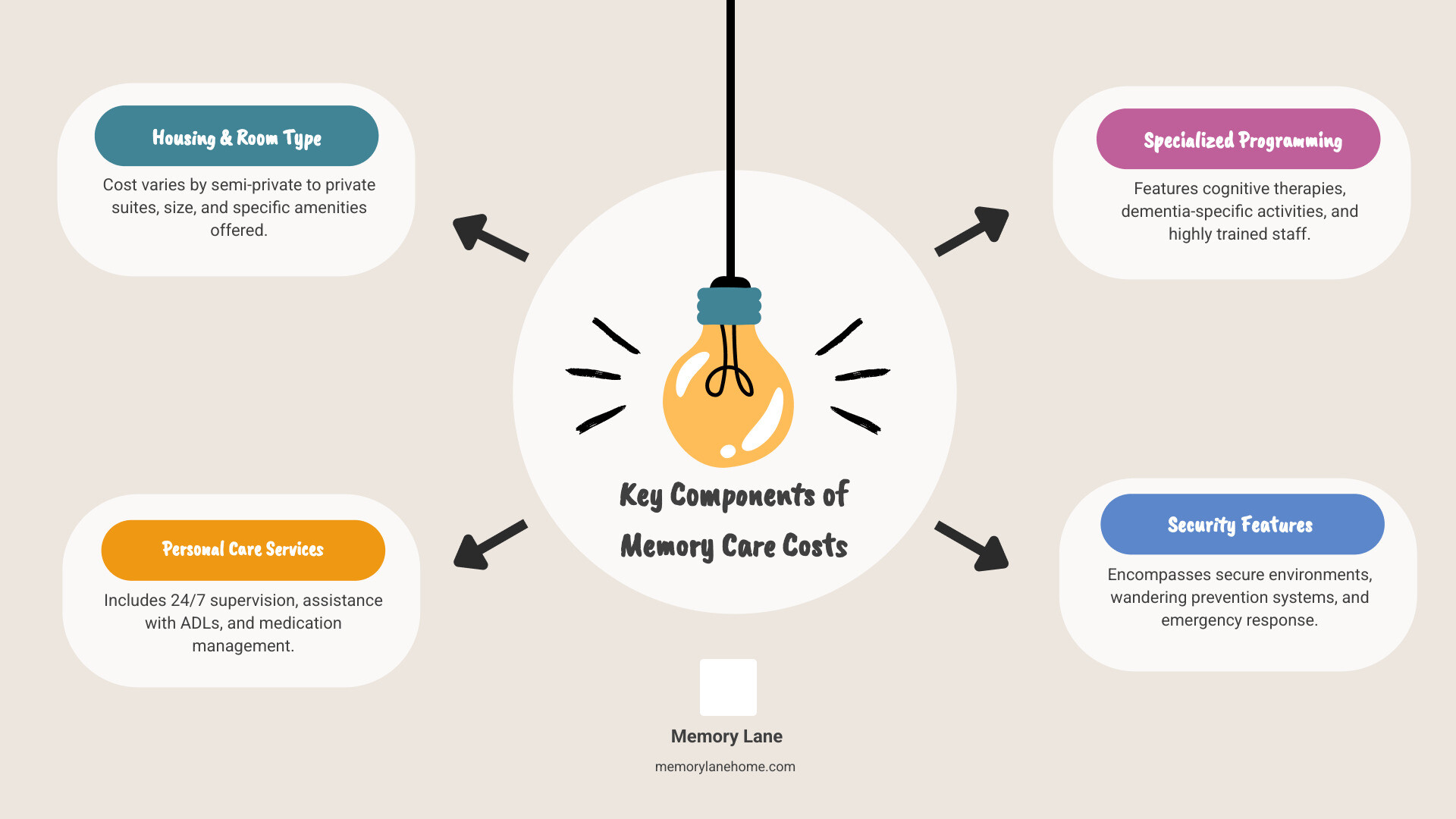
Terms related to memory care facility costs:
The Average Cost of Memory Care in the U.S.
When researching memory care facility costs, you’ll find a wide range of prices. The cost varies significantly based on location and the level of care required.
According to recent data, the national median cost for memory care is around $6,450 per month, or about $77,400 per year. However, this is just a median. The actual range spans from just over $4,000 to more than $11,000 per month, with some recent surveys placing the median even higher.
Geographic location is the single biggest factor driving these cost differences. Areas with a higher cost of living, like the Northeast, naturally have higher memory care prices. To budget accurately, you must research costs in your specific community. Resources like Genworth’s Cost of Care Survey can provide state-level data.
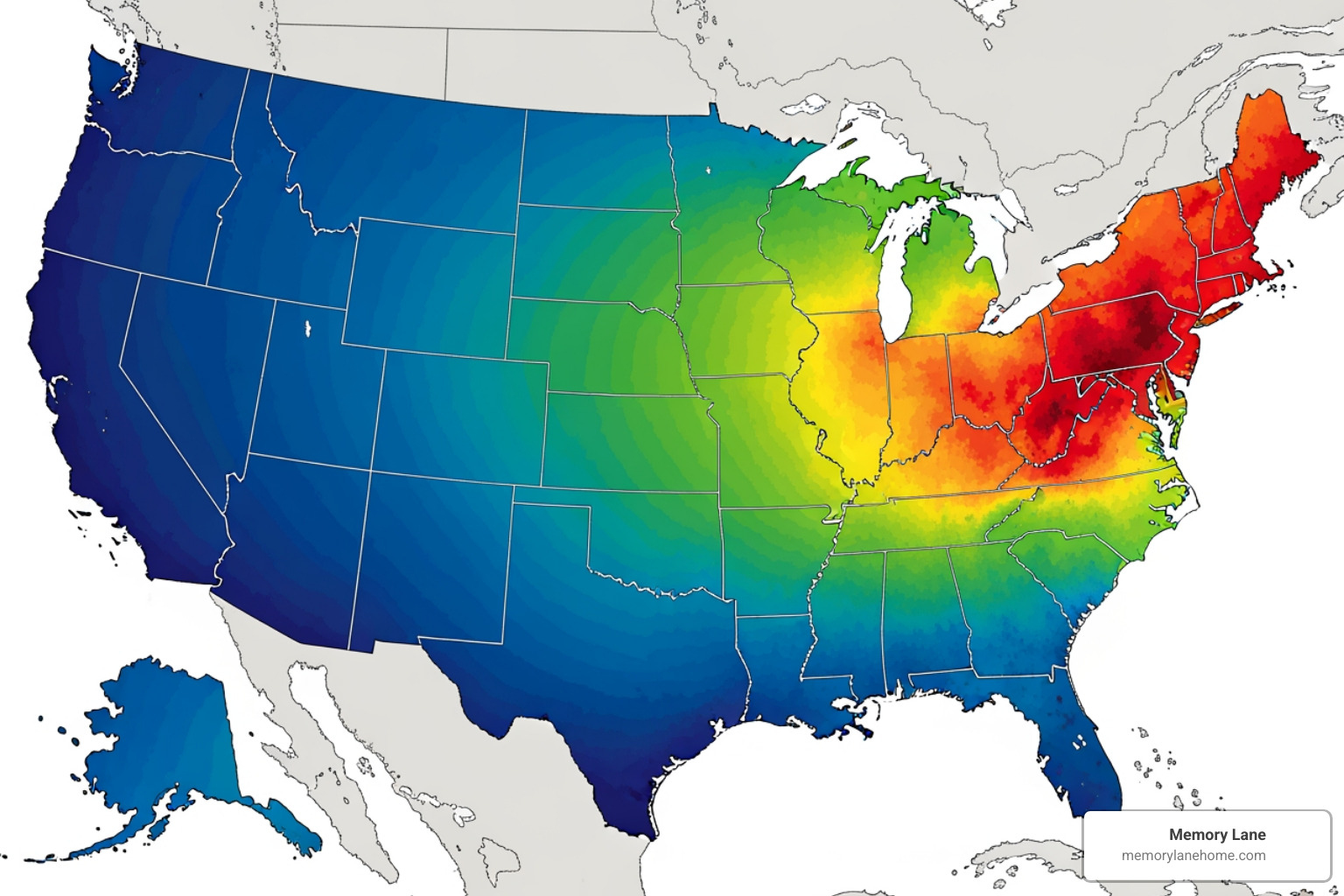
A State-by-State Look at Memory Care Costs
National trends are a good starting point, but local costs are what matter. The most expensive states are often in the Northeast, while more affordable options are typically found in the Southeast.
Here in Michigan, where Memory Lane serves families, recent 2025 data from SeniorLiving.org suggests a median of $7,465 per month, though other sources report lower figures. This variance highlights differences in survey methods and the specific facilities included.
Even within Michigan, costs vary. Urban areas like Ann Arbor have higher memory care facility costs than rural communities, reflecting the local cost of living and demand. When planning, research the specific costs in your city or region by calling local facilities and asking for detailed pricing. While cost is a major factor, it should be balanced with the quality of care, staff expertise, and the overall environment.
What’s Included in the Monthly Fee?
When you see the price tag for memory care facility costs, it’s important to understand that the fee covers comprehensive care, not just a room. Most memory care communities use an all-inclusive model, where a single monthly payment covers nearly everything. However, some use tiered or fee-for-service pricing, so always ask for clarification.
Standard Services and Amenities
Memory care includes more intensive support than standard assisted living. Here’s what is typically covered:
- 24/7 Supervision and Security: Constant monitoring by trained staff in a secure environment with alarmed doors and enclosed outdoor spaces to prevent wandering.
- Assistance with Activities of Daily Living (ADLs): Personalized help with bathing, dressing, grooming, toileting, and mobility.
- Medication Management: Trained staff ensure correct medications and dosages are administered on time.
- Specialized Dementia Programming: Therapeutic activities like reminiscence therapy, cognitive stimulation, and art or music therapy designed to improve quality of life.
- Three Nutritious Meals Daily, Plus Snacks: Prepared meals that accommodate special dietary needs, served in a social setting.
- Housekeeping and Laundry Services: Regular cleaning and laundry to maintain a clean, comfortable living space.
- Social and Recreational Activities: A full calendar of events, from group exercise to social gatherings, to keep residents engaged.
Common Exclusions and Potential Extra Fees
While the monthly fee is extensive, some items usually cost extra. Be sure to ask about:
- Incontinence Supplies: Products like briefs and pads can add $50-$200+ monthly.
- Personal Grooming: On-site salon services like haircuts or manicures.
- Transportation for Personal Appointments: Individual trips outside of scheduled group outings.
- Guest Meals: A per-meal fee for visitors who wish to dine with a resident.
- In-Room Utilities: Cable TV, internet, or a private phone line.
- Annual Rate Increases: Most facilities raise rates 3-8% annually to cover rising operational costs. Factor this into your long-term budget.
Key Factors That Influence Memory Care Facility Costs
Not all memory care is priced the same because care is highly personalized. Several key factors determine the final cost for your loved one.

Level of Care Required
The biggest factor is the amount of support needed, determined by a pre-admission assessment.
- Early-Stage Dementia: Residents who are more independent but need a secure environment, medication reminders, and engaging activities will be at the lower end of the cost spectrum.
- Mid-to-Late-Stage Dementia: As needs intensify, residents may require full assistance with daily activities, management of behavioral symptoms like wandering, and more intensive staff supervision, which increases the cost.
- Co-existing Health Conditions: Chronic conditions like diabetes or heart disease, or significant mobility issues requiring specialized nursing care, will also impact the overall price.
At Memory Lane, our personalized care plans evolve with a resident’s needs, and we communicate transparently about any associated cost changes.
Facility Location and Room Type
Just like real estate, location significantly affects memory care facility costs.
- Geographic Location: Metropolitan areas like Ann Arbor have higher operating costs (real estate, wages) than rural communities, leading to higher prices.
- Room Type: A private room offers more personal space and privacy at a higher cost. A semi-private or shared room is a more budget-friendly option that can also provide companionship.
- Apartment Size and Amenities: Larger rooms, private bathrooms, kitchenettes, or premium views will increase the monthly fee.
- Luxury Amenities: Communities with gourmet dining, spa services, or elaborate gardens will have higher costs. Consider which amenities your loved one will truly use and benefit from.
How Memory Care Compares to Other Senior Living Options
Understanding the senior living landscape helps clarify why memory care facility costs are what they are. Memory care is a specialized service, and its price reflects that.
- Independent Living: For active seniors needing no daily help. Costs are lowest, around $2,500-$3,500/month.
- Assisted Living: For seniors needing help with daily activities. Costs typically range from $4,500-$5,500/month.
- Memory Care: For individuals with cognitive impairment. National medians range from $6,450-$7,785/month.
- Nursing Homes: For those needing intensive, skilled medical care. Costs are highest, often $7,500-$9,000+/month.
These numbers only tell part of the story. The value is in the specific services provided.
Memory Care vs. Assisted Living
Memory care costs 20-30% more than assisted living for three key reasons:
- Specialized Staff Training: Staff are trained in dementia communication, behavior redirection, and recognizing changing needs.
- Secure Environment: Facilities are designed to prevent wandering, with features like secured doors and enclosed outdoor spaces, allowing for safe freedom of movement.
- Dementia-Specific Programming: Activities are therapeutic and designed for cognitive impairment, such as reminiscence therapy, sensory stimulation, and structured routines to reduce anxiety.
Memory Care vs. In-Home Care
While keeping a loved one at home is a common first thought, it can be challenging.
- Cost: 24/7 in-home care is often far more expensive than a memory care facility, potentially costing $14,000-$22,000 per month.
- Social Isolation: Even with a caregiver, living at home can be lonely. Memory care provides a built-in community and daily social interaction.
- Safety and Burnout: Homes require significant safety modifications, and the strain of 24/7 caregiving leads to high rates of family caregiver burnout. Memory care provides a purpose-built, safe environment and allows you to be a family member again, not just a caregiver.
What is the average monthly cost of memory care in the United States?
When researching memory care facility costs, you’ll see different figures from various sources. This is because pricing varies based on location, services, and when data was collected.
Generally, the national median cost for memory care ranges from $6,450 to $7,785 per month. Some sources may report lower averages, while others show initial rates approaching $7,900 per month (nearly $95,000 annually).
These figures reflect rising operational costs and increasing demand for specialized dementia care. Use these national averages as a starting point for your budget, but your actual costs will depend on your specific location and your loved one’s care needs.
How do memory care costs vary by state?
Memory care facility costs are heavily influenced by geographic location. Operating expenses like property values, staff wages, and state regulations differ dramatically from one state to another.
States in the Northeast (e.g., Massachusetts, New Jersey) are consistently among the most expensive. States in the Southeast and Midwest often have more affordable options.
In Michigan, recent data shows a median cost of around $7,465 per month, though figures vary by source. Even within the state, costs differ significantly. A facility in a metropolitan area like Ann Arbor will typically charge more than one in a rural town due to a higher local cost of living. When planning, always research prices in your specific city or region.
What services and amenities are typically included in the monthly cost of memory care?
When evaluating memory care facility costs, it’s crucial to know what you’re paying for. The monthly fee in a quality community like Memory Lane typically covers a comprehensive package of services designed for individuals with dementia.
Standard Inclusions:
- 24/7 Supervision and Security: A secure environment with trained staff present at all times.
- Assistance with Activities of Daily Living (ADLs): Help with bathing, dressing, eating, and mobility.
- Medication Management: Administration of medications by trained staff.
- Specialized Dementia Programming: Therapeutic activities like cognitive and sensory stimulation.
- Meals and Housekeeping: Three daily meals plus snacks, and regular housekeeping and laundry services.
- Social and Recreational Activities: A calendar of engaging events and group outings.
Common Exclusions (Extra Fees):
- Incontinence supplies.
- Personal grooming services (e.g., haircuts).
- Transportation for individual appointments.
- Guest meals.
- In-room cable, internet, or phone.
- Intensive one-on-one therapies.
- Annual rate increases (typically 3-8%).
What factors influence the cost of memory care facilities?
Memory care facility costs vary because care is personalized. The price reflects the specific needs of the resident and the characteristics of the facility.
Level of Care Required
The most significant factor is the amount of hands-on support needed. A resident in the early stages of dementia who is largely independent will cost less than a resident in the late stages who requires full assistance with daily activities, mobility, and management of complex behaviors. Co-existing health conditions that require additional nursing oversight also increase costs.
Facility Location and Room Type
- Location: Operating costs are higher in metropolitan areas like Ann Arbor compared to rural towns, which is reflected in the pricing.
- Room Type: A private room costs more than a semi-private (shared) room. The size, layout, and view of the room also affect the price.
- Amenities: Facilities with luxury amenities like gourmet dining, spas, or extensive grounds will have higher monthly fees.
How Memory Care Compares to Other Senior Living Options
To understand memory care facility costs, it’s helpful to compare them to other senior living options. Each type of care is designed for different needs, and the pricing reflects the level of service and specialization provided.
| Care Type | Median Monthly Cost (National) | Typical Resident | Primary Services |
|---|---|---|---|
| Independent Living | $3,000 – $4,500 | Active seniors who need minimal assistance | Housing, social activities, some meals, housekeeping |
| Assisted Living | $4,500 – $5,500 | Seniors needing help with daily activities but not memory-specific care | Housing, meals, ADL assistance, medication reminders, social activities |
| Memory Care | $6,450 – $7,785 | Individuals with Alzheimer’s or dementia requiring specialized support | 24/7 supervision, secure environment, specialized dementia programming, ADL assistance, medication management, all meals |
| Nursing Homes | $8,000 – $9,500 | Individuals requiring skilled nursing care and medical supervision | Skilled nursing care, rehabilitation services, medical monitoring, ADL assistance |
Memory care costs are typically 20-30% higher than assisted living due to specialized staff training, improved security features to prevent wandering, and dementia-specific therapeutic programming.
Compared to 24/7 in-home care, a memory care facility is often more cost-effective and provides the added benefits of a social community, a purpose-built safe environment, and relief from family caregiver burnout. At Memory Lane, we help families find renewed connection by providing expert memory care services.
Potential Long-Term Cost Projections for Alzheimer’s and Related Dementias
While families focus on immediate memory care facility costs, it’s helpful to understand the broader financial outlook for Alzheimer’s disease and related dementias (ADRDs). The projections are sobering and highlight the importance of proactive planning.
According to research, the aggregate formal care cost for ADRDs in the U.S. is projected to reach $1.4 trillion by 2060. When including the value of informal care provided by family, that total could surge to $3.3 trillion. For context, the total cost was an estimated $321 billion in 2022 and could hit $1 trillion by 2050.
Several factors drive these increases:
- An Aging Population: The number of Americans aged 65+ is expected to grow from 55 million in 2020 to 94 million by 2060.
- Rising Prevalence: The number of older Americans with Alzheimer’s is projected to more than double from 6.5 million in 2022 to 13.8 million by 2060.
- Increasing Healthcare Costs: Medical care inflation continues to drive up per-patient costs.
This burden is not distributed evenly, with higher prevalence among Black and Hispanic populations and a significant impact on women, who are disproportionately affected as both patients and caregivers.
These long-term projections are a call to action for families to engage in proactive financial planning and for society to invest in research and innovative care models. At Memory Lane, we believe in having transparent conversations about costs to help families plan for both the present and the future.
A Practical Guide to Paying for Memory Care
After seeing the numbers for memory care facility costs, the next question is, “How do we pay for this?” Most families use a combination of funding sources. Here is a breakdown of the most common payment methods.
Private Pay and Personal Assets
This is the most direct approach, using personal financial resources.
- Savings and Investments: Using funds from savings accounts, mutual funds, stocks, and bonds.
- Retirement Income: From pensions, 401(k)s, IRAs, and Social Security benefits.
- Selling the Family Home: This can provide substantial equity to fund care for years and eliminates the costs of homeownership.
- Reverse Mortgages and HELOCs: These allow homeowners to convert home equity into cash. Always consult a trusted financial advisor before pursuing these complex options.
Navigating Government Programs: Medicare and Medicaid
It’s crucial to understand what government programs will and won’t cover.
- Medicare: A common misconception is that Medicare covers long-term care. Medicare generally does not pay for custodial care in a memory care facility. It covers medical care, such as short-term skilled nursing after a qualifying hospital stay or prescription drugs through Part D. For details, visit Medicare’s website.
- Medicaid: This joint federal and state program can help with long-term care costs for those with limited income and assets. In many states, including Michigan, Home and Community-Based Services (HCBS) waivers can help pay for care in an assisted living or memory care setting. Qualifying often involves an “asset spend-down,” so consulting an elder law attorney is highly recommended. Learn more at Medicaid.gov and your state’s agency.
Strategies for Managing Memory Care Facility Costs
Several other strategies can help make care more affordable.
- Long-Term Care Insurance: If a policy was purchased before a diagnosis, it can significantly reduce out-of-pocket costs. Review the policy for details on benefits and coverage.
- Veterans Benefits: The VA’s Aid and Attendance benefit can provide monthly payments to eligible veterans or surviving spouses to help cover care costs. Contact the VA at (800) 698-2411 or explore their Community Residential Care and Aid and Attendance programs.
- Life Insurance Conversions: Some policies can be converted into funds for long-term care through life settlements or accelerated death benefits.
- Tax Deductions: A portion of memory care costs may qualify as a medical expense tax deduction if your loved one meets the IRS definition of chronically ill. Consult a tax professional.
- Shared or Companion Suites: Opting for a semi-private room can significantly reduce monthly fees.
- Bridge Loans: These short-term loans can cover costs while waiting for other assets, like a home sale, to become available.
- Family Contributions: Pooling resources among siblings and other family members can make a significant difference.
The most important strategy is early planning. Consulting an elder law attorney or financial planner can help you steer your options. The Eldercare Locator can connect you with local resources.
What questions should families ask when evaluating the costs and services of a memory care facility?
When visiting communities in Ann Arbor, Ypsilanti, Saline, or elsewhere, being prepared with the right questions is key. Understanding memory care facility costs requires looking beyond the base price to assess the true value and avoid surprises.
Understanding the Fine Print
- Is the monthly fee all-inclusive, or is it a base rate with added charges for different levels of care?
- How do costs change as a resident’s care needs progress from early to late-stage dementia?
- What is the facility’s policy on annual rate increases? What is the typical percentage?
- Are there one-time community fees, entrance fees, or security deposits? Are they refundable?
- What specific services cost extra (e.g., incontinence supplies, personal grooming, transportation)?
- What are the contract terms for moving out, including the required notice period and any associated fees?
Assessing Value Beyond Price
- What is the staff-to-resident ratio during the day, evening, and overnight?
- What specific dementia care training and certifications do staff members have?
- Can you provide examples of the specialized dementia programming and activities offered?
- How does the community communicate with families about a resident’s care plan and well-being?
- How often are residents’ care needs reassessed, and how are changes to the care plan and costs communicated?
- What security and emergency protocols are in place to ensure resident safety?
- Can we speak with families of current residents about their experiences?
Asking these questions will give you a complete picture of not just the cost, but the quality of life your loved one will experience. At Memory Lane, we welcome these conversations because transparency builds the trust essential for this important decision.
Conclusion
Navigating memory care facility costs can be daunting. With national averages ranging from $6,450 to $7,785 per month, and Michigan’s median around $7,465, the investment is significant. However, these figures represent the specialized, 24/7 care, secure environments, and expert staff that are essential for the well-being of those with dementia.
As this guide has shown, proactive financial planning can make this manageable. By exploring options like long-term care insurance, Medicaid waivers, Veterans benefits, and family contributions, you can create a viable path forward.
The true value of memory care lies beyond the invoice. It’s in the peace of mind that comes from knowing your loved one is safe, the dignity they are shown every day, and the joy they find in specialized activities. It allows you to reclaim your role as a son, daughter, or spouse, rather than an exhausted caregiver.
Seeking professional care is not giving up; it’s an act of love that provides your family member with the expert support they need. The money spent is an investment in their safety, dignity, and quality of life.
As you move forward, use the questions in this guide and seek advice from professionals like elder law attorneys or financial planners. Resources like the Eldercare Locator can provide local assistance.
At Memory Lane, we are committed to transparency and helping you understand our comprehensive memory care services and their costs. We invite you to have an open conversation with us about your needs and concerns. You are not alone on this journey, and with the right information and support, you can find a solution that honors both your loved one and your family.

Related Posts