Residential Dementia Care: 5 Essential Steps for Best Care
Making One of Life’s Most Difficult Decisions
Residential dementia care provides specialized, 24/7 support for individuals with Alzheimer’s disease and other forms of dementia in a secure, structured environment. Here’s what you need to know:
- What it is: Housing communities with trained staff, memory-focused activities, and secure environments designed specifically for dementia
- When to consider: When safety concerns arise at home, care needs exceed family capacity, or caregiver burnout threatens everyone’s wellbeing
- Types available: Memory care units, assisted living with dementia support, nursing homes with specialized units, and continuing care retirement communities
- Key features: Secure environments, dementia-trained staff, structured activities, medication management, and 24/7 supervision
- Cost range: $70,800/year for assisted living to $127,750/year for private nursing home rooms (national averages)
- Funding options: Private pay, long-term care insurance, Medicaid, Veterans benefits, or a combination
Making the decision to move a loved one into residential dementia care is one of the most challenging journeys a family can face. Of the 5.8 million people in the United States living with Alzheimer’s disease and other types of dementia, the majority live in their own homes over the course of their illness. However, research from Johns Hopkins found that more than 90% of patient needs in those with dementia were home safety-related, signaling a critical turning point when home care may no longer be enough.
The reality is this: There often comes a point when your loved one’s safety and care needs exceed what can be provided at home, no matter how much you want to manage it all yourself.
This guide provides a clear, step-by-step path through this complex process. You’ll learn how to recognize the signs that it’s time for a change, steer assessments and financial planning, evaluate communities like Memory Lane, and support your loved one through the transition. Most importantly, you’ll find how to find a place that offers not just care, but safety, dignity, and quality of life.
I’m Jason Setsuda, a Board Certified Emergency Medicine Physician and CFO of Memory Lane Assisted Living, with over 10 years of medical experience and extensive work in residential dementia care as a visiting physician and medical director. Throughout my career, I’ve guided countless families through this difficult decision, combining medical expertise with a holistic understanding of what makes a care community truly supportive.
Recognizing the Need: When to Consider a Care Home

One of the hardest parts of this journey is acknowledging when home care, no matter how dedicated, is no longer the safest or most effective option. We understand the deep emotional connection to keeping loved ones at home, but there are clear indicators that a move to residential dementia care may be necessary for their well-being and yours.
While the majority of people with dementia live in their own homes, a Johns Hopkins study revealed that more than 90% of their patient needs were home safety-related. This statistic speaks volumes about the inherent challenges of managing dementia at home, even in its advanced stages.
Caregiver burnout is a significant concern that we often see. Providing 24/7 care for someone with dementia can lead to greater health problems, physical and emotional burden, and financial strains for caregivers. It’s not a sign of failure to recognize your limits; it’s a sign of love to seek the best possible care.
Increased care needs, especially as dementia progresses, can also manifest as social isolation for the person with dementia, and struggles with medical management for the caregiver. We want to ensure your loved one remains engaged and receives consistent, professional medical oversight.
Signs It Might Be Time for Residential Care
It’s never an easy decision, but recognizing these signs can help you determine if it’s time to explore residential dementia care options:
- Wandering: If your loved one frequently wanders, gets lost, or tries to leave the home unsupervised, their safety is at severe risk. Memory care communities are designed with secure environments to prevent this.
- Frequent Falls: As dementia progresses, balance and mobility often decline, leading to an increased risk of falls. A home environment, especially with stairs or uneven surfaces, can become a hazard.
- Neglecting Personal Hygiene: Difficulties with bathing, dressing, grooming, or toileting can indicate a need for consistent, professional assistance that may be challenging to provide at home.
- Unsafe Cooking Habits: Forgetting to turn off the stove, leaving food unattended, or misusing appliances can lead to fires or other household accidents.
- Medication Errors: Incorrectly taking medications—missing doses, double-dosing, or mixing them up—can have serious health consequences.
- Aggression or Agitation: These behaviors, often stemming from pain, discomfort, fear, or confusion, can become unmanageable and unsafe for both the person with dementia and their caregiver.
- Caregiver Health Decline: Your own health and well-being are paramount. If you’re experiencing severe stress, exhaustion, or your physical health is deteriorating, it’s a clear signal that you need more support.
Understanding the Difference: Types of Residential Dementia Care
When we talk about residential dementia care, it’s important to understand that there isn’t a one-size-fits-all solution. Different facilities cater to varying levels of need.
| Type of Care | Level of Medical Care | Staffing | Typical Resident Needs | Cost Structure |
|---|---|---|---|---|
| Assisted Living | Basic medical oversight, medication management | 24/7 non-medical staff, some licensed nurses | Help with daily activities (ADLs), light supervision | Monthly fee, tiered services |
| Memory Care (Specialized Assisted Living) | Medication management, improved medical oversight | 24/7 specialized dementia-trained staff | Moderate to advanced dementia, wandering, behavioral challenges | Higher monthly fee, comprehensive services |
| Nursing Home (Skilled Nursing Facility) | 24/7 skilled nursing care, medical treatments | Registered Nurses (RNs), Licensed Practical Nurses (LPNs), CNAs | Advanced medical needs, complex health issues, rehabilitation | Daily rate, often covered by Medicare for short-term, Medicaid for long-term |
| Group Home | Varies, often similar to assisted living | At least one caregiver on-site 24/7 | Small, homelike setting, personalized attention | Monthly fee |
| Life Plan Community (CCRC) | Continuum of care: independent, assisted, skilled nursing | Varies by level of care | Independent seniors to those with advanced medical needs | Entrance fee + monthly fees, transitions between care levels |
Let’s break these down further:
- Residential Care Homes / Assisted Living Facilities: These communities provide housing, meals, and supportive services for individuals who need help with daily activities like bathing, dressing, and medication reminders, but do not require 24/7 skilled nursing care. Some assisted living facilities, like Memory Lane, offer specialized units specifically for dementia care.
- Memory Care Units (Specialized Assisted Living): This is where facilities like Memory Lane shine. These units are designed specifically for individuals with Alzheimer’s and other dementias. They feature secure environments to prevent wandering, staff specially trained in dementia behaviors and compassionate management strategies, and structured activities custom to cognitive abilities. Studies show that seniors living in memory care communities often experience a higher quality of life than when they live at home. Our programs, for example, focus on a person-centered approach to improve well-being and purpose.
- Nursing Homes (Skilled Nursing Facilities): These are for individuals who require 24-hour skilled nursing care, intensive medical treatments, or rehabilitation services. While some nursing homes have specialized dementia units, the primary distinction is the constant presence of licensed medical professionals.
- Group Homes: These are smaller, homelike settings where several individuals live together with at least one caregiver on-site at all times. They can offer a more intimate, personalized environment.
- Continuing Care Retirement Communities (CCRCs) / Life Plan Communities: These offer a tiered approach, providing independent living, assisted living, and skilled nursing care all within one community. This allows residents to transition between different levels of care as their needs evolve, often without having to move to a new location.
For many families in Michigan, especially in areas like Ann Arbor, Ypsilanti, and Saline, exploring specialized memory care within an assisted living setting, like what we offer at Memory Lane, provides the ideal balance of personalized support, engaging activities, and a secure environment.
Navigating the System: Assessments, Legal, and Financial Planning
Before we can even begin to choose a specific residential dementia care community, there are crucial preliminary steps involving assessments, legal preparations, and financial planning. These steps ensure your loved one’s needs are properly identified, their wishes are honored, and the financial burden is understood and managed.
Necessary Assessments Before a Move
We can’t stress enough the importance of getting thorough assessments. These provide a comprehensive picture of your loved one’s condition and needs:
- Social Services Needs Assessment: This is often the first step. You can apply for a needs assessment through your local social services department. These assessments are usually free and identify the level of support your loved one requires, which can help determine the most appropriate type of care setting.
- Clinical Evaluation: A physician’s assessment is vital to determine the specific type and stage of dementia. This evaluation will guide the medical care and specialized programming needed in a residential dementia care facility.
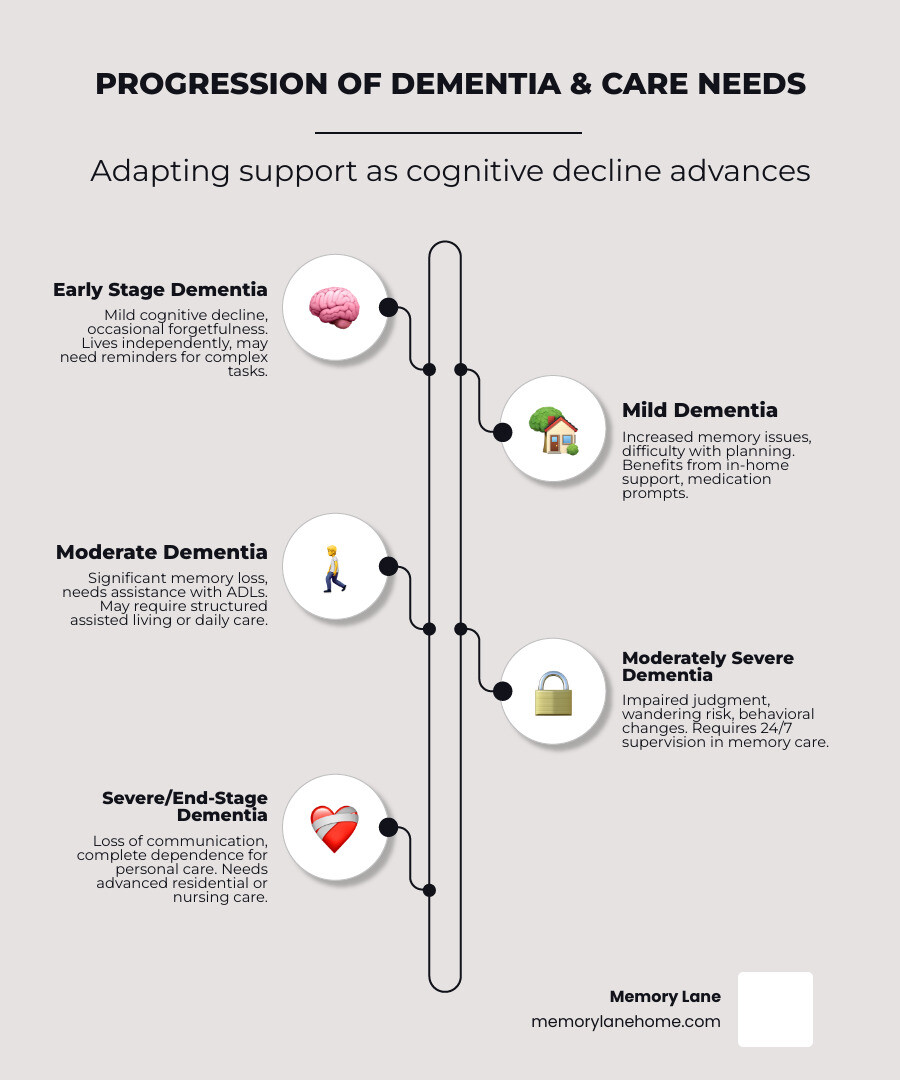
- Dementia Staging: Understanding the stage of dementia (early, middle, or late) helps in selecting a community that can best cater to their cognitive and functional abilities. For instance, Memory Lane offers programs for different stages of dementia, from early to advanced, acknowledging the evolving needs.
- Functional Abilities Assessment: This assessment evaluates your loved one’s ability to perform Activities of Daily Living (ADLs) such as bathing, dressing, eating, and mobility. It also looks at Instrumental Activities of Daily Living (IADLs) like managing finances or preparing meals. This helps determine the level of assistance required.
Legal Preparations for Residential Dementia Care
Planning ahead legally is essential, especially as many people with dementia will eventually lose the mental capacity to make their own decisions. We encourage families to address these documents early:
- Lasting Power of Attorney (LPA): This legal document allows your loved one (while they still have mental capacity) to appoint someone they trust to make decisions on their behalf. There are two types: one for health and welfare decisions (e.g., medical treatments, care choices) and another for property and financial affairs (e.g., managing bank accounts, paying bills).
- Advance Care Plans (ACP): An ACP outlines your loved one’s wishes regarding their future care, medical treatments, and end-of-life decisions. This ensures their preferences are respected even if they can no longer communicate them.
- Guardianship: If your loved one has already lost mental capacity and an LPA was not put in place, you may need to apply for guardianship through the courts. This is a more complex and often more expensive process. The Alzheimer’s Association offers valuable guidance on legal planning for individuals with dementia.
Understanding the Costs and Funding Options
The cost of residential dementia care is a significant concern for many families. We want you to be fully informed about the financial aspects:
- National Average Costs: The cost varies widely depending on the type of facility and location. Nationally, the average cost for basic services in an assisted living setting is around $70,800 per year. For a private room in a nursing home, the average cost is approximately $127,750 per year, and a semi-private room averages $111,324 per year. These figures give us a general idea, but specific costs in Michigan, including Ann Arbor, Ypsilanti, and Saline, will depend on the community and level of care.
- Private Pay: Many families initially cover costs through private savings, pensions, or long-term care insurance.
- Long-Term Care Insurance: If your loved one has a long-term care insurance policy, review it carefully to understand what services are covered and what the eligibility requirements are.
- Medicare: It’s important to know that Medicare generally does not cover the cost of long-term residential care in a community. It primarily covers short-term skilled nursing care after a hospital stay or specific home health services.
- Medicaid: Medicaid is a state and federal program that provides health coverage to low-income individuals. Eligibility for Medicaid to cover residential dementia care (specifically nursing home care or some assisted living services) is based on strict income and asset limits, which vary by state. Consulting an elder care lawyer can be beneficial if Medicaid planning is necessary.
- Veterans Benefits: Veterans and their spouses may be eligible for certain benefits, such as the Aid and Attendance program, which can help cover the costs of assisted living or in-home care. We encourage exploring resources like Benefits.gov and BenefitsCheckUp to find federal and state benefit programs that may be able to help save money and access care and support.
If you’re entitled to local council funding (in some states), the council may set a personal budget outlining their contribution and what you’ll need to pay. Sometimes, “top-up fees” are required if the chosen facility’s cost exceeds the council’s budget.
The Search: Choosing the Right Residential Dementia Care Community
Now that we’ve covered the assessments and financial planning, it’s time for the exciting (and sometimes daunting) part: finding the perfect residential dementia care community. This is where your research, intuition, and a keen eye will be your best allies. Our goal at Memory Lane is to partner with families to provide specialized, person-centered care that improves residents’ quality of life and independence.
When choosing a residential care setting, we recommend a thorough approach. Visit multiple facilities, and if possible, make both scheduled and unannounced appointments. Talk with staff, residents, and their families during these visits. The Alzheimer’s Association & AARP Community Resource Finder can be a great tool to locate local resources, including residential care communities in Michigan, such as Ann Arbor, Ypsilanti, and Saline.
Key Factors to Evaluate in a Care Community
Here’s a list of essential questions and factors to consider when touring a potential residential dementia care community:
- Staff Qualifications and Training:
- Are staff trained specifically in dementia care? How long is the training, and what topics are covered (e.g., person-centered care, communication, challenging behaviors)?
- What is the resident-to-staff ratio, especially during evenings and weekends?
- What is the staff turnover rate? High turnover can indicate issues.
- How does staff handle challenging behaviors (e.g., aggression, wandering) without resorting to sedation? Memory care communities, like ours, use non-pharmacological interventions.
- Programs and Services (Engagement Activities):
- What activities are planned daily? Are they custom to individual needs, interests, and abilities? Are activities available on weekends and evenings?
- Is there a safe outdoor space for residents to enjoy?
- Which therapies (e.g., occupational, physical, speech) are offered?
- Are religious services or celebrations available?
- Resident Well-being and Environment:
- Do residents appear comfortable, relaxed, and engaged? Are they well-groomed and clean?
- Is the environment free of unpleasant odors?
- Do indoor spaces allow freedom of movement and promote independence? Are they easy to steer?
- Are the indoor and outdoor areas safe and secure (e.g., secured exits to prevent wandering)?
- Are rooms clean and spacious? Are residents allowed to bring familiar items to personalize their space?
- Dining Experience:
- Are there regular meal and snack times, or is there flexibility? Is the food appetizing and appealing?
- Is the dining environment pleasant and comfortable?
- Does staff have a plan for monitoring adequate nutrition and accommodating special dietary needs?
- How is assistance provided during meals for those who need it?
- Policies and Communication:
- Are families encouraged to participate in care planning and communicate with staff?
- What are the visiting hours? Are they flexible?
- What is the discharge policy? Under what conditions might a resident be discharged?
- Is continuing care available as needs change (an “aging in place” policy)?
- Does the community provide an escort to the emergency room if a visit is required?
- Does the community provide end-of-life or hospice care?
Using Inspection Reports and Regulatory Information
We strongly encourage you to use all available resources to verify the quality of any residential dementia care community you consider.
- State Licensing Reports: In Michigan, assisted living facilities and nursing homes are licensed and regulated by the state. You should be able to access their inspection reports, which detail any violations or deficiencies found during routine inspections.
- Medicare’s Care Compare Tool: For nursing homes, Medicare provides an online tool called Care Compare. This allows you to find and compare Medicare-certified nursing homes in your area, providing detailed information about their past performance and quality ratings.
- Accreditation and Quality Standards: While not all facilities are accredited, some may be by organizations like the Joint Commission on the Accreditation of Healthcare Organizations (JCAHO). Accreditation signifies that a facility meets high standards of care.
By diligently reviewing these factors and reports, you can make a much more informed decision about where your loved one will receive the best possible care.
The Transition: Supporting Your Loved One and Yourself
The move to residential dementia care is a significant life event. It’s a time of change for everyone involved, and we understand the emotional rollercoaster that families often experience. Our goal is to help make this transition as smooth as possible for your loved one and to provide support for you, the caregiver.
Making the Move as Smooth as Possible
- Involving Your Loved One (as appropriate): Even with cognitive decline, we can involve our loved ones. Focus on simple, calm discussions. Offer limited choices (e.g., “Which blanket would you like to bring?”) rather than overwhelming questions. Focus on tangible aspects they can understand, like the comfort of a room or the beauty of a garden. Honor their feelings and reactions during visits.
- Personalizing Their New Room: Familiarity brings comfort. We encourage bringing cherished photos, a favorite blanket, a comfortable chair, or other personal items to make their new room feel like home. This helps create a sense of continuity.
- Creating a “Life Story” Book for Staff: This is a wonderful tool. A small book or binder detailing your loved one’s life—their career, hobbies, family stories, preferences, routines, and even quirky habits—can help staff connect with them on a deeper level and provide truly person-centered care.
- Establishing a Routine: Dementia thrives on routine. Try to establish a consistent visiting schedule in the beginning, and help your loved one adjust to the community’s daily rhythm.
- Planning Your First Few Visits: Keep early visits positive, calm, and relatively short. Focus on engaging activities rather than long conversations about the move.
- Communicating with the Care Team: We encourage open and regular communication. Share any concerns, observations, or changes in your loved one’s condition with the staff. They are your partners in care.
Coping with the Emotional Journey
It’s okay to feel a mix of emotions during this time. Many caregivers experience feelings of loss, sadness, guilt, or even relief. These are all normal responses to a profound life change.
- Acknowledging Your Feelings: Give yourself permission to feel whatever you feel. There’s no right or wrong way to grieve or cope with such a difficult decision.
- Finding a Caregiver Support Group: Connecting with others who are going through similar experiences can be incredibly validating and helpful. Support groups provide a safe space to share feelings and strategies. The Family Caregiver Alliance offers valuable support services for caregivers.
- Focusing on Quality of Visits: Once your loved one is settled, your role shifts. Focus on enjoying quality time together. You are no longer the primary caregiver, but still a vital part of their life. Engage in activities they enjoy, share stories, or simply sit together.
- Connecting with Others Online: Online communities, like ALZConnected, can provide a platform to connect with other caregivers, share advice, and find emotional support from people who understand your journey.
Ensuring Continuity of Care Post-Move
The transition doesn’t end after moving day. We believe in fostering strong partnerships between families and our care team to ensure continuity and quality of care.
- Regular Communication with Staff: Schedule regular check-ins with the care team. This can be through phone calls, emails, or in-person meetings. Share any observations from your visits.
- Participating in Care Plan Meetings: You have a right to participate in your loved one’s care plan meetings. These are opportunities to discuss their progress, address concerns, and contribute to their personalized care strategy.
- Advocating for Your Loved One’s Needs: Continue to be their voice. If you notice something that seems off or if their needs change, don’t hesitate to speak up and advocate for them.
- Monitoring for Changes in Condition: Be observant during your visits. Report any changes in mood, behavior, appetite, or physical health to the staff promptly. Your insights are invaluable.
Frequently Asked Questions about Residential Dementia Care
What is the main difference between a memory care community and a standard assisted living community?
Memory care communities are secure environments specifically designed for individuals with dementia. They feature specially trained staff, dementia-focused activities, and environmental cues to reduce confusion, which are not standard in general assisted living. For example, Memory Lane’s communities in Ann Arbor, Ypsilanti, and Saline are designed with these specialized features.
How can I involve my loved one in the decision if they have cognitive decline?
Even with cognitive decline, you can involve them by discussing preferences in a simple, calm manner. Focus on tangible aspects like the feel of a room or the look of a garden. Offer limited choices to avoid overwhelm and honor their feelings and reactions during visits.
What happens if my loved one’s needs increase after moving in?
Most communities, especially those with “aging in place” policies, will conduct regular assessments and adjust the care plan. This may involve adding more services or, in some cases, recommending a move to a higher level of care, if available within the community. For instance, our specialized programs offer different levels of support for various stages of dementia, allowing for adjustments as needs evolve.
Conclusion
Choosing the right residential dementia care is a journey of research, careful consideration, and compassion. By understanding when it’s time, what to look for in a community, and how to steer the transition, you can ensure your loved one receives the support, dignity, and quality of life they deserve.
We recognize that this decision is never made lightly, and it often marks a new chapter for both the individual with dementia and their family. The importance of early planning, prioritizing person-centered care, and focusing on enhancing quality of life cannot be overstated. Communities like Memory Lane are dedicated to partnering with families to provide this specialized, compassionate care, ensuring your loved one can continue to live a purpose-filled life.
To learn more about our specialized dementia care services and how we can support your family in Michigan, please visit our website.