
Oakland County senior care: 2025 Perfect Guide
Navigating Senior Care in Oakland County: An Introduction
Oakland County senior care encompasses a wide range of services and support systems designed to help older adults maintain their independence, health, and quality of life. Whether you’re seeking in-home assistance, exploring community-based programs, or researching residential care options like assisted living or memory care, Oakland County offers comprehensive resources through local government agencies, nonprofit organizations, and specialized care providers.
Quick Overview of Oakland County Senior Care Resources:
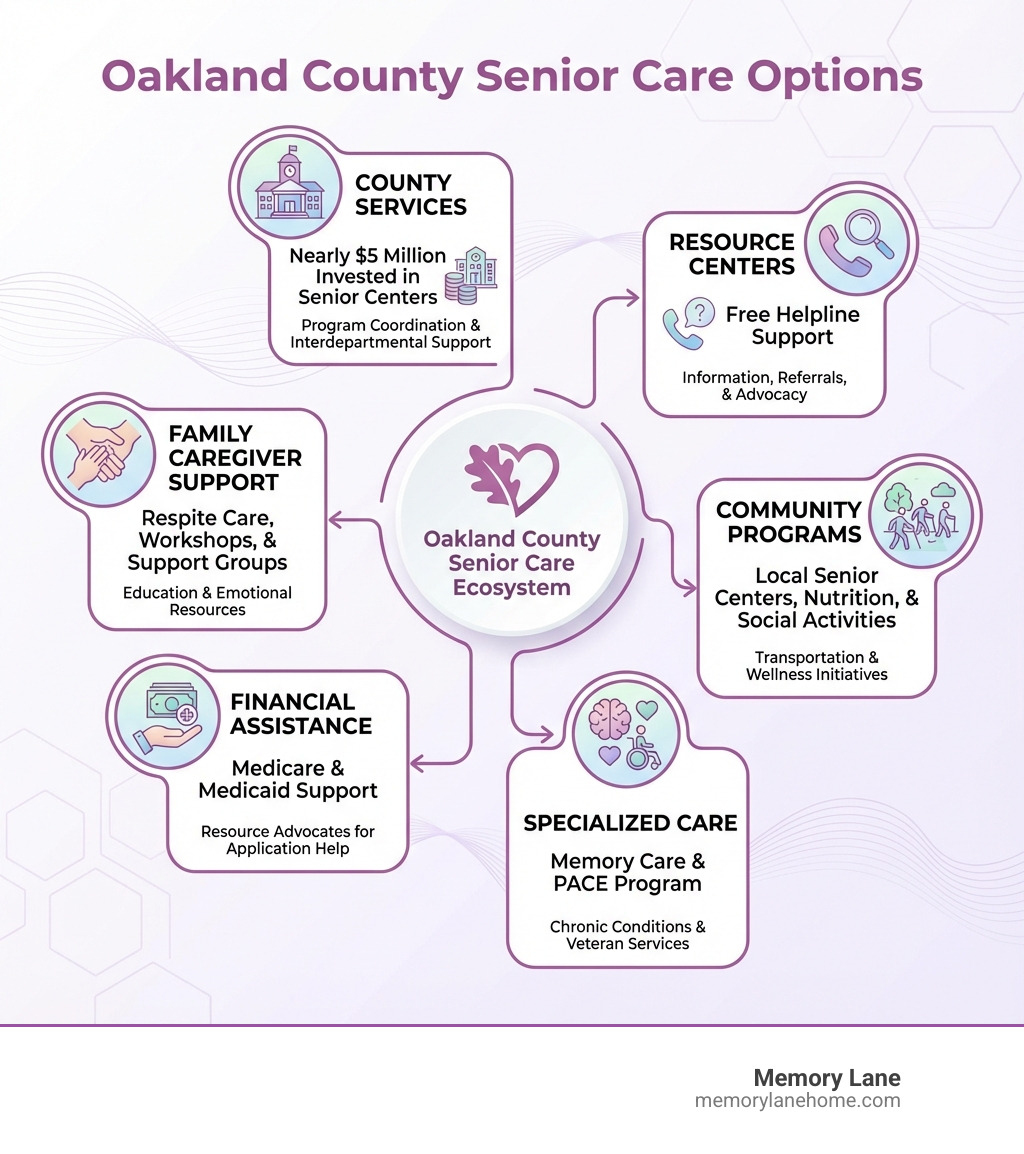
- County Services: Office of Older Adult Services coordinates programs, senior centers, and interdepartmental support
- Resource Centers: AgeWays Nonprofit Senior Services (formerly Area Agency on Aging 1-B) provides free helpline at 800-852-7795
- Financial Assistance: Help with Medicare, Medicaid, and SNAP applications through Resource Advocates
- Community Programs: Senior centers, nutrition services, transportation, and social activities
- Specialized Care: Memory care facilities, PACE program for chronic conditions, veteran services
- Family Support: Respite care, caregiver workshops, and support groups
Oakland County has made significant investments in its aging population. The county invested nearly $5 million to improve senior centers and provided over $3.2 million in pandemic support for nursing home residents and grocery delivery services. With the number of Americans aged 60 and over projected to more than double by 2030—meaning one in every five Americans will be in this age group—the need for comprehensive senior care has never been more critical.
The challenge many families face is navigating this complex landscape of options. From understanding the difference between assisted living and memory care to finding the right balance of independence and support, the decisions can feel overwhelming. This is especially true when a loved one begins showing signs of cognitive decline or dementia, requiring specialized environments that prioritize both safety and dignity.
I’m Jason Setsuda, CFO of Memory Lane Assisted Living and a Board Certified Emergency Medicine Physician with over 15 years of experience in healthcare and business management across Metro Detroit, including extensive work with Oakland County senior care resources and memory care communities. Through my roles as Medical Director for hospice and visiting physician services, I’ve guided countless families through the journey of finding compassionate, appropriate care for their loved ones.
Understanding the Spectrum of Senior Living Options
As our loved ones age, their needs evolve, and so do the types of support available. Navigating the diverse landscape of senior living options can feel like deciphering a complex puzzle, but understanding the distinctions is the first step toward finding the perfect fit. In Oakland County senior care, we’re fortunate to have a wide array of choices, from in-home assistance that allows seniors to age in place, to vibrant independent living communities, supportive assisted living facilities, and specialized memory care environments.
Let’s explore these options to help us better understand what might be right for our families:
-
In-Home Care: This option allows seniors to remain in the comfort of their own homes while receiving assistance with daily tasks. Services can range from companionship, meal preparation, and light housekeeping to personal care, medication reminders, and even skilled nursing care. Many providers focus on the important aspects of elder care beyond physical tasks, such as social engagement and mental stimulation to maintain health and wellness. This can be an excellent choice for those who cherish their independence but need a little extra help to stay safe and comfortable.
-
Independent Living: Designed for active, self-sufficient seniors who desire a maintenance-free lifestyle with opportunities for social engagement. These communities offer amenities such as chef-prepared meals, fitness centers, social activities, and transportation, all within a secure and vibrant environment. These communities are perfect for those who want to shed the responsibilities of home ownership and enjoy their golden years surrounded by peers.
-
Assisted Living: When a senior needs more consistent support with Activities of Daily Living (ADLs) such as bathing, dressing, grooming, and medication management, assisted living becomes a vital option. These communities provide personalized care plans, 24-hour assistance, and a balance of independence and support. They often include dining services, social programs, and health monitoring, with a focus on individualized care from skilled professionals.
-
Memory Care: This is a specialized form of care designed specifically for individuals living with Alzheimer’s disease or other forms of dementia. Memory care communities, such as Memory Lane, offer secure environments, specially trained staff, and programs custom to the unique needs of residents with cognitive impairments. The focus is on creating a familiar, safe, and engaging routine that improves quality of life, reduces anxiety, and supports cognitive function. This level of care is crucial when safety becomes a primary concern due to wandering, confusion, or complex behavioral needs.
Distinguishing Between Care Levels
Understanding the nuances between these options is key to making an informed decision for Oakland County senior care. Here’s a comparison to highlight the primary differences:
| Feature | Independent Living | Assisted Living | Memory Care |
|---|---|---|---|
| Level of Assistance | Minimal to none; focus on convenience and amenities | Assistance with 2-3 Activities of Daily Living (ADLs) | High level of supervision and structured support for ADLs |
| Environment | Private apartments/homes within a community; active, social | Private/semi-private apartments; supportive, engaging | Secure, specialized units/communities; calming, familiar |
| Typical Resident | Active, self-sufficient seniors seeking community/amenities | Seniors needing help with daily tasks but largely independent | Individuals with cognitive impairments (dementia, Alzheimer’s) |
| Cost Structure | Rent, utilities, meal plans, amenity fees | Base rent + care level fees (tiered or à la carte) | Often higher due to specialized staffing and security |
Finding the Right Level of Oakland County Senior Care
Choosing the right level of Oakland County senior care for a loved one is a profoundly personal decision. We recommend a thoughtful approach that considers several factors:
-
Assessing Needs (ADLs): Start by honestly evaluating your loved one’s current abilities and challenges. Do they need help with bathing, dressing, eating, or using the restroom? Are they managing their medications independently? Assistance with practical tasks like scheduling appointments, meal preparation, and medication reminders can significantly improve a senior’s well-being. A formal assessment by a healthcare professional can provide an objective view of their functional capabilities.
-
Budget Considerations: Costs vary significantly across senior living options. While specific figures are always best obtained directly from providers, understanding your financial resources and potential assistance programs (which we’ll discuss later) is crucial.
-
Location Preferences: Proximity to family and familiar surroundings is often a top priority. Oakland County senior care offers options across its diverse communities, from urban centers to more suburban settings.
-
Social and Activity Needs: Does your loved one thrive in social settings, or do they prefer quieter activities? Independent and assisted living communities often boast robust activity calendars, while memory care focuses on therapeutic engagement custom to cognitive abilities. Senior centers, as we’ll see, are also fantastic hubs for social connection.
-
Tips for Evaluating the Best Fit: When exploring options, many families find it helpful to work with local senior care advisors who can provide a personalized approach. This process typically involves:
- Phone Assessment: Discussing needs, preferences, and questions.
- Consultation: Reviewing options based on needs, location, and budget.
- Making a Plan: Collaborating on clear steps and goals.
- Community or Care Home Selection: Scheduling tours and getting assistance with paperwork.
- Ongoing Support: Ensuring needs are met even after the move.
The goal is to find an environment where your loved one can thrive, maintain dignity, and enjoy the highest possible quality of life.
A Comprehensive Guide to Oakland County Senior Care Resources
Oakland County senior care extends far beyond residential living options, encompassing a vibrant network of community-based services designed to support older adults and their families. We are committed to ensuring our growing older adult population has access to a “whole host of services,” as articulated by Oakland County officials. These resources play a crucial role in promoting social connection, health and wellness, nutritional support, and recreational activities, all aimed at improving the quality of life for seniors.
The county’s commitment is evident in its establishment of an Office of Older Adult Services, which centralizes information and drives improvements for seniors. During the early days of the COVID-19 pandemic, Oakland County demonstrated its dedication by investing $3.2 million to equip nursing home residents with PPE, testing, and vaccinations, and by providing free grocery delivery services to over 5,500 older residents. This proactive approach highlights the county’s understanding of the diverse needs of its senior community.
Key Resources for Oakland County Senior Care
When we look for support systems, several organizations stand out in providing comprehensive Oakland County senior care:
-
AgeWays Nonprofit Senior Services (formerly Area Agency on Aging 1-B): For 50 years, AgeWays has been a cornerstone for seniors and their families in Southeast Michigan, including Oakland County. They offer a no-cost telephone helpline at 800-852-7795 (available Monday-Friday, 8 am-5 pm) to help us find programs, information, and resources. Their Resource Center guides individuals to assistance with care, housing, food, and utility needs. AgeWays also helps connect seniors with government-funded programs for in-home care, Meals on Wheels, and transportation options. They are a vital resource for navigating the often-complex world of senior services. We can also follow them on social media for updates: Facebook and Instagram.
-
Oakland Livingston Human Service Agency (OLHSA): OLHSA is another critical collaborator, offering comprehensive human services, particularly for older adults. Their Resource Advocates assist older adults with vital benefit applications, including Medicare, Medicaid, and SNAP. They also run the Grandparents Raising Grandchildren (GRG) program, providing workshops, support groups, and home visits for these unique family structures. OLHSA is funded in part by the Older Americans Act and through AgeWays, demonstrating a collaborative effort to support our seniors. We can get involved by making donations to support older adult services: Donate to OLHSA.
-
PACE (Program of All-Inclusive Care for the Elderly) Southeast Michigan: PACE is a unique health plan funded by Medicare and Medicaid, designed for individuals aged 55 or older with chronic health conditions or disabilities. The program’s mission is to keep seniors in their homes and communities longer by providing all-inclusive, coordinated medical care under one roof. PACE Southeast Michigan serves Macomb, Wayne, and Oakland counties, offering medical services, a day center for social and mental health needs, home care services, and medically necessary transportation. As they say, “There is nothing like PACE. They do so much for us and with us.” We can learn more about this incredible program: Discover PACE Southeast Michigan and Step up to more with PACE Southeast Michigan.
-
Senior Centers: These community hubs are indispensable for Oakland County senior care. The county has invested nearly $5 million toward improving senior centers across the county, recognizing their importance for social connection, services, and programming. They offer a network of friends, educational and nutritional programs, and a wide array of activities that promote engagement, activity, and health. We can find our local senior center through the Oakland County website.
Support for Family Caregivers
Caring for an aging loved one can be challenging, and we understand the immense dedication it requires. Thankfully, Oakland County senior care resources also focus on supporting family caregivers.
-
Respite Care: In-home care agencies and adult day programs can provide temporary relief for family caregivers, allowing them to take a much-needed break, attend to personal needs, or simply recharge. Respite care can be provided in a senior’s own home or through community-based programs.
-
Adult Day Programs: AgeWays helps connect caregivers with adult day programs, which offer supervised care and engaging activities for seniors during the day, providing caregivers with time off while ensuring their loved ones are in a safe and stimulating environment.
-
Workshops and Support Groups: AgeWays offers workshops, such as “Powerful Tools for Caregivers,” and OLHSA provides support groups and workshops for grandparents raising grandchildren. These programs equip caregivers with strategies, emotional support, and a sense of community. AgeWays helps family caregivers by connecting them with services like adult day programs and workshops, which you can learn more about on their caregiver resources page.
-
Information and Guidance: The AgeWays Resource Center and OLHSA’s Resource Advocates are invaluable for caregivers seeking guidance on navigating services, understanding care options, and accessing support systems.
Seeking support is a sign of strength, and these resources are here to help us sustain our caregiving journey.
Specialized Support for Veterans, Chronic Conditions, and More
Oakland County senior care is designed to be inclusive, offering specialized programs and initiatives that cater to the unique needs of various senior populations. We recognize that one size does not fit all, and custom support can make a profound difference in the quality of life for our older adults.
-
Support for Veterans: We owe a debt of gratitude to our veterans, and Oakland County ensures they receive the benefits they’ve earned. The Oakland County Veterans Services team provides crucial information and assistance regarding veteran benefits and resources. They have offices in Pontiac (248-858-0785) and Troy/South Oakland (248-655-1250). These dedicated teams help veterans and their families steer complex systems to access healthcare, financial aid, and other entitlements.
-
Programs for Chronic Health Conditions: For seniors managing chronic health conditions or disabilities, programs like PACE Southeast Michigan (Program of All-Inclusive Care for the Elderly) are transformative. As discussed, PACE is a unique Medicare and Medicaid funded plan for individuals aged 55 or older who meet specific criteria. It provides comprehensive, coordinated medical care, often allowing participants to remain in their homes. This all-inclusive model ensures that medical, psychosocial, and spiritual needs are met, with services ranging from medical care to therapies, nutrition, and even medically necessary transportation.
-
Elder Abuse Prevention: Protecting our vulnerable seniors from abuse, neglect, and exploitation is a top priority. The Oakland County Health Division is actively involved in this through the S.A.V.E. Task Force (Safe Against Vulnerability in Elder Abuse). This initiative focuses on prevention, education, and intervention to safeguard older adults in our community. We can contact Nurse on Call at 800-848-5533 or noc@oakgov.com for health-related inquiries, which can include reporting concerns.
-
Grandparents Raising Grandchildren (GRG): The demographics of modern families sometimes mean grandparents step into primary caregiving roles. OLHSA’s GRG program provides essential support for these dedicated grandparents in Oakland County. This includes workshops, support groups, home visits, and intergenerational activities, helping them steer the unique challenges of raising children in their golden years.
These specialized services underscore Oakland County’s commitment to addressing the diverse needs within our senior community, ensuring that everyone has access to the support systems vital for their well-being.
Financial and Practical Assistance Programs
Navigating the financial landscape of senior care can be daunting, but Oakland County senior care offers several programs designed to provide financial and practical assistance, ensuring that cost is not an impossible barrier to quality of life.
-
Medicare, Medicaid, and SNAP Benefits: For assistance with these critical programs, we can turn to OLHSA’s Resource Advocates. These professionals are experts in helping older adults apply for and understand their eligibility for Medicare, Medicaid, and the Supplemental Nutrition Assistance Program (SNAP). Similarly, AgeWays offers the Michigan Medicare Assistance Program (MMAP), providing free, unbiased counseling on Medicare and related health insurance issues. This support is invaluable for maximizing benefits and managing healthcare costs. The AgeWays helpline (800-852-7795) is a great first point of contact for these inquiries.
-
Senior Market FRESH Program: This wonderful initiative provides coupon vouchers to eligible older adults to purchase Michigan-grown fruits, vegetables, herbs, spices, and honey from local farmers’ markets. It’s a fantastic way to improve nutritional intake while supporting local agriculture.
-
Emergency Senior Cell Phone Program: Safety and security are paramount. The Oakland County Sheriff’s Office provides a free Emergency Senior Cell Phone Program for Oakland County Senior Citizens. These phones are for emergency use only and come with no monthly service fee, offering peace of mind for seniors and their families. We can obtain these phones by visiting the Sheriff’s Office at 1200 North Telegraph Road, Building 38E, Pontiac, Michigan 48341 on Fridays from 9 a.m. to noon.
-
Free Annual Vehicle Permit for Parks: Staying active and engaged with nature is crucial for senior well-being. Older adults (ages 62 and up) in Oakland County can receive a free Annual Vehicle Permit to access eight of the 14 Oakland County Parks. This encourages outdoor activity, social interaction, and connection with the beautiful natural spaces our county offers. We can call 248-858-0916 or email info@oaklandcountyparks.com for more information.
-
Housing Assistance (Reverse Mortgages): The Neighborhood Housing and Development Division offers information and counseling on reverse mortgages for eligible seniors aged 62 or older. Housing Counselors are available to explain this option, which can provide financial stability by converting home equity into cash. We can contact them at 248-858-5402.
These programs exemplify how Oakland County senior care aims to provide holistic support, addressing not only health and social needs but also crucial financial and practical challenges.
Frequently Asked Questions about Senior Care in Oakland County
We understand that you likely have many questions as you steer the options for Oakland County senior care. Here, we address some of the most common inquiries to help clarify the path forward.
How do I start the search for senior care in Oakland County?
The best place to begin your search for Oakland County senior care is by reaching out to local senior services offices or resource centers. Organizations like AgeWays Nonprofit Senior Services (formerly Area Agency on Aging 1-B) offer a no-cost telephone helpline (800-852-7795) and a Resource Center specifically designed to guide seniors and their families. They can provide a personalized assessment of needs and connect you with relevant programs, information, and resources. Similarly, the Oakland County Office of Older Adult Services website (www.oakgov.com/community/older-adults) is a comprehensive hub for county-specific resources and contact information. We recommend starting with a conversation to identify specific needs, whether it’s for in-home support, community activities, or residential care.
What financial assistance is available for senior care?
Financial assistance for Oakland County senior care is available through several key programs. Medicaid and Medicare are primary federal and state programs that can cover various healthcare and long-term care costs. OLHSA’s Resource Advocates specialize in assisting older adults with applications for both Medicare and Medicaid benefits. The Michigan Medicare Assistance Program (MMAP), accessible through AgeWays, provides free, unbiased counseling on Medicare. Additionally, programs like the MI Choice Waiver Program (which allows Medicaid funds to cover in-home care for those who would otherwise require nursing home care) and Veterans’ benefits (for eligible veterans and their spouses) can provide significant financial relief. Don’t hesitate to contact the AgeWays helpline or OLHSA’s Resource Advocates for personalized guidance on eligibility and application processes.
What is the role of a senior center?
Senior centers play a multifaceted and vital role in the Oakland County senior care community. They are far more than just social clubs; they are dynamic community hubs offering a wide array of services and programming. Key functions include:
- Social Activities: Providing opportunities for connection, friendship, and combating isolation, which studies show can significantly impact health.
- Educational Classes: Offering lifelong learning opportunities, from computer skills to arts and crafts.
- Fitness Programs: Promoting physical health through exercise classes, walking groups, and other wellness initiatives.
- Nutritional Services: Many centers offer congregate meals, providing nutritious food in a social setting, and often serve as distribution points for programs like Meals on Wheels.
- Access to Local Support Services: Senior centers often host representatives from various agencies or provide referrals to resources for legal aid, financial counseling, transportation, and health screenings.
Oakland County recognizes their importance, having invested nearly $5 million in improving senior centers. They are integral to promoting a healthy, active, and engaged lifestyle for older adults in our community.
Taking the Next Step in Your Senior Care Journey
As we’ve explored, Oakland County senior care offers a rich mix of services and living options designed to support our older adults and their families. From the convenience of in-home care and the vibrant communities of independent living, to the supportive environment of assisted living and the specialized attention of memory care, the resources are here. We’ve seen how organizations like AgeWays and OLHSA, alongside Oakland County’s dedicated departments, collaborate to provide everything from financial assistance and veteran support to engaging senior centers and crucial caregiver resources.
The journey of finding the right care can feel overwhelming, but remember, you don’t have to steer it alone. Proactive planning, open communication with your loved ones, and leveraging the extensive support systems available in Oakland County are key. The goal is always to improve quality of life, maintain dignity, and ensure safety and well-being.
For families navigating the specific challenges of dementia or Alzheimer’s, finding a dedicated community is crucial. These are situations where specialized expertise, a secure environment, and custom engagement programs can make all the difference. We understand the complexities of memory loss and the need for compassionate, personalized support.
Learn more about specialized memory care in the Detroit area.