Memory Care Made Easy: A Guide to Local Centers
Why Finding the Right Memory Center Near Me Matters for Your Family
If you’re looking for a memory center near me, here’s what you need to know to get started:
Quick Guide to Finding Local Memory Centers:
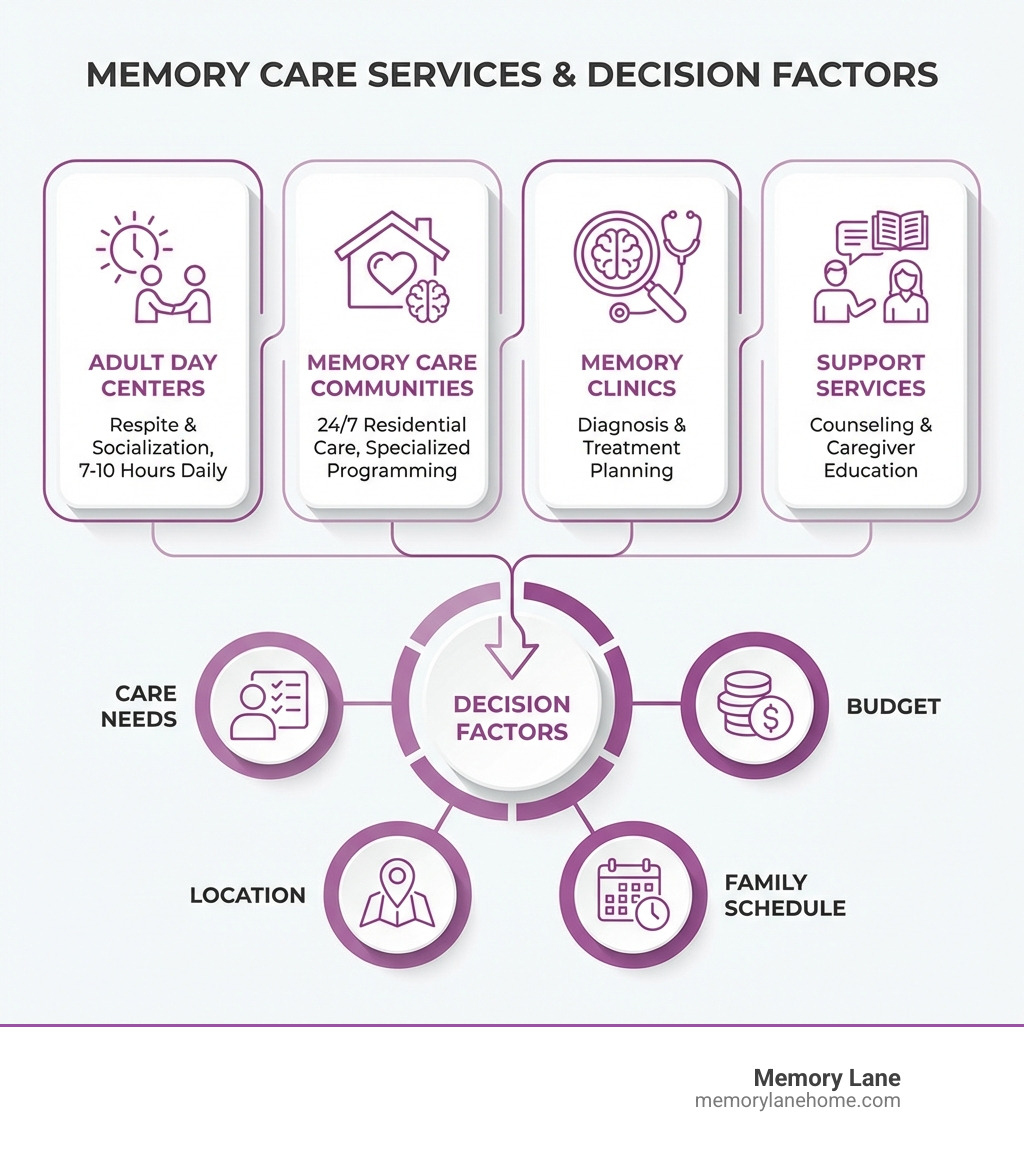
- Adult day centers – Provide respite care, socialization, and cognitive activities during daytime hours (typically 7-10 hours per day)
- Memory care communities – Offer 24/7 specialized residential care with secure environments and trained staff
- Memory clinics – Focus on diagnosis, evaluation, and treatment planning for cognitive decline
- Support services – Include counseling, family education, and caregiver resources
Key steps to take:
- Contact your local Alzheimer’s Association chapter for referrals
- Visit the Community Resource Finder to search by location
- Schedule tours at multiple facilities before deciding
- Ask about staff training, safety measures, and activity programs
Choosing the right memory center can feel overwhelming when you’re already managing the emotional weight of watching a loved one experience cognitive decline. The good news is that specialized memory care centers exist to provide exactly what your family needs—a safe, structured environment with trained staff who understand dementia care, combined with meaningful activities that promote dignity and quality of life.
The difference between a standard assisted living facility and a specialized memory center is significant. Memory centers employ staff specifically trained in dementia care and behavior management. They maintain secure environments to prevent wandering, offer specialized programming designed for cognitive stimulation, and provide the low caregiver-to-patient ratios necessary for personalized attention. Many centers maintain ratios as low as 1:2, ensuring residents receive individualized care throughout the day.
Caregivers often ask themselves: “If I wear myself out to the point of total exhaustion, what good will I be to the person with dementia?” This is where memory centers become invaluable. Whether you need full-time residential care or part-time adult day services, these centers provide professional support while giving you the respite necessary to maintain your own health and effectiveness as a caregiver.
I’m Jason Setsuda, and as CFO of Memory Lane Assisted Living and a board-certified Emergency Medicine Physician with over 10 years of medical experience, I’ve helped countless families navigate the journey of finding the right memory center near me for their loved ones. My holistic approach to patient care extends from emergency medicine to long-term memory care planning.
Memory center near me vocab to learn:
Understanding Your Options: Memory Centers and Supportive Services
When you begin searching for a memory center near me, it is important to realize that “memory care” is a broad umbrella covering several different types of support. In Michigan communities like Ann Arbor and Ypsilanti, families have access to a spectrum of care that evolves as the needs of their loved ones change.
Memory Care Communities
These are residential facilities, like our homes at Memory Lane, that provide 24/7 care. Unlike standard assisted living, these communities are specifically licensed and designed for individuals with dementia or Alzheimer’s. They offer secure environments to prevent wandering and staff who are trained in the nuances of cognitive impairment. We focus on enhancing quality of life and independence through tailored care plans.
Short-Term Respite Stays
Not every transition to a memory center needs to be permanent right away. Short-term respite care allows a loved one to stay in a professional environment for a few days or weeks. This is a lifesaver for caregivers who need a break, are planning a vacation, or simply want to “test the waters” of a facility. You can learn more about What Types of Dementia Care Services Are Available to see which fits your current situation.
Enrichment and Adult Day Programs
Adult day centers are a fantastic “middle ground.” They typically operate 7–10 hours a day and provide a structured environment where seniors can socialize, enjoy nutritious meals, and participate in brain-stimulating activities. For the caregiver, it provides a much-needed break to work or rest, knowing their loved one is safe and engaged.
Family Support Resources
Caring for someone with dementia is a marathon, not a sprint. Support services often include counseling for family members, educational workshops, and support groups. Organizations like the National Institute on Aging provide excellent guides on Getting Help With Alzheimer’s Caregiving to help you navigate the emotional and practical hurdles of this journey.
Essential Services to Look for in a Memory Center Near Me
Searching for a memory center near me means looking beyond the “bricks and mortar” of a building. You want to find a place that treats your loved one as a whole person, not just a diagnosis.

Personalized Care and Behavior Management
Dementia affects everyone differently. A high-quality center will develop an individualized treatment plan that accounts for a resident’s unique background, personality, and specific symptoms. This includes professional behavior management for common challenges like wandering, incontinence, or hallucinations.
Nutrition and Therapy
Proper nutrition is vital for cognitive health. When visiting a center, ask to sample a meal. Does it look appetizing? Can they accommodate special diets? Additionally, look for centers that offer:
- Physical Therapy: To maintain mobility and prevent falls.
- Occupational Therapy: To help residents stay engaged with daily tasks and meaningful hobbies like art or music.
- Sensory Support: Accommodations for those with vision or hearing impairments.
For more details on what to prioritize, check out this guide on how to Discover Top Memory Care Facilities In Your Area Today.
Safety and Emergency Procedures
Safety is often the number one reason families seek a memory center near me. Ensure the facility has:
- Secure exits and monitored “neighborhoods” to prevent wandering.
- Clear, written emergency procedures for medical crises or natural disasters.
- 24-hour assistance and medication management.
Specialized Medical Teams at a Memory Center Near Me
A top-tier memory center doesn’t work in a vacuum. They often collaborate with a network of specialists to ensure the best outcomes.
- Diagnostic Evaluations: Many memory clinics provide comprehensive evaluations that can take 2 to 3 hours, including neuropsychological testing. This is crucial for early detection, which can prolong independence.
- Neurologists and Geriatricians: Having access to specialized doctors ensures that medical care is tailored to the aging brain.
- Wellness Monitoring: Regular check-ins on a resident’s physical and mental state allow for quick adjustments to care plans as the condition progresses.
How to Select the Right Memory Center Near Me for Your Family
Selecting a center is a deeply personal decision. In the Ann Arbor and Saline areas, you have several options, but finding the “perfect fit” requires a bit of detective work.
Step 1: Consider Your Family Needs
Start by looking at your current schedule. Do you need 24/7 care, or would an adult day program suffice for now? Consider the location—is it close enough for frequent visits? We always recommend that families How to Choose Local Memory Care Options based on the specific stage of dementia their loved one is experiencing.
Step 2: Trial Visits and Observations
Never choose a center based on a website alone. Visit in person—and if possible, visit more than once.
- Observe the Atmosphere: Is it warm and homely, or does it feel clinical?
- Watch the Interaction: How do staff members speak to the residents? Is there a sense of respect and compassion?
- Give it a Trial Period: If you are considering a day center or residential home, give it at least twice a week for a month. It takes time for someone with dementia to adjust to a new routine.
Step 3: Verify Staff Training
Dementia care requires specialized skills. Ask if the staff is trained specifically in memory loss, redirection techniques, and communication strategies for non-verbal residents. High-quality centers prioritize ongoing education for their teams.
Key Questions to Ask a Memory Center Near Me
When you tour a facility, bring a notebook and don’t be afraid to ask the “tough” questions:
- What is the staff-to-patient ratio? (Look for low ratios, such as 1:2 or 1:5, for the best care).
- What is the fee structure? Are meals, activities, and medication management included, or are there “extra” fees?
- What does a typical day look like? Ask to see an activity calendar. Programs should be intentional and designed for cognitive stimulation.
- How do you handle medical emergencies?
- Can you accommodate special diets?
- Is transportation provided for outings or medical appointments?
For a comprehensive checklist, the National Institute on Aging offers a great resource on Alzheimer’s Caregiving: Finding Long-Term Care.
Planning for the Future: Costs and Care Coordination
Let’s talk about the elephant in the room: cost. Memory care is a significant investment, but there are resources available to help Michigan families manage the financial burden.
Typical Costs and Financial Assistance
Costs vary widely based on the level of care and the location. Some adult day centers offer sliding scales based on income, while residential memory care usually involves a monthly base fee plus care tiers.
- Medicaid: In Michigan, Medicaid may cover some costs of long-term care if the individual meets certain clinical and financial criteria.
- Medicare: While Medicare generally doesn’t pay for long-term residential care, it may cover diagnostic evaluations and some home health services.
- Veteran Benefits: Veterans and their spouses may be eligible for “Aid and Attendance” benefits to help pay for memory care.
To find federal and state benefit programs that might apply to you, use the BenefitsCheckUp tool.
Financial and Legal Planning
It is never too early to start planning. This includes:
- Long-term care insurance: If a policy is already in place, review it to see what memory care services are covered.
- Legal Preparations: Ensure that Power of Attorney (for both health and finances) and a living will are updated.
- End-of-Life Decisions: Discussing hospice and palliative care options early ensures that your loved one’s wishes are respected.
Cost Consideration Table
| Care Type | Typical Services | Payment Options |
|---|---|---|
| Adult Day Center | Socialization, Meals, Supervision | Private Pay, Sliding Scale, Medicaid |
| Respite Care | Short-term residential stay | Private Pay, Long-term Care Insurance |
| Memory Care Home | 24/7 Care, Security, Specialized Activities | Private Pay, Medicaid (certain cases), VA Benefits |
| Home Health Care | Medical/Personal care at home | Medicare (limited), Private Pay, Insurance |
Finding Local Resources and Support Systems
You don’t have to do this alone. There is a robust network of organizations designed to support families in Michigan.
National and Local Organizations
- Alzheimer’s Association: Their local Michigan chapters provide 24/7 helplines, support groups, and educational resources.
- Area Agency on Aging: This is a vital resource for finding local senior services, meal programs, and caregiver support in Ann Arbor and Ypsilanti.
- Community Resource Finder: An excellent tool to locate adult day programs and residential care near you.
- Eldercare Locator: A public service that connects you to services for older adults and their families in your specific zip code.
The Power of Patient Testimonials
When researching a memory center near me, look for reviews from other families. Testimonials often highlight the things that brochures don’t—like the compassion of the staff or how a resident’s health improved after moving in. Families often emphasize the importance of a holistic, personalized approach that makes a resident feel like “part of the family.”
If you’re in our neck of the woods, you can Explore Quality Alzheimer Care Options in Michigan Today to see how local communities are leading the way in compassionate care.
Frequently Asked Questions about Memory Centers
What are the typical costs of memory care services?
In Michigan, costs vary. Adult day centers can range from $70 to $150 per day, while residential memory care can range from $5,000 to over $8,000 per month depending on the level of specialized care required. Always ask for a detailed fee schedule to avoid “hidden” costs for meals or laundry.
How do I know when it is time to transition to a memory center?
Signs that it may be time include:
- Caregiver burnout or exhaustion.
- The person with dementia is wandering or getting lost.
- Unsafe behaviors (e.g., leaving the stove on).
- Neglect of personal hygiene or nutrition.
- Social isolation or depression in the individual.
What is the difference between standard assisted living and memory care?
The main differences are security and specialization. Memory care units are secured to prevent residents from wandering into unsafe areas. Additionally, the staff receives specific training in dementia behaviors, and the daily activities are intentionally designed to support cognitive function, which is not always a requirement in standard assisted living.
Conclusion
Finding the right memory center near me is about more than just finding a safe place for your loved one; it’s about finding a partner in their care. Whether you are in Ann Arbor, Ypsilanti, or Saline, the goal is to enhance your loved one’s quality of life and independence while providing you with the peace of mind you deserve.
At Memory Lane, we specialize in 24/7 personalized, compassionate support. We focus on creating a secure environment where residents can thrive through tailored care plans and engaging activities. We invite you to learn more about Our Homes and see how we can support your family on this journey. Taking care of yourself is the first step in taking care of your loved one. Don’t wait until you are exhausted to reach out for help.