Maintain Independence Seniors: Empowered 2025
Why Independence Matters More Than Ever for Seniors
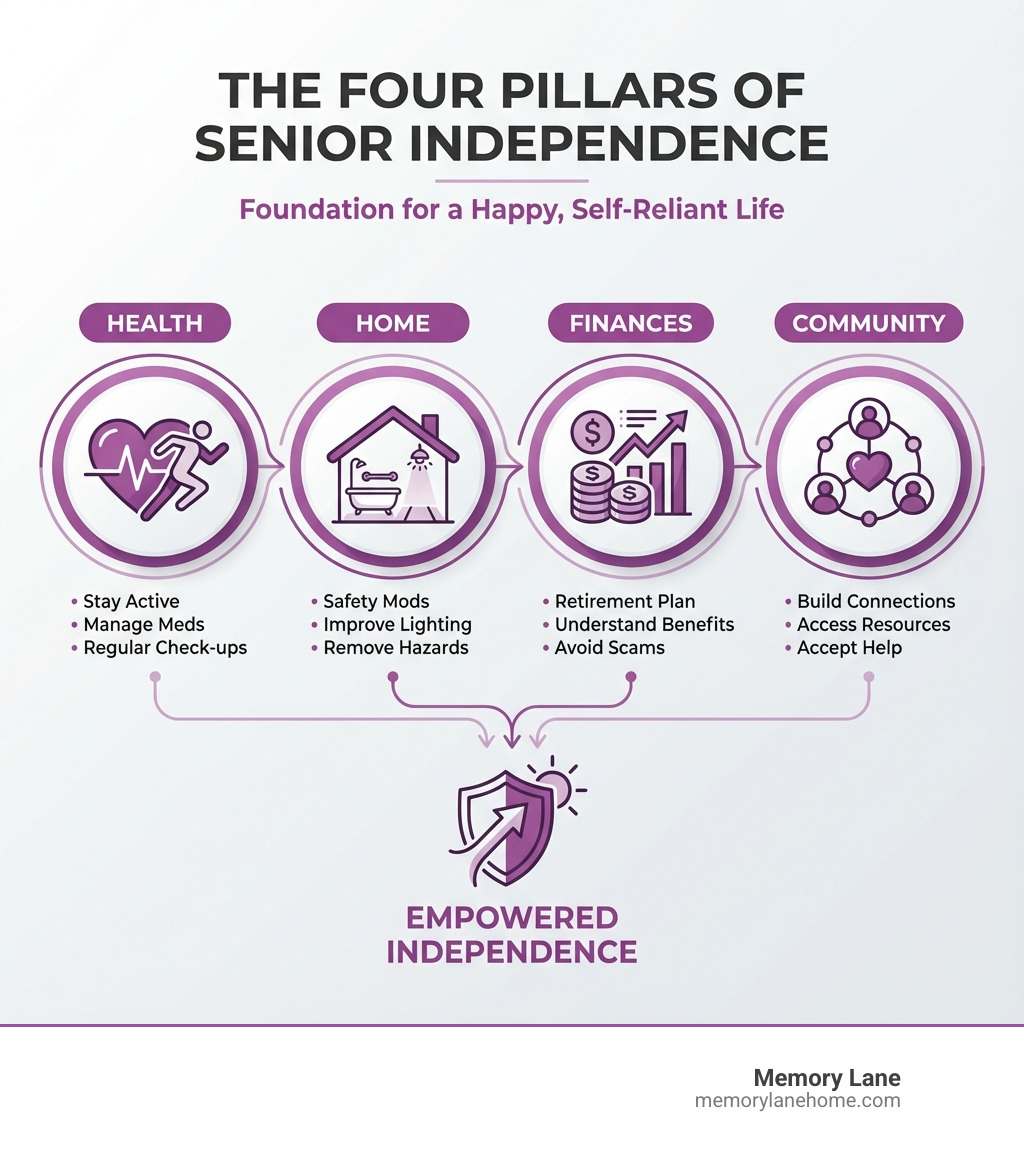
Maintain independence seniors can achieve by focusing on four key pillars:
- Health: Stay physically active, manage medications, and keep regular doctor appointments
- Home: Make safety modifications like grab bars, improved lighting, and remove fall hazards
- Finances: Plan for retirement costs, understand benefits, and protect against scams
- Community: Build social connections, access local resources, and accept help when needed
For many seniors, independence means something profound—it’s about freedom from relying on others for daily assistance. It’s the ability to make your own choices, from what to eat for lunch to whether you’ll join that book club at the senior center. More than 75% of adults over age 50 say they would prefer to live in their own home as they age, according to a 2021 AARP survey. This desire isn’t just about comfort; it’s deeply tied to self-worth, a sense of purpose, and overall well-being.
The good news? Maintaining independence is not about doing everything alone. It’s about making proactive choices that support your physical health, mental sharpness, social connections, and safety. It’s about knowing when accepting help—like hiring a driver or installing a grab bar—actually strengthens your autonomy rather than diminishing it.
As Dr. Jason Setsuda, CFO of Memory Lane Assisted Living and a Board Certified Emergency Medicine Physician with over a decade of experience in medicine and senior care, I’ve seen how seniors who maintain independence through strategic planning and community support live happier, healthier lives. My work across emergency medicine, hospice care, and assisted living has shown me that independence isn’t a destination—it’s an ongoing journey that requires both courage and wisdom.
Mind, Body, and Spirit: Your Foundation for Independence
To truly maintain independence seniors need to nurture their physical, mental, and emotional well-being. Think of it as a three-legged stool: if one leg is weak, the whole thing wobbles! We believe that prioritizing self-care through daily habits significantly improves quality of life, preserves independence for longer, and promotes mental and emotional health.
For seniors, independence is often the only thing they feel they can control as certain aspects of their life change with age. This control is vital for a sense of achievement, self-worth, and overall well-being. It’s a core human drive, instilled in us from childhood, and it doesn’t diminish with age; it becomes even more important. By staying active, engaged, and connected, we lay a strong foundation for continued self-reliance.
Staying Physically and Mentally Active
Our bodies and minds are interconnected, and keeping both sharp is paramount for self-reliance. The Centers for Disease Control and Prevention (CDC) recommends that adults aged 65 and up need 30 minutes of moderate-intensity activity at least five days a week. This isn’t about becoming an Olympic athlete; it’s about consistent, gentle movement. Activities like brisk walking, swimming, dancing, or even gardening can make a huge difference. Regular physical activity helps us maintain strength, improve balance (crucial for fall prevention!), and boost our mood.

Beyond physical movement, our brains need a workout too! Engaging in mentally stimulating activities helps preserve cognitive abilities and keeps our minds sharp. Think brain games like Sudoku or crosswords, learning a new language or skill, joining a book club, or even taking an online course. These activities foster personal fulfillment and can even create opportunities for new social connections. For example, local senior centers in Ann Arbor and Ypsilanti often offer a variety of classes and workshops designed to keep minds active and engaged.
Volunteering is another fantastic way to combine physical and mental activity with social engagement. Whether it’s helping at a local animal shelter, reading to children, or assisting with community events in Saline, volunteering offers a dual benefit: it keeps us active and connected while providing a profound sense of purpose and contribution. People who pursue their hobbies and interests in their later years have been shown to experience higher levels of personal fulfillment.
The Importance of Social Connection and Routine
While the desire to maintain independence seniors feel is strong, independence doesn’t mean solitude. In fact, social connection is a cornerstone of well-being and a powerful tool against the challenges of aging. About 1 in 4 adults over age 65 feels lonely, and this isn’t just a sad statistic; loneliness can be fatal. One recent study showed that feeling extreme loneliness can raise an older adult’s chances of premature death by 14%. Loneliness and social isolation can also increase the risk of chronic health conditions like heart disease, diabetes, and even dementia.
It’s normal for our social circles to shrink as we grow older, but we can proactively combat isolation. Maintaining a wide network of friends and family is crucial. Regular phone calls, video chats, or in-person visits with loved ones can provide essential emotional support. Local senior centers in Michigan are fantastic hubs for social engagement, offering a variety of activities, clubs, and opportunities to meet new people. Community groups, faith-based organizations, and even online communities can help foster new friendships and provide a sense of belonging. As the saying goes, friends keep us young – and water our plants when we leave town!
Establishing and maintaining a daily routine also plays a significant role in promoting independence. A structured day provides a sense of control, reduces stress, and ensures that essential activities like meals, medications, and exercise are not overlooked. A healthy routine often includes:
- Regular mealtimes
- Scheduled physical activity
- Dedicated time for hobbies or mental stimulation
- Social interaction
- Consistent sleep patterns
The CDC recommends around 7 to 9 hours of quality sleep each night for most adults. Not getting enough sleep can weaken the immune system, impair cognitive function, and lead to heart problems. A good routine helps us get that much-needed rest.
Here are some social activities for seniors we often see thriving in our communities:
- Book clubs
- Walking groups
- Art classes or craft workshops
- Card games or board game nights
- Volunteer opportunities
- Community garden projects
- Group fitness classes (e.g., Tai Chi, senior yoga)
- Attending local events or concerts
- Joining a choir or theater group
- Coffee meet-ups with friends
A Holistic Approach to Maintain Independence for Seniors
Beyond personal habits, a supportive environment is essential for seniors to maintain independence. This includes making our homes safer, embracing technology, and ensuring reliable transportation. It’s about designing our lives and spaces to work for us, not against us.
Practical Home Modifications to Maintain Independence for Seniors
Our homes are our sanctuaries, but as we age, they can sometimes present challenges. Simple home modifications can significantly improve safety and ease of living, directly helping us maintain independence. Falls are a major concern; more than 1 in 4 older adults report falling each year, leading to about 37 million falls. These falls can cause serious injuries like broken bones or head injuries. The good news? Falls are not a normal part of aging, and they can be prevented!
Here are practical modifications we recommend:
- Fall Prevention:
- Remove trip hazards: Get rid of loose rugs, clear clutter from walkways, and secure electrical cords.
- Improved lighting: Ensure all areas, especially staircases, hallways, and bathrooms, are well-lit. Consider nightlights in bedrooms and bathrooms.
- Sturdy handrails: Install secure handrails on both sides of staircases.
- Bathroom Safety: This is a high-risk area.
- Grab bars: Install grab bars inside and outside the shower/tub, and next to the toilet.
- Non-slip mats: Use non-slip mats or strips in the shower/tub.
- Raised toilet seats: These can make it easier to sit down and stand up.
- Accessible Storage: Lower pantry shelves and frequently used items to an easily reachable height. Store heavy items at waist level.
- Home Safety Checklists: Many organizations offer checklists to help identify potential hazards. Consider doing a walk-through of your home with a loved one or a professional to spot areas for improvement.
These changes are not about giving up control; they are about taking control of our environment to ensure safety and comfort, allowing us to stay in our cherished homes longer. The Administration for Community Living (ACL) offers resources for financial aid programs to help with home repairs and safety updates.
Leveraging Technology and Transportation
Technology is a powerful ally in our quest to maintain independence seniors can use to stay connected, safe, and manage their daily lives.
- Medical Alert Systems: Wearable devices (pendants or wristbands) that alert emergency services with the touch of a button. These are invaluable, especially for those living alone, as they can call for help if a fall occurs or another emergency arises. These devices are only helpful if worn 24/7!
- Smart Home Devices: Tools like Amazon Echo or Google Home can be programmed for medication reminders, setting alarms, making hands-free calls, or even controlling lights and thermostats. Imagine saying, “Alexa, remind me to take my pills at 5 PM,” or “Hey Google, turn on the living room light.”
- Video Calls and Online Communities: Staying connected with family and friends, especially those who live far away, is easier than ever with video calling apps. Online communities and social media can also provide platforms for connection, shared interests, and support.
- Transportation Alternatives: As driving becomes more challenging with age, having reliable transportation options is vital.
- Community transit: Many local communities, including those around Ann Arbor and Ypsilanti, offer senior-friendly transportation services.
- Ride-sharing services: Uber and Lyft provide on-demand rides.
- Friends and family: Don’t hesitate to ask for rides from trusted loved ones.
- AARP Driver Safety Program: Offers courses to help refresh driving skills.
- Rides in Sight: A national helpline that helps seniors find local transportation options.
These technological and transportation solutions empower us to steer our world safely and conveniently, ensuring we can continue to live life on our own terms.
Embracing Support: The Key to Sustained Autonomy
It might sound counterintuitive, but learning to accept help is one of the most powerful strategies to maintain independence seniors can adopt. Independence isn’t about doing everything by yourself; it’s about having the freedom to choose how you live, even if that involves strategically leveraging support.
Knowing When and How to Accept Help
We often associate accepting help with a loss of control, but we need to reframe this thinking. Accepting support is a proactive choice that can prevent more serious issues and allow us to continue living independently for longer. It’s not a slippery slope to dependence; it’s a tool to improve our autonomy.
Signs you might need assistance: It’s important to be honest with ourselves and our loved ones about changes. Some signs that outside help might be beneficial include:
- Difficulty with daily tasks like bathing, dressing, or meal preparation.
- Increased falls or near-falls.
- Unexplained weight loss or poor hygiene.
- Forgetting to take medications or taking them incorrectly.
- Social withdrawal or increased feelings of loneliness.
- Difficulty managing household chores or home maintenance.
- Struggles with driving or managing transportation.
Framing help as a tool: When we view help as a resource, it becomes empowering. For example, hiring a cleaning service or a lawn care professional frees up our energy for activities we enjoy more, like hobbies or social events. If driving becomes stressful, using a ride service means we still get to our appointments and outings without the anxiety.
Maintaining control: The key is to be involved in the decision-making process. We choose the type of help, the person providing it, and the schedule. This active participation ensures that we remain in control. Communicate your needs clearly to family members, emphasizing that this help is about maintaining your lifestyle, not about giving it up.
Hiring in-home help: If personal care or household tasks become challenging, in-home caregivers can provide assistance. These services can range from companionship and light housekeeping to more skilled nursing care. When choosing caregivers, we recommend talking to your doctor, family, and friends for recommendations. Always choose someone you feel comfortable with, who has the right skills for your specific needs, and always check references. Medicare’s online search tool can help you find and compare Medicare-certified home health agencies.
Finding Community and Professional Resources
Fortunately, a wealth of resources exists in our communities to help us maintain independence seniors can tap into. These support systems are designed to provide assistance without compromising our autonomy.
- Local Agencies on Aging (AAA): Your local Area Agency on Aging, such as those serving Ann Arbor, Ypsilanti, Saline, and broader Michigan, is an invaluable resource. They can provide information on local services, benefits, and support programs. You can find them through USAging.
- Geriatric Care Managers: These specially trained professionals (found through the Aging Life Care Association) can help coordinate resources, create care plans, and steer complex healthcare systems. They are particularly helpful when family members live far apart.
- Adult Day Programs: If your regular caregiver needs a break or you simply want more social engagement during the day, adult day care programs offer supervised activities, meals, and companionship.
- Local Social Services: State and local offices on aging or social services departments can also provide lists of available resources and financial aid programs.
- The Caregiver’s Handbook: For those with family members who are caregivers, the National Institute on Aging offers a free “Caregiver’s Handbook” that can guide them in providing support effectively.
- Finding Support for Aging at Home: The National Institute on Aging’s “Aging in Place: Growing Older at Home” guide is an excellent resource for planning ahead and understanding available help. This includes personal care, household chores, meal preparation, and transportation.
These community resources are here to support our journey, offering practical help and social opportunities that reinforce our ability to live independently and vibrantly.
Financial and Future Planning for Lasting Independence
Financial security and careful future planning are critical pillars to maintain independence seniors desire. Thinking ahead about our finances, healthcare, and legal matters ensures that we have the resources and frameworks in place to live life on our own terms.
How to Maintain Independence for Seniors with Financial Planning
Managing our finances effectively as we age provides peace of mind and the flexibility to access the services and support we might need.
- Managing Retirement Funds: It’s crucial to understand our retirement income sources—pensions, Social Security, investments—and create a realistic budget. This helps us ensure our money lasts throughout our golden years.
- Seeking Financial Advice: Consulting with a trusted financial advisor can help us plan for long-term care costs, manage investments, and organize our estate.
- Avoiding Scams: Unfortunately, older adults are often targets for financial scams. We must be vigilant, never share personal financial information over the phone or online unless we initiated the contact, and be wary of too-good-to-be-true offers.
- Long-Term Care Planning: While Medicare covers some short-term skilled nursing care, it generally doesn’t cover long-term personal care. Exploring options like long-term care insurance or understanding how to self-fund potential future care needs is a vital step.
- Legal Planning: Establishing a durable power of attorney for finances and healthcare, as well as an advance directive, ensures that our wishes are respected and our affairs are managed by trusted individuals should we become unable to do so ourselves. This is a profound way to maintain independence seniors value, by exerting control over future decisions.
Navigating Healthcare and Assistance Programs
Proactive health management and understanding available assistance programs are key to sustained independence.
- Understanding Healthcare Options: Regular doctor appointments are essential for age-appropriate health screenings and vaccinations. We should openly discuss any health concerns, changes in mobility, or medication side effects with our physicians. Taking medications as prescribed and discussing any difficulties or side effects with our doctor is paramount for our well-being.
- Benefits Finder Tools: The National Council on Aging (NCOA) offers a “Benefits CheckUp” tool that can help us find financial assistance programs for healthcare, food, utilities, and more, based on our specific needs and location.
- Government Assistance Programs: Federal and state government programs like Medicare, Medicaid, and the U.S. Department of Veterans Affairs (VA) offer various forms of support for healthcare and financial assistance. USA.gov is a great starting point to explore these benefits.
- Local and National Resources for Seniors: Organizations like AARP and the National Institute on Aging (NIA) provide a wealth of research-based advice and resources on topics ranging from health and safety to financial planning and caregiving. We can also reach out to LongTermCare.gov for information on long-term care options.
By diligently planning and utilizing these resources, we can ensure our health and financial well-being are secure, allowing us to maintain independence seniors cherish.
Frequently Asked Questions About Senior Independence
We often hear similar questions from individuals and their families as they steer the journey of aging. Here are some common ones:
What are the first signs that an older adult might need more help?
It’s common for abilities to shift as we age, and recognizing the early signs that more support might be beneficial is crucial. We look for changes in:
- Difficulty with daily tasks (ADLs): Struggling with personal care like bathing, dressing, or grooming, or with household tasks like cooking, cleaning, or managing finances.
- Increased falls: More frequent trips, stumbles, or actual falls, even if minor. About 1 in 4 adults over age 65 falls each year.
- Noticeable weight loss or poor hygiene: Unintended weight loss can signal issues with nutrition, while a decline in hygiene might indicate difficulty with self-care.
- Social withdrawal: A sudden decrease in interest in hobbies, social events, or contact with friends and family.
- Forgetting medication: Missing doses, taking incorrect dosages, or confusion about medication schedules.
- Changes in mood or behavior: Increased irritability, anxiety, depression, or confusion.
These signs don’t mean a loss of independence; they’re indicators that a re-evaluation of current support or strategies is needed to help maintain independence seniors value.
How can I help my elderly parent stay independent without overstepping?
This is a delicate balance, and we understand the concern. Here’s how adult children and caregivers can empower their elderly parents:
- Open communication: Talk with them, not at them. Express your concerns from a place of love and support, not judgment.
- Focus on empowerment: Frame any assistance as a way to help them continue doing what they love, rather than taking things away.
- Offer choices, not commands: Instead of saying, “You need a caregiver,” try, “Would you prefer help with groceries or household chores first?”
- Involve them in decisions: Whether it’s choosing a new piece of assistive technology or deciding on a home modification, their input is vital.
- Start with small, less intrusive help: Perhaps a meal delivery service a few times a week, or a ride to an appointment, rather than immediately suggesting live-in care.
- Respect their autonomy: Treat them as adults capable of making their own decisions, even if those decisions differ from what you’d choose. Independence is often the only thing they feel they can control.
What is the single most important thing for maintaining independence?
While the journey to maintain independence seniors undertake is multifaceted, if we had to choose one overarching factor, it would be proactive health management. This encompasses physical, mental, and social well-being.
Think about it:
- Without physical health, daily tasks become difficult.
- Without mental sharpness, decision-making and problem-solving are impaired.
- Without social connection, loneliness can lead to serious health declines.
By actively managing our health—through regular exercise, a balanced diet, mental stimulation, strong social ties, and consistent medical care—we build the fundamental strength and resilience needed to support all other aspects of our independence. It’s the cornerstone that allows us to leverage home modifications, technology, and community resources effectively.
Your Journey to Continued Independence
The desire to maintain independence seniors feel is a powerful and healthy one. It’s a journey filled with opportunities for growth, connection, and continued fulfillment. We’ve explored how a holistic approach—nurturing our mind, body, and spirit, creating a supportive home environment, leveraging technology, embracing help when needed, and planning for the future—can pave the way for a vibrant and self-reliant golden age.
Independence isn’t about being alone; it’s about making conscious choices that empower us to live life on our own terms. It’s about being proactive, adaptable, and willing to accept the tools and support available in our communities, such as those found in Ann Arbor, Ypsilanti, and Saline, Michigan.
For those with cognitive challenges like dementia, specialized communities such as those at Memory Lane focus on creating a supportive environment that maximizes independence while ensuring safety. We understand that every individual’s journey is unique, and our goal is to empower each person to live their fullest life possible.