
Affordable Memory Care 2026: Best Options
Why Affordable Memory Care Matters Now More Than Ever
Affordable memory care is specialized long-term care for individuals with Alzheimer’s or dementia, typically costing between $4,000 and $7,500 per month. Fortunately, options exist to reduce these expenses through government programs, shared living models, day programs, and nonprofit assistance.
Quick answers for families seeking affordable memory care:
- Average monthly cost: $6,160 to $7,899 nationally (varies by state and facility type)
- Most affordable options: Day programs ($1,690/month), shared living models, and government-run facilities (starting at $2,800)
- Financial assistance: Medicaid waivers, VA Aid & Attendance benefits, PACE programs, and sliding-scale fees at nonprofit facilities
- Cost-saving strategies: Companion suites vs. private rooms, suburban vs. urban locations, and facilities with personalized care plans (pay only for services needed)
If someone you love is showing signs of memory loss—like forgetting familiar names, wandering, or struggling with daily tasks—you’re facing one of the most difficult decisions a family can encounter. The emotional weight is heavy, and the financial reality can feel crushing.
Memory care exists to bridge this gap. It’s not just about safety; it’s about preserving dignity, fostering connection, and creating moments of joy. The best memory care homes understand that people are more than their medical conditions, building environments where residents experience purpose and belonging.
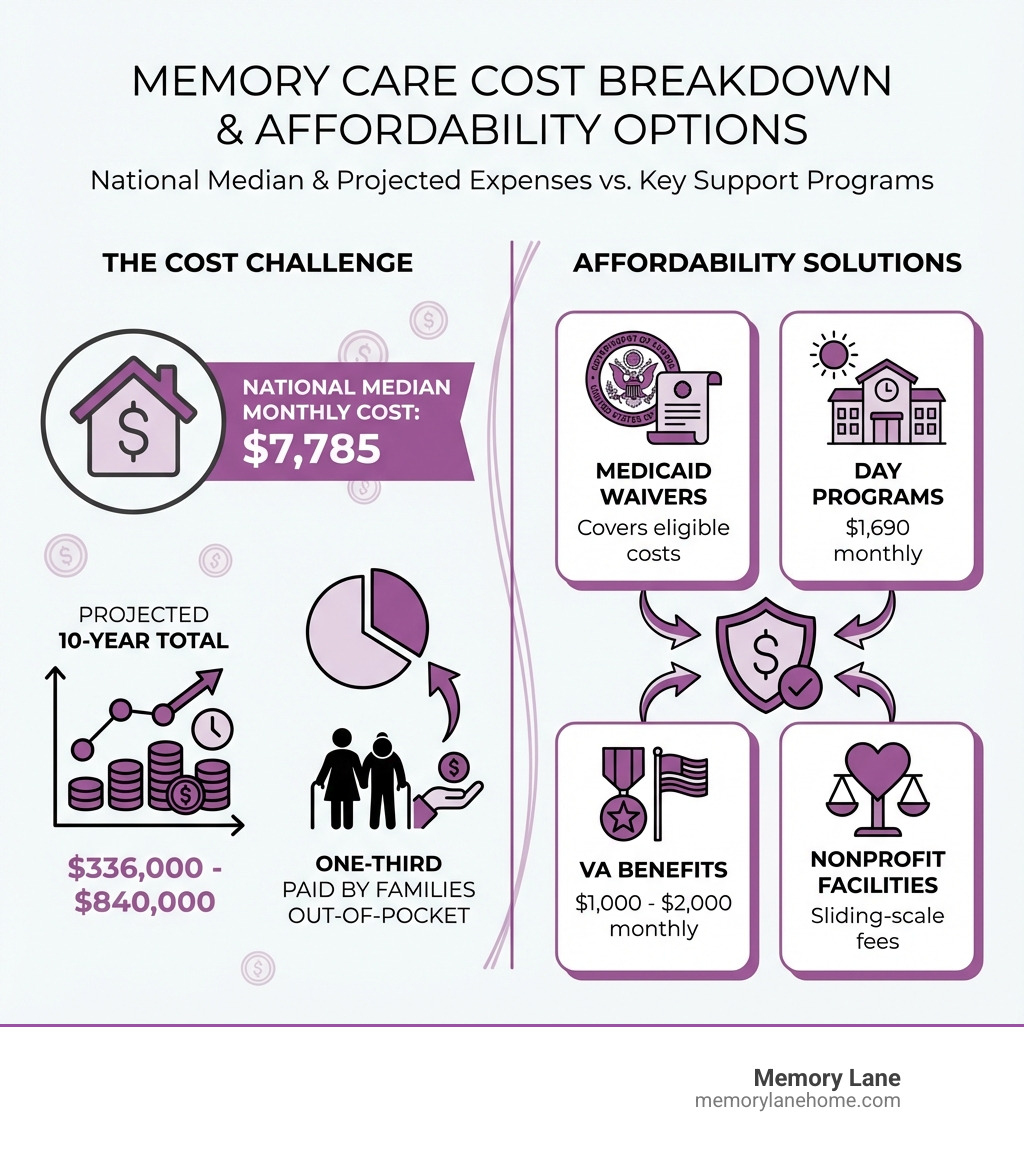
The challenge is that the total cost of memory care can range from $336,000 to $840,000 over an average stay. For many, this feels impossible. But affordable memory care exists when you know where to look and how to access the right resources. Government programs, nonprofit providers, and value-based communities can dramatically reduce costs without sacrificing quality.
I’m Jason Setsuda, CFO of Memory Lane Assisted Living and a board-certified Emergency Medicine Physician with over 15 years of business management experience. I’ve spent years helping families find affordable memory care solutions that honor both their loved ones’ needs and their financial realities.
Understanding the Landscape of Memory Care
Navigating the journey of memory loss with a loved one is challenging. As their needs evolve, it’s important to understand when to seek help and what options are available to find affordable memory care that truly makes a difference.
Signs a Senior May Need Memory Care
It’s important to distinguish between typical age-related memory loss and the more significant cognitive decline associated with dementia. Here are key signs that a senior in Ann Arbor, Ypsilanti, or Saline, Michigan, might benefit from memory care:
- Memory Loss vs. Dementia: While occasional forgetfulness is normal, dementia involves a persistent decline in memory and thinking that interferes with daily life, such as repeatedly asking questions or getting lost in familiar places.
- Wandering: A common and dangerous symptom of dementia is wandering. If your loved one starts to leave home unsupervised, a secure memory care environment becomes crucial.
- Difficulty with Daily Tasks: Struggling with Activities of Daily Living (ADLs) like bathing, dressing, or managing medications indicates a need for more support.
- Behavioral Changes: Increased anxiety, agitation, or paranoia can be distressing and often require the specialized training found in a memory care facility.
- Caregiver Stress: The physical and emotional toll of 24/7 caregiving can be overwhelming. If you’re experiencing burnout, it's a clear signal that professional help is needed.
Memory Care vs. Assisted Living
While often co-located, memory care and assisted living serve distinct needs. Understanding the difference is key to assessing costs and finding the right fit.
- Assisted Living: This is for seniors who need help with daily activities but can still live with a degree of independence.
- Memory Care: This is a specialized form of assisted living for individuals with Alzheimer’s disease, dementia, or other memory impairments. It includes:
- Specialized Staff Training: Caregivers are trained in dementia care, communication techniques, and managing challenging behaviors.
- Secure Environments: Facilities have features like alarmed doors and enclosed outdoor spaces to prevent wandering.
- Structured Activities: Programs are designed to stimulate cognitive function and reduce anxiety.
- Higher Staff-to-Resident Ratios: This provides more intensive, personalized support.
This specialization means memory care typically costs more than standard assisted living—about $1,200 more per month nationally. However, for those with advanced dementia, the improved safety and custom care are invaluable.
Here’s a quick comparison of different care approaches:
| Care Approach | Average Monthly Cost (National/Michigan) | Services Included | Pros – |
|---|---|---|---|
| In-Home Care | $5,000 – $6,000+ | Personal care, companionship, meal prep, light housekeeping. | – Familiar environment – One-on-one attention |
| Adult Day Care | $1,690+ | Social activities, meals, supervision during the day. | – Socialization – Respite for caregivers – Cost-effective |
| Assisted Living | $4,500 – $6,000+ | Housing, meals, personal care assistance, social activities. | – Community environment – 24/7 staff availability – Less expensive than nursing home |
| Memory Care | $6,000 – $8,000+ | All assisted living services plus specialized dementia care, secure environment, structured activities. | – Specialized staff – Safe and secure – Custom activities for cognitive health |
The Benefits of a Specialized Memory Care Home
While in-home care or day programs can be suitable for some, a specialized memory care home often becomes the best solution as dementia progresses. The benefits extend far beyond basic supervision:
- 24/7 Supervision: Trained staff are always present to ensure safety and respond to emergencies, which is crucial for those prone to wandering.
- Professional Care: Our caregivers receive specialized training in dementia care to provide the most appropriate and compassionate support.
- Social Environment: Memory care communities foster a vibrant social environment where residents can interact with peers and participate in group activities, combating the loneliness that can accelerate cognitive decline.
- Safety and Security: Our facilities are designed with advanced security features, including alarmed doors and secure outdoor spaces, to prevent wandering and ensure a safe environment.
- Structured Routines: A consistent daily routine can significantly reduce confusion and anxiety for individuals with dementia.
- Reduced Family Burden: Knowing your loved one is safe and well-cared for allows you to shift from a caregiver role back to being a spouse, child, or grandchild. This is what we call a “guilt-free solution” for care partners.
To find local care resources and support in Ann Arbor, Ypsilanti, Saline, or other parts of Michigan, you can connect with trusted government and nonprofit organizations. Your state's office of aging or a local Area Agency on Aging (AAA) can be excellent starting points. You can also explore the Eldercare Locator, a public service of the U.S. Administration for Community Living, to find community-based services in your area.
Decoding the High Cost of Memory Care

The cost of memory care is a significant concern for many families. Understanding the figures and the factors behind them is the first step toward finding affordable memory care.
Nationally, the median monthly cost for memory care in 2025 is projected to be $7,785. In Michigan, the estimated median is $7,465 per month. With an average stay of four to 10 years, total costs can be substantial, and families often bear a large portion of these expenses out-of-pocket. To get a clearer picture of costs in your specific area, you can use a cost of care calculator to see the median cost of various types of care and future projections.
Key Factors That Influence Pricing
Several factors contribute to the wide range in memory care costs:
- Geographic location: Costs vary significantly by state and even within Michigan. Facilities in areas like Ann Arbor may have different price points than those in Saline or Ypsilanti due to real estate values and local cost of living.
- Type of room: A private room is typically more expensive than a shared or companion suite.
- Level of care needed: Costs often increase as a resident requires more assistance with Activities of Daily Living (ADLs) like bathing, dressing, and mobility.
- Facility amenities: Communities with extensive amenities like pools or movie theaters may have higher rates.
- Staff-to-resident ratio: A higher ratio means more personalized care but can also increase costs. At Memory Lane Assisted Living, we pride ourselves on maintaining a high staff-to-resident ratio to ensure quality care.
What’s Included in the Monthly Fee (and What’s Not)
Understanding what your monthly fee covers is crucial for budgeting.
Typically Included:
- Room and board
- Three meals a day plus snacks
- Medication management
- Housekeeping and laundry
- Utilities
- Basic social and cognitive activities
- 24/7 supervision and security
Potential Additional Costs:
- Incontinence supplies
- Salon and personal grooming services
- Special outings or events
- Advanced or one-on-one therapies
- Non-scheduled transportation
- Annual rate increases
- Increased fees for higher levels of care
Your Guide to Finding Affordable Memory Care
Finding affordable memory care requires proactive financial planning and exploring all available resources. It’s about finding the best value that meets your loved one’s needs and your family’s budget.
Government Programs and Financial Assistance
Many programs can help offset the cost of memory care. Eligibility often depends on income, assets, and level of care, so it’s important to investigate Michigan-specific programs.
- Medicaid and Waivers: Medicaid is a federal and state program for low-income individuals. In Michigan, Home and Community-Based Services (HCBS) Waivers may help cover services in a community setting, including some memory care services. Contact your state's Medicaid agency for details.
- Medicare Coverage Limitations: Medicare generally does not pay for long-term care, including memory care. It may cover short-term nursing home stays after hospitalization or specific medical services, but not the daily custodial care.
- PACE Program: The Program of All-Inclusive Care for the Elderly (PACE) is a comprehensive option for eligible individuals 55 and older who need nursing home-level care but can live safely in the community with PACE support.
- Veterans Aid and Attendance Benefits: Qualifying veterans and their spouses may receive significant financial assistance for memory care, potentially providing $1,000 to $2,000 per month.
- Social Security Disability Income (SSDI): Individuals with early-onset Alzheimer’s may qualify for SSDI, and “compassionate allowances” can expedite the process for certain conditions.
We highly recommend using BenefitsCheckUp.org and Benefits.gov to find other federal and state benefit programs for which you or your loved one may be eligible.
Strategies for Finding Affordable Memory Care
Beyond government aid, consider these financial strategies:
- Personal Assets: Savings, retirement accounts, and investments are common sources of funding. Selling a home or using a reverse mortgage are also options, but always consult a trusted financial advisor first.
- Long-Term Care Insurance: If a policy was purchased previously, it can be a valuable tool to cover memory care costs. Review your policy for specific coverage details and limitations.
- Life Insurance Conversions: Some policies can be converted or used for accelerated death benefits to help pay for long-term care.
- Family Contributions: Pooling resources among family members can be a viable solution.
- Nonprofit Assistance: Local charities and nonprofit organizations in Michigan may offer grants or financial aid for dementia care.
- Sliding-Scale Fees: Ask facilities if they offer sliding-scale pricing or subsidized spots for low-income residents. These “value-based communities” prioritize quality care over luxury amenities, making them a more affordable memory care option.
- Negotiating Discounts: Don’t hesitate to ask about move-in specials or flexible payment plans when touring facilities.
How to Assess Quality Without Breaking the Bank
When searching for affordable memory care, it’s easy to assume that lower cost means lower quality. However, this isn’t always the case. The key is knowing what to look for to evaluate a facility’s true value. A fancy amenity doesn’t necessarily mean superior care. Instead, focus on the core elements that impact a resident’s well-being, like staff engagement and a clean, safe environment. The goal is to find a facility where your loved one feels at home and is treated with dignity and respect.

What to Look for in an Affordable Memory Care Home
When touring memory care homes in Ann Arbor, Ypsilanti, or Saline, Michigan, look for these indicators of quality:
- Cleanliness: A clean, well-maintained facility reflects attention to detail and respect for residents.
- Safety Features: Look for secure wandering paths, alarmed exits, and other measures that protect residents without feeling restrictive.
- Staff Qualifications: Inquire about dementia-specific training and certifications. We ensure our staff are highly skilled and continuously developed.
- Staff-Resident Interactions: Observe how staff engage with residents. Look for respectful, patient, and warm interactions.
- Resident Engagement: Are residents participating in activities and socializing? A vibrant, purposeful environment is a hallmark of quality care.
- Personalized Care Plans: A quality facility will develop a custom care plan that addresses each resident’s specific needs and preferences.
Questions to Ask During a Tour:
- What is your staff-to-resident ratio, especially during evenings and weekends?
- How do you personalize care plans, and how often are they updated?
- What specialized training do your staff receive in dementia care?
- How do you handle challenging behaviors or agitation?
- What security measures are in place to prevent wandering?
- Can you provide a sample activity schedule?
- What is included in the base monthly fee, and what are the potential additional costs?
- How do you communicate with families about their loved one’s well-being?
- Do you have any move-in specials or financial assistance programs?
- Can we speak with current residents’ families about their experiences?
The Role of Specialized Therapies
Specialized therapies are vital for enhancing the quality of life for individuals with dementia, even in affordable memory care settings. These activities stimulate cognitive function, reduce anxiety, and foster emotional well-being.
- Music & Art Therapy: Creative outlets like music and art can evoke memories, reduce agitation, and provide a non-verbal way to express emotions. Our Memory Lane Home Living offers “Music From the Heart & Choir” programs, recognizing music’s power to connect.
- Snoezelen Rooms: These multi-sensory environments use light, sound, and textures to create a calming or stimulating atmosphere.
- Cognitive & Physical Fitness: Activities like puzzles, memory games, and adapted physical exercise help maintain cognitive function and improve mood.
- Socialization: Interacting with others in a supportive community is a powerful way to combat isolation.
Basic group activities are often included in the monthly fee, but individualized therapy sessions may be an additional cost. Be sure to ask what is included during your tour.
Frequently Asked Questions about Affordable Memory Care
What is the biggest difference between assisted living and memory care?
Assisted living focuses on help with daily activities for seniors, while memory care provides a higher level of specialized, 24/7 care and security in an environment designed for individuals with dementia or Alzheimer’s, which typically results in a higher cost. Memory care includes staff with specific dementia training, structured routines, and advanced safety features like secure wandering paths to prevent disorientation or wandering.
What happens if a resident runs out of money?
If a resident’s private funds are depleted, they may be able to transition to Medicaid, provided the residence is certified to accept it and the resident meets state eligibility requirements. This process often involves “spending down” assets to meet Medicaid’s financial criteria. It is crucial to plan for this possibility with the residence and an elder law attorney in Michigan well in advance, as not all memory care facilities accept Medicaid, and eligibility rules are strict and vary by state.
Is memory care tax-deductible?
Long-term care services, including memory care, may be tax-deductible as a medical expense if the resident is certified by a licensed healthcare practitioner as being chronically ill and unable to perform at least two Activities of Daily Living (ADLs) without substantial assistance, or has a severe cognitive impairment requiring supervision for safety. The IRS defines a chronically ill person as someone who a licensed health care practitioner has determined to be unable to perform at least two ADLs, such as bathing or dressing, or requires supervision due to cognitive impairment. We recommend consulting a tax professional to understand your specific eligibility and deductions for memory care expenses in Michigan.
Conclusion: Taking the Next Step with Confidence
Navigating affordable memory care can feel like a labyrinth, but we hope this guide has illuminated the path forward. We’ve seen that affordability is a delicate balance of cost, quality, and strategic financial planning. The importance of early planning cannot be overstated; the sooner you begin to explore options and resources, the better prepared you’ll be.
Finding the right memory care solution is about more than just numbers. It’s about finding a community that feels like home – a place where your loved one is safe, respected, and cherished. At Memory Lane Assisted Living, we are dedicated to providing 24/7 personalized, compassionate support for individuals with dementia and Alzheimer’s. We offer custom care plans, engaging activities, and a secure environment, focusing on enhancing residents’ quality of life and independence in Ann Arbor, Ypsilanti, and Saline, Michigan. We believe in fostering the uniqueness, dignity, and spirit of each individual, creating a place to truly “live,” not just “be.”
We are here to help you take the next step with confidence.
For families in Ann Arbor and Ypsilanti comparing specific homes, read what an affordable memory care rate really covers — including how to compare all-inclusive pricing against tiered models, and the six questions to ask before you sign.