
Find the best assisted living near me within 5 mi. Discover local benefits, essential services, costs, and financial aid for optimal care.

Memory Care on a Budget and How Families Make It Work
Memory Care on a Budget and How Families Make It Work
Why Affording Memory Care Matters More Than Ever
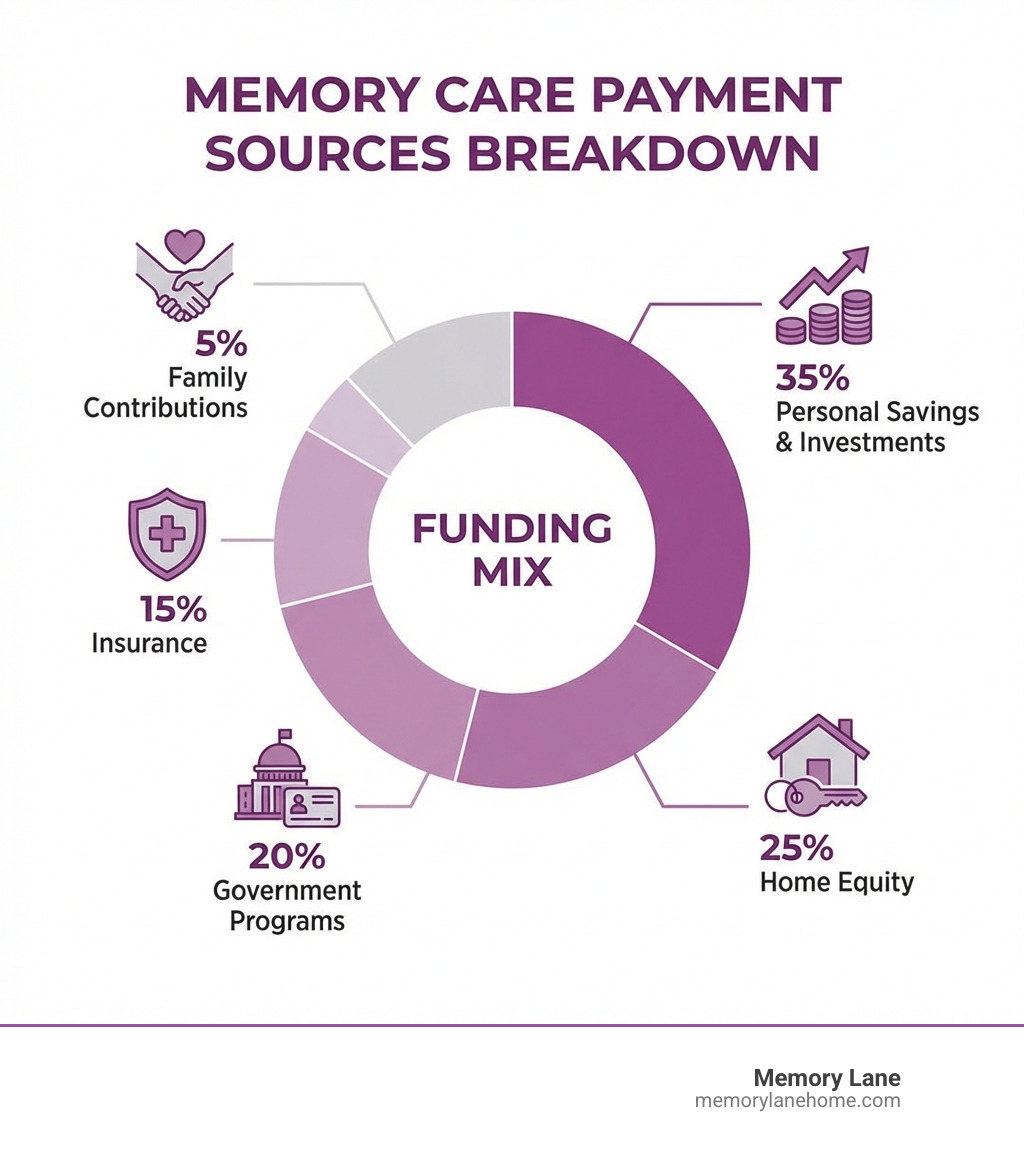
How do people afford memory care? Most families combine multiple funding sources to cover the average monthly cost of $7,899. Common payment methods include personal savings and retirement accounts, home equity (through selling, renting, or reverse mortgages), long-term care insurance, government programs like Medicaid waivers and VA benefits, and Social Security income. Many families also leverage life insurance conversions or receive financial support from multiple family members to bridge gaps in coverage.
Key Payment Options at a Glance:
- Private Assets: Savings, 401(k), IRA, pension income, home sale proceeds
- Insurance Products: Long-term care policies, life insurance conversions, accelerated death benefits
- Government Programs: Medicaid HCBS waivers, VA Aid and Attendance ($2,358/month for eligible veterans), Social Security benefits
- Home Equity: Selling current home, renting property, reverse mortgages, bridge loans
- Tax Benefits: Medical expense deductions for qualifying care costs
The financial reality is stark. With lifetime dementia care costs estimated at $184,500 (and rising), families bear 86% of these expenses out-of-pocket. Meanwhile, the average Social Security retirement benefit of $1,979 per month covers less than half the median memory care cost.
“We’re seeing lots of families paying out-of-pocket these days,” notes one senior living expert. Adult children often step in to cover remaining costs after parents exhaust their own resources. This financial strain leads many families to cut spending on basic household items, deplete savings, or even delay retirement.
Understanding your payment options before crisis hits makes all the difference. Early planning allows families to combine resources strategically, qualify for assistance programs, and avoid depleting assets unnecessarily.
As CFO of Memory Lane Assisted Living and a board-certified emergency medicine physician with over 15 years in healthcare administration, I’ve helped countless families navigate how do people afford memory care while maintaining quality care standards. My dual background in medical care and financial management gives me unique insight into balancing compassionate support with practical affordability solutions.
Terms related to how do people afford memory care:
Understanding the Costs: How Do People Afford Memory Care?
When a loved one receives a diagnosis of Alzheimer’s or another form of dementia, the emotional weight is heavy enough. But soon, the practical questions arrive: Where will they live? Who will care for them? And perhaps most pressingly, how do people afford memory care without losing everything?
In our experience serving families in Ann Arbor, Ypsilanti, and Saline, Michigan, we’ve seen that the “sticker shock” is real. The national average monthly cost for memory care is approximately $7,899 (roughly $94,788 annually), according to the National Investment Center (NIC). However, this price isn’t just a random number; it reflects the high level of specialized service required to keep residents safe and engaged.
Memory care costs more than standard assisted living because it requires specialized staff training, higher staff-to-resident ratios, and secure wings designed to prevent wandering. When families look for Exploring Affordable Dementia Care Options in Michigan, they are often balancing the need for safety with the reality of their bank accounts. Understanding Ypsilanti Senior Living Costs Explained helps local families realize that while the costs are significant, they are manageable when broken down into a multi-faceted financial plan.
Factors Influencing the Price Tag
Several variables can swing the monthly cost of memory care by thousands of dollars. At Memory Lane, we encourage families to look at these specific factors:
- Staffing Levels: Dementia care is labor-intensive. Facilities with lower staff-to-resident ratios typically charge more because they provide more one-on-one attention.
- Therapeutic Programming: Specialized activities—like music therapy, sensory stimulation, and cognitive exercises—require trained coordinators and specific equipment.
- Safety Features: Secure outdoor courtyards, delayed-exit doors, and sophisticated monitoring systems are essential for resident safety but add to the facility’s overhead.
- Geographic Location: Real estate prices in areas like Ann Arbor or Saline will influence the base rent.
- Room Size: Choosing a semi-private (shared) room can often save a family $1,000 or more per month compared to a private suite.
For a broader look at how these costs fluctuate nationally, the Genworth Cost of Care Survey provides an excellent benchmark for median costs across the country.
Comparing Memory Care to Other Senior Living Options
It helps to see where memory care sits in the hierarchy of senior care costs. While it is more expensive than assisted living, it is often significantly more affordable than 24/7 skilled nursing care.
| Care Type | Median Monthly Cost (Approx.) | Level of Support |
|---|---|---|
| Assisted Living | $5,900 | Help with ADLs (bathing, dressing) |
| Memory Care | $7,899 | Specialized dementia care + Security |
| Skilled Nursing (Private) | $10,600+ | Intensive medical & clinical care |
The primary difference lies in “custodial care” versus “medical care.” Memory care focuses on custodial care (assisting with daily life) and behavioral management, whereas nursing homes are clinical environments for those with complex medical needs.
Private Funding: Leveraging Home Equity and Insurance
For many of the families we work with in Michigan, the first place they look is their own “nest egg.” Private funding is the bedrock of memory care payment strategies. This includes personal savings, 401(k) plans, IRA distributions, and monthly pension checks.
However, once liquid savings begin to dwindle, families must look at their largest asset: the family home. Finding Affordable Dementia Housing Options That Ensure Quality Care often starts with a conversation about real estate.
Utilizing Home Equity and Real Estate
If the individual needing care owns a home, that equity can be a lifesaver. There are four primary ways families use real estate to fund care:
- Selling the Home: This is the most straightforward method. The proceeds from a home sale in a competitive market like Saline can often fund several years of high-quality memory care.
- Renting the Property: If the family isn’t ready to sell, renting the home can provide a steady monthly income stream that covers a portion of the memory care rent.
- Reverse Mortgages: For homeowners aged 62 or older, a Home Equity Conversion Mortgage (HECM) allows them to convert part of their home equity into cash. However, be cautious; the loan usually becomes due if the homeowner moves out of the house for more than 12 consecutive months (which happens when moving into memory care). It is vital to Avoid reverse mortgage shopping scams by working with HUD-approved counselors.
- Bridge Loans: These are short-term loans (usually 12 months) designed to provide immediate cash flow while a family waits for a home to sell or for VA benefits to be approved.
Long-Term Care and Life Insurance Conversions
If your loved one was proactive enough to purchase long-term care (LTC) insurance years ago, now is the time to dust off that policy. These policies often have “triggers”—such as a cognitive impairment diagnosis or the inability to perform two “Activities of Daily Living” (ADLs)—that kick-start payments. Be mindful of the “elimination period,” which is a waiting period (often 30 to 90 days) during which you must pay out-of-pocket before insurance takes over.
What if they don’t have LTC insurance? You might be able to use their life insurance policy. Options include:
- Accelerated Death Benefits: Some policies allow the insured to receive a portion of the death benefit while still living if they are diagnosed with a chronic or terminal illness.
- Life Settlements: Selling the policy to a third party for a lump sum that is higher than the cash surrender value but lower than the death benefit.
- Viatical Settlements: Similar to life settlements but specifically for those with a terminal illness.
The federal government provides detailed guidance on Using Life Insurance to Pay for Long-term Care that can help you understand the tax implications of these moves.
Public Assistance: How Do People Afford Memory Care Using Medicare and Medicaid?
There is a common misconception that Medicare will “pick up the tab” for memory care. Unfortunately, that is rarely the case. Understanding the distinction between these two programs is essential for any family in Michigan. We recommend starting with Affordable Dementia Nursing Homes in Michigan Explained to get a sense of the local landscape.
How Do People Afford Memory Care with Medicare?
Medicare is health insurance, not long-term care insurance. Here is what it does and doesn’t do:
- What it Covers: Medicare Part A covers hospital stays and up to 100 days of skilled nursing care following a hospital admission (though only the first 20 days are usually 100% covered). Part B covers doctor visits, cognitive testing, and some outpatient therapies.
- What it Doesn’t Cover: Medicare does not cover “room and board” or long-term custodial care in a memory care facility.
If your loved one has a Medicare Advantage plan, they might have slightly expanded benefits for home safety modifications or respite, but the core “rent” for memory care remains a private responsibility. You can find more details on Medicare coverage for long-term care at the official government site.
How Do People Afford Memory Care Through Medicaid Waivers?
Medicaid is a joint federal and state program that does cover long-term care, but it is strictly for those with limited income and assets.
In Michigan, families often utilize Home and Community-Based Services (HCBS) or 1915(c) waivers. These programs are designed to help seniors stay in “community settings” (like assisted living or memory care) rather than nursing homes.
- The Catch: Medicaid typically pays for the care services provided, but it rarely pays for the room and board (rent) in an assisted living environment.
- Eligibility: To qualify, an individual usually must “spend down” their assets until they reach a state-mandated limit (often $2,000 for a single person).
Navigating these rules can be complex, which is why we suggest Grasping Michigan Dementia Nursing Home Certifications for Families to understand how facilities are licensed to accept these payments.
Veterans Benefits and Social Security Support
For those who served our country, there are specific “hidden” benefits that can significantly offset memory care costs.
VA Aid and Attendance
The Aid and Attendance benefit is a “pension top-off” for veterans and surviving spouses who require the assistance of another person to perform daily tasks.
- 2025 Rates: A single veteran can receive up to $2,358 per month, while a surviving spouse can receive up to $1,515 per month.
- Eligibility: The veteran must have served at least 90 days of active duty, with at least one day during an authorized wartime period (like the Vietnam or Korean War). There are also income and net worth limits (currently less than $159,240, excluding the primary home and car).
For local veterans in the Ann Arbor area, the VA Alzheimer’s and Dementia Care resources page is an invaluable tool for starting the application process.
Social Security and Disability Income
While standard Social Security retirement benefits rarely cover the full cost of care, they are a vital piece of the puzzle.
- SSDI (Disability Insurance): If a person is under 65 and diagnosed with early-onset Alzheimer’s, they may qualify for SSDI.
- Compassionate Allowances: The Social Security Administration has a “Compassionate Allowances” list that fast-tracks disability applications for certain conditions, including early-onset Alzheimer’s and Lewy Body Dementia.
- SSI (Supplemental Security Income): This is for those with very limited income and resources who are 65 or older or disabled.
You can explore these options further through Social Security Benefits for People With Disabilities.
Compensation for Family Caregivers
Many families ask us if they can be paid to care for their loved ones at home before they move into a facility. Through Michigan’s Medicaid “Self-Directed Care” programs, some family members can indeed receive a stipend for their caregiving hours. Similarly, the Veteran-Directed Care program allows veterans to manage their own care budget and hire family members as providers.
Financial Planning and Tax Strategies for Families
The secret to answering how do people afford memory care often lies in the fine print of the tax code and legal planning. We always recommend that families in the Ann Arbor and Ypsilanti areas consult with an elder law attorney or a certified financial planner early in the process.
Tax Deductions for Memory Care Expenses
The IRS provides a significant “silver lining” for those paying for memory care. If the care is primarily for medical reasons and provided to a “chronically ill” individual, a large portion of the costs may be tax-deductible.
- The Threshold: You can deduct medical expenses that exceed 7.5% of your Adjusted Gross Income (AGI).
- Chronically Ill Definition: A licensed healthcare professional must certify that the individual cannot perform at least two ADLs (like eating or dressing) or requires constant supervision due to cognitive impairment.
- What’s Deductible?: Often, the entire monthly fee—including room and board—can be deducted if the resident is in the facility primarily for medical/memory care.
For a deep dive into these rules, refer to the IRS Medical and Dental Expenses guide.
Organizing Essential Documents
Before you can access many of these funds, you need the legal authority to act on your loved one’s behalf. We recommend having the following legal documents for long-term care organized in a single, accessible “fire box”:
- Durable Power of Attorney (Financial): Allows you to manage bank accounts and sell property.
- Healthcare Proxy/Medical Power of Attorney: Allows you to make medical decisions.
- Living Will: Outlines end-of-life wishes.
- Trust Documents: If assets have been moved into a trust to protect them for Medicaid eligibility.
The Consumer Financial Protection Bureau offers a series of Managing Someone Else’s Money guides that are incredibly helpful for family members stepping into these roles.
Frequently Asked Questions about Affording Memory Care
Does Medicare pay for the rent in a memory care facility?
No. Medicare covers medical services (like doctor visits and medications) and short-term rehabilitative stays in a skilled nursing facility, but it does not cover the monthly rent or custodial care in a memory care community.
Can I use a reverse mortgage to pay for a loved one’s memory care?
Yes, but with caution. A reverse mortgage allows you to access home equity without selling the house. However, if the homeowner moves into memory care permanently (missing from the home for more than 12 months), the loan becomes due. This usually means the home must then be sold to pay off the debt.
What is the “spend-down” process for Medicaid eligibility?
The “spend-down” is the process of using up excess assets on care-related expenses until the individual’s countable assets fall below the Medicaid limit (usually $2,000). This can include paying for memory care rent, buying medical equipment, or even pre-paying funeral expenses.
Conclusion
At Memory Lane, we understand that the question of how do people afford memory care is one of the most stressful hurdles a family can face. However, we also know that with a combination of home equity, veterans’ benefits, tax strategies, and careful planning, high-quality care is within reach.
Our mission in Ann Arbor, Ypsilanti, and Saline is to provide 24/7 personalized, compassionate support that enhances our residents’ independence and quality of life. We work closely with families to help them coordinate their financial resources so they can stop worrying about the bills and start focusing on making meaningful memories with their loved ones.
If you are ready to explore how we can support your family and fit into your financial plan, we invite you to reach out for More info about memory care services or to schedule a tour of our community. Together, we can find a way to make it work.
Related Posts