
The Best Memory Care in Delray Beach: A Head-to-Head Comparison
Choosing Memory Care: Why Michigan Families Look Beyond Delray Beach
Choosing the right memory care community is a vital decision for families in Ann Arbor, Ypsilanti, and Saline, Michigan. While many explore memory care delray beach options for a parent or spouse who ‘snowbirds’ in Florida, staying close to home in Southeast Michigan often offers a much stronger long-term support system. Frequent visits, easier oversight, and faster response in emergencies can make a real difference in a loved one’s daily well-being.
This guide is written from the perspective of Memory Lane’s Michigan-based memory care communities and is designed to help you understand why personalized, close-to-home dementia care in Southeast Michigan may be a better fit than an out-of-state placement. We routinely help families think through whether moving a loved one far from family is truly sustainable over time.
This article is designed for:
- Michigan families who have considered an out-of-state move for a loved one but want to understand the benefits of local memory care
- Adult children looking to bring a loved one back to Michigan from Florida to be nearer to family
- Families who want a comparison checklist they can use for any community, local or out-of-state
Quick Overview: Memory Lane’s Michigan Communities
| Factor | Details |
|---|---|
| Locations | Ann Arbor, Ypsilanti & Saline, Michigan |
| Care Model | Intimate, small-home settings |
| Key Features | 24/7 personalized care, tailored plans, secure environments |
When you notice your loved one struggling with daily tasks, forgetting familiar faces, or wandering away from home, the weight of that realization can feel crushing. As one family member shared in their review: “Get patient on the resident list as soon as a dementia diagnosis is obtained. They might not be ready for a facility right away, but often times the waiting lists are very long.”
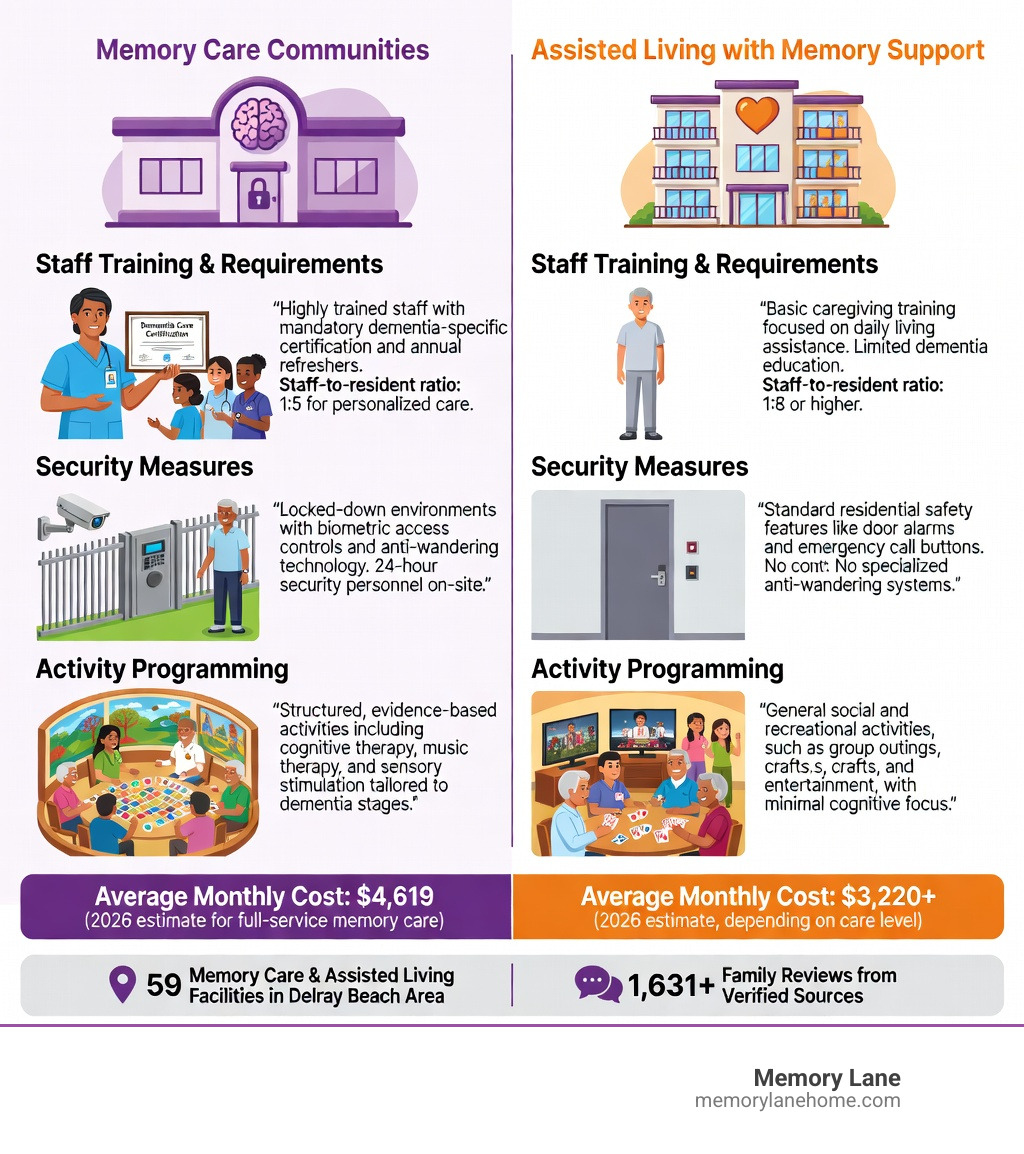
Memory care differs from assisted living in critical ways. While assisted living helps with daily tasks like dressing and bathing, memory care provides comprehensive dementia-specific programming, secure environments to prevent wandering, specially trained caregivers, and therapeutic activities designed for cognitive support, as recommended by the Alzheimer’s Association.
Whether your loved one currently lives in Florida or right here in Michigan, it is worth comparing what is available near family. At Memory Lane, our intimate, home-like communities in Ann Arbor, Ypsilanti, and Saline offer the kind of personalized dementia care families look for when searching nationally, with the added benefit of keeping your loved one close.
I’m Jason Setsuda, a Board Certified Emergency Medicine Physician and CFO of Memory Lane Assisted Living. Our care communities in Ann Arbor, Ypsilanti, and Saline, Michigan offer the kind of personalized, small-home dementia care that larger facilities often cannot match. My holistic medical training and emergency medicine background give me unique insight into the urgent need for specialized dementia care that balances safety with dignity.
Memory Care Standards: Michigan Quality vs. Delray Beach Options
Memory care is a highly specialized tier of senior housing. Unlike a standard nursing home – which focuses heavily on clinical medical needs – or assisted living, which focuses on social convenience, memory care is a “middle ground” of high-touch clinical care and lifestyle support specifically for cognitive impairment.
Whether you have been searching for memory care delray beach options for a “snowbird” parent or exploring options closer to home, the standards for high-quality cognitive care remain the same. Memory Lane operates in Ann Arbor, Ypsilanti, and Saline, Michigan, and our communities are built to meet or exceed the benchmarks families should expect from any top-tier memory care provider, regardless of geography.
This section is designed to help you understand what quality memory care looks like and why Memory Lane’s Michigan communities deliver on every key benchmark.
- Specialized Housing: The best facilities are built from the ground up to accommodate those with cognitive decline. This includes circular hallways (so residents never hit a “dead end,” which can cause agitation) and secure perimeters. At Memory Lane’s Michigan homes, our intimate residential settings provide this same thoughtful design in a warm, home-like atmosphere.
- 24-Hour Supervision: Because dementia doesn’t sleep, neither does the staff. Licensed nurses and trained aides are on-site around the clock to manage behaviors and ensure safety.
- Wandering Prevention: This is a top priority for families. High-tech solutions like motion sensors, exit-controlled neighborhoods, and secure outdoor spaces help prevent residents from leaving the safe zone.
- Person-Centered Care: This means the care plan is built around the person, not the diagnosis. At Memory Lane, we believe in Dementia Care Services that honor the individual’s past while supporting their present.
Specialized Features That Define Quality Memory Care
What should you look for in any memory care community? The best programs pay close attention to environmental cues. Have you ever walked into a room and forgotten why you were there? For someone with dementia, that feeling is constant. Quality facilities combat this with:
- Secure Layouts: Wide, well-lit paths that encourage safe independence.
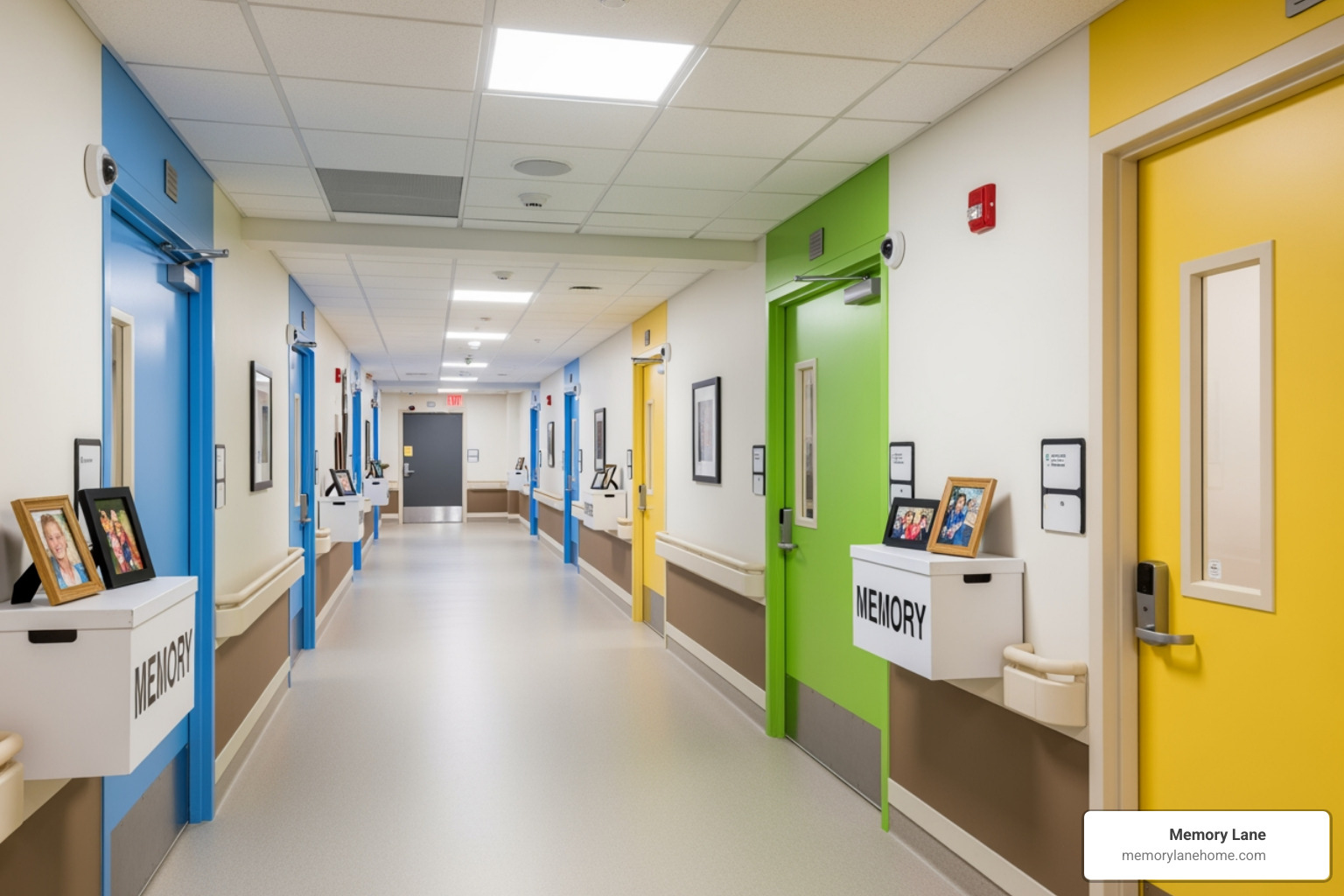
- Color-Coded Cues: Using bright, contrasting colors on bathroom doors or dining areas to help residents navigate without needing to read signs.
- Memory Boxes: These are small display cases outside a resident’s private room. They contain personal photos, a favorite hat, or a memento from a career. It serves as a visual “address” to help them find their home.
- Familiar Routines: Structure is the antidote to anxiety. Alzheimer’s Care programs – like those at Memory Lane in Michigan – focus on “meaningful moments” – structured daily paths that include brain games, fitness, and social dining.
For a deeper dive into what these environments look like, check out our Blog: What Types of Dementia Care Services Are Available.
When to Transition to Memory Care
Knowing “when” is often harder than knowing “where.” We often see families wait until a crisis occurs before they start looking. However, proactive transition leads to better outcomes. You should consider memory care if you notice:
- Caregiver Burnout: If you are physically and emotionally exhausted, you aren’t providing the best care, and your own health is at risk.
- Wandering Risks: If your loved one has “escaped” the house or gotten lost in a familiar neighborhood even once, the risk of injury is too high to ignore.
- Medication Mismanagement: Forgetting heart medication or doubling up on doses can be fatal.
- Socialization Needs: Dementia often leads to isolation. In a community, residents interact with peers, which can actually slow the progression of some symptoms.
If you are seeing these signs, don’t wait for an emergency. You can reach out via our Request Info Form to start the conversation about Memory Lane’s Michigan communities or to get guidance on evaluating any memory care option.
Memory Care Costs: Michigan Value vs. Delray Beach Pricing
Let’s talk numbers. The cost of memory care varies significantly by region. If you have been comparing memory care delray beach costs – which often reflect Florida’s high-end retirement market – to options in Michigan, it is important to focus on the total value of the environment, the staffing model, and the level of dementia-specific support rather than sticker price alone.
Many Michigan families find that Memory Lane in Ann Arbor, Ypsilanti, and Saline provides a strong balance of cost and personalized, small-home care close to family. Our pricing reflects the Michigan market and our intimate care model, which often offers a higher staff-to-resident ratio than larger, resort-style facilities found in other states.
Pricing factors to consider at any community include:
- Room Type: A private suite will naturally cost more than a “friendship suite” (semi-private).
- Level of Care: Some facilities use a “tiered” system where you pay more as more assistance is needed with activities of daily living (ADLs).
- Amenities: Luxury facilities may include gourmet dining, social events, and high-end fitness centers. At Memory Lane, our focus is on intimate, home-like care rather than resort-style amenities – which often translates to more one-on-one attention.
While the price tag might seem high, memory care typically covers housing, 24/7 care, all meals, utilities, and specialized programming. For more help with financial planning, our Resources page offers guidance on navigating these waters, and you can find official information on coverage limitations at Medicare.gov.
Payment Options for Memory Care
Many families are surprised to learn that they have several tools at their disposal to help cover the cost of memory care:
- VA Benefits: If your loved one is a veteran or the surviving spouse of a veteran, they may qualify for the “Aid and Attendance” benefit. This can provide a significant monthly stipend toward care costs.
- Long-Term Care Insurance: If a policy was purchased years ago, now is the time to activate it. Most policies cover memory care specifically.
- Tax Deductibility: Memory care expenses are often considered a “long-term care service,” which may qualify for a medical expense tax deduction. Always consult a tax professional to see how this applies to your situation.
- Personal Assets: This includes the sale of a home or using a bridge loan to cover costs while a property is on the market.
We provide specialized Resources / Training to help families understand how to maximize these benefits.
Evaluating Quality: Why Local Michigan Care Often Outshines Out-of-State Options
When comparing any out-of-state memory care community to what is available locally in Michigan, look beyond the aesthetics. The real measure of quality is in the programming, the staffing consistency, and how well a community supports family involvement.
Memory Lane serves Ann Arbor, Ypsilanti, and Saline, Michigan, and this section is meant to help you evaluate any community you tour – whether it is a facility you found while searching for memory care delray beach or an option closer to home.
Key therapeutic programs to look for include:
- Dakim(r) Brain Fitness: A computer-based program designed to challenge the brain and maintain cognitive function.
- Music Therapy: Music is often the last thing forgotten. Communities use specific playlists to trigger memories and reduce agitation.
- Pet Therapy: The presence of a calm dog or cat can lower blood pressure and provide a sense of purpose for residents.
- Sensory Stimulation: For those in later stages of dementia, sensory rooms with soft lights, textures, and sounds can provide a soothing experience.
- Life Skill Stations: These are areas of the facility designed to look like a nursery, a garden, or a hobby workbench. They allow residents to “work” or “care” for something, tapping into long-term memories of their careers or parenting years.
At Memory Lane, our Michigan communities incorporate many of these approaches in an intimate, home-like setting where every resident is known by name. For more on what to look for, read our Blog: What to Expect in Dementia Care Facilities.
Essential Questions for Your Facility Tour
Whether you’re touring a community out of state or scheduling a visit to Memory Lane in Ann Arbor, Ypsilanti, or Saline using our Tour Form, you need to go in with a checklist. Don’t be dazzled by the lobby; ask the hard questions:
- What is the staff-to-resident ratio? In memory care, you want a lower ratio (more staff per resident) than in standard assisted living. Memory Lane’s small-home model ensures high staff-to-resident ratios.
- What specific dementia training does the staff receive? Ask if they have ongoing cognitive care training.
- How do you handle emergencies? Look for 24-hour personal call systems and on-site licensed nurses.
- How do you communicate with families? Transparency is key. You should know about medication changes or falls immediately.
If you have specific concerns about your loved one’s needs, Contact us directly.
Frequently Asked Questions about Memory Care
Does Medicare cover the cost of memory care?
Generally, no. Medicare is designed for short-term medical needs, not long-term residential care. It will cover diagnostic testing, medications, and physician visits, but it will not pay for the room and board or the 24/7 supervision provided by memory care facilities.
What are “Life Skill Stations” in memory care?
These are therapeutic environments that recreate familiar life situations. For example, a “nursery station” with a lifelike doll can provide comfort to a resident who was a nurturer. A “hobby workbench” with safe tools can anchor a resident who spent their life as a craftsman. These stations promote cognitive engagement and reduce the “idleness” that leads to agitation.
How do quality memory care communities ensure resident safety and security?
Safety is built into the architecture. Most high-quality facilities — including Memory Lane’s homes in Michigan — use secure environments where doors are monitored and controlled. Inside, they use motion sensors that alert staff if a resident gets out of bed at night, and guiding lights in bathrooms to prevent falls in the dark.
Conclusion: Finding the Best Memory Care for Your Michigan Family
Choosing the right memory care community is one of the most significant decisions your family will ever make. It is about more than just finding a safe place; it’s about finding a community that honors your loved one’s dignity, fosters their independence, and celebrates the moments of joy that remain.
If your search for memory care delray beach brought you here, we hope this guide has helped you see the value of choosing personalized, close-to-home dementia care in Southeast Michigan over an out-of-state placement. For families connected to Ann Arbor, Ypsilanti, and Saline, Michigan, keeping a loved one nearby can make visits easier, improve oversight, and strengthen day-to-day support.
Use a consistent checklist when comparing any community: care model, staffing, training, safety, and how they communicate with families. Start early so you’re not making decisions in a crisis.
At Memory Lane, we specialize in providing 24/7 personalized, compassionate dementia support with tailored care plans, engaging activities, and a secure environment focused on enhancing residents’ quality of life and independence in our Michigan communities.
Experience the best in Memory Care Services and let us help you find the peace of mind your family deserves.