When you start searching for memory care options in Michigan, you'll run into the phrase "adult foster care" — and it can be confusing. It doesn't sound like care for a parent with Alzheimer's. It sounds like something for children. In practice, a Michigan-licensed adult foster care (AFC) home is one of the most appropriate residential settings available for a person with dementia — and in many cases, it offers a fundamentally different experience from what families picture when they think of a "memory care facility."
What "Adult Foster Care" Means Under Michigan Law
Under Michigan's Adult Foster Care Facility Licensing Act, an adult foster care home is a privately owned, state-licensed residence that provides supervised care to adults who cannot safely live independently. These are not hospitals. They are not nursing facilities. They are licensed private homes, regulated and inspected by the state.
Michigan law defines AFC facilities by size. A family home serves no more than six residents; a small group home serves up to twelve; a large group home serves thirteen to twenty. These definitions come from MCL Section 400.703, Michigan's Adult Foster Care Facility Licensing Act. There is no institutional hallway, no shift-change handoff between strangers at 2 a.m. A six-bedroom AFC home is, by design and by legal definition, a home.
Licensing is issued and enforced by the Michigan Department of Licensing and Regulatory Affairs (LARA), which sets standards for staffing, medication management, physical safety, and the scope of care each facility may provide.
How AFC Homes Differ from Nursing Homes and Large Memory Care Communities
Many families searching for dementia care in Michigan picture a large community: a dedicated memory care wing, secured corridors, a central dining room shared by forty or more residents. That model exists, and it serves some families well. But a Michigan AFC home operates at an entirely different scale — and for people with moderate to advanced dementia, that difference is clinically meaningful, not just aesthetic.
In a six-bedroom AFC home:
- Your loved one knows every other resident by name.
- Staff know each resident's routines, preferences, and difficult hours — not from a care plan binder, but from daily contact.
- Routines stay consistent, which matters deeply for people with dementia whose condition worsens with unpredictability.
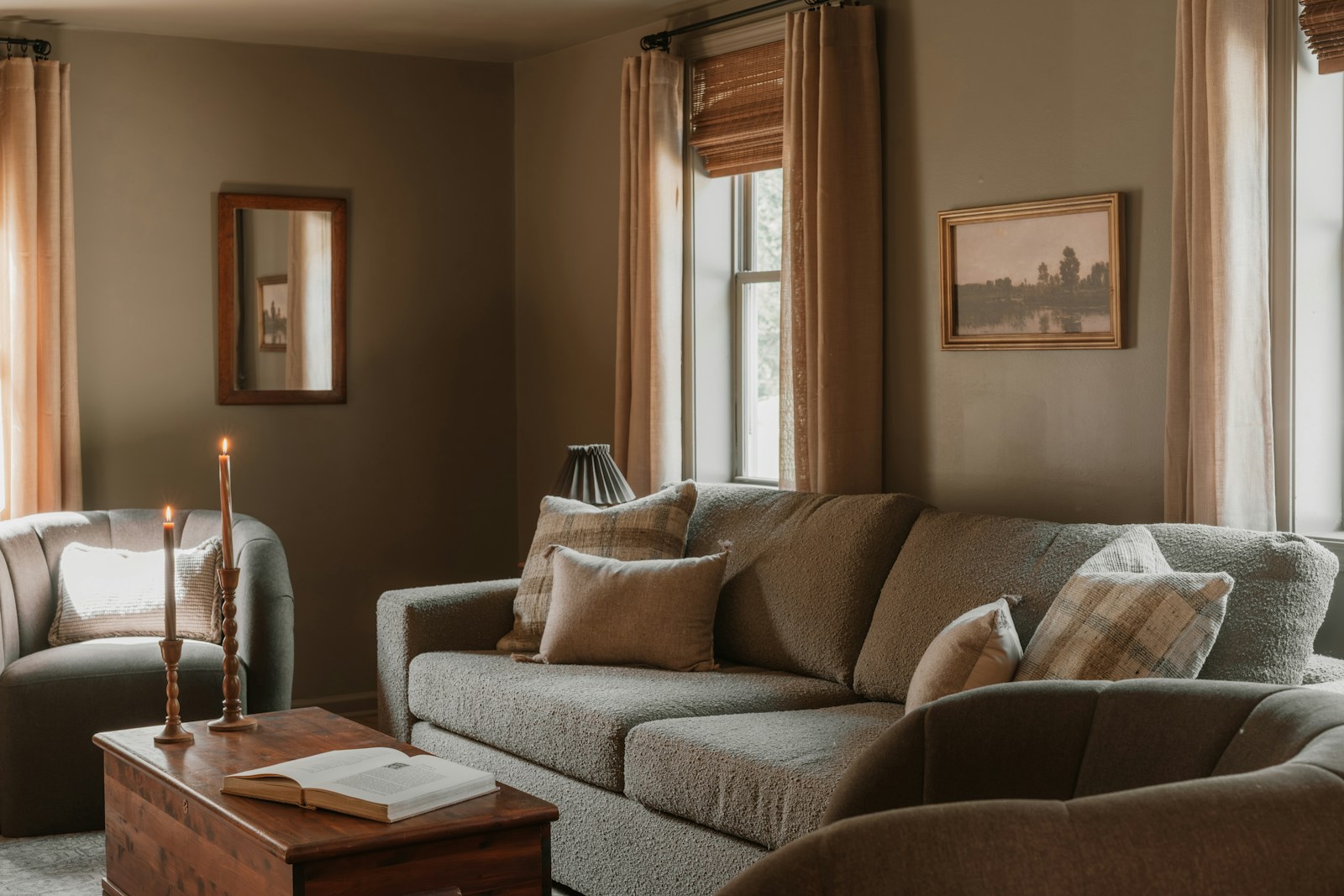
- A visitor stepping in for the first time finds a living room, a kitchen, family photographs on the wall — not a reception desk and a sign-in sheet.
A nursing home is licensed as a healthcare facility and is appropriate for residents who need skilled nursing services, sub-acute medical care, wound care, or IV therapy. An AFC home is appropriate for residents who need round-the-clock personal care, supervision, and behavioral support in a home environment. These are different needs, and they call for different settings.
What the Research Shows About Smaller Settings
The clinical case for small, home-like dementia care settings is growing. A controlled study published in Health and Quality of Life Outcomes followed 145 residents with moderate to severe dementia over eight months. Half moved to small-scale homelike facilities of 7–8 residents per unit; the other half remained in large traditional wards of 20–30 residents.
Residents who moved to smaller settings showed significantly reduced anxiety compared to those who stayed in large facilities — a validated measure of anxious behavior scored 7.9 in the small-scale group versus 9.7 in the large-facility control group. Researchers Jeroen Kok, Marjan Nielen, and Erik Scherder of Vrije Universiteit Amsterdam concluded: "This study demonstrates that moving to a small-scale care facility is associated with a reduction of anxiety in residents with dementia."
Anxiety is one of the most common and most disruptive neuropsychiatric symptoms in dementia — it drives agitation, resistance to care, and nighttime wakefulness. Reducing it is a meaningful clinical outcome for the resident, and a meaningful relief for visiting family.
The Scale of the Need in Michigan
This matters because the number of families facing a placement decision in Michigan is large and growing. More than 7 million Americans are currently living with Alzheimer's disease — approximately 1 in 9 people aged 65 and older — according to the Alzheimer's Association's 2026 Alzheimer's Disease Facts and Figures report. In Washtenaw County specifically, the Alzheimer's Association's 2023 county-level prevalence estimates put the rate at 10.8% of adults 65 and older — approximately 6,000 seniors in the Ann Arbor and Ypsilanti area currently living with Alzheimer's.
Most of those families will eventually face a placement decision. Michigan's AFC system gives them an option that many never find until they're deep in the search: a licensed residential home, professionally staffed, regulated by the state, and explicitly designed for people who can no longer safely live at home but who don't belong — and often don't thrive — in a large institutional setting.
What AFC Homes Work Best For
AFC homes are not the right setting for every person with dementia. Being honest about that is part of what makes a good AFC provider. These settings work particularly well for:
- People with moderate to advanced dementia who thrive with routine, familiar faces, and a quiet environment
- Residents who have become overwhelmed or anxious in larger communities with more stimulation, more strangers, and more shift changes
- People with complex behavioral profiles — including Lewy Body Dementia, frontotemporal dementia, or late-stage Alzheimer's with behavioral symptoms — who need high caregiver-to-resident ratios and truly individualized daily plans
- Families who want to be known — not just signed in at a front desk, but genuinely familiar to the people caring for their loved one
If your loved one needs skilled nursing services, wound care, or continuous medical monitoring, a skilled nursing facility is the appropriate setting. An honest AFC provider will tell you this before placement — not after.
What to Ask When You Evaluate an AFC Home
These questions cut through brochures and reveal how a home actually operates:
- What is your caregiver-to-resident ratio, by day and by night? Specifics matter more than general reassurances.
- Is your pricing all-inclusive, or do costs increase as care needs increase? Ask specifically whether incontinence products are included — they are often billed separately.
- What diagnoses does your license allow you to serve? Not every AFC home accepts residents with Lewy Body Dementia or complex behavioral presentations.
- Who develops care plans, and how are they individualized? A Recreational Therapist, an RN, a care coordinator — find out who and how.
- What happens if my loved one's needs increase? Understand the process before you need it.
- Can I verify your license? LARA maintains a public database of licensed AFC facilities at adultfostercare.apps.lara.state.mi.us.
Memory Lane: Three AFC Homes Near Ann Arbor and Ypsilanti
Memory Lane is a family-owned, Michigan-licensed Adult Foster Care home operating three six-bedroom private ranch-style residences in the Ann Arbor and Ypsilanti area. Our caregiver-to-resident ratio is 1:3 by day and 1:6 at night — more than double the Michigan assisted living average. Pricing is all-inclusive and does not increase as care needs increase; incontinence products are included.
We accept residents with complex diagnoses, including Lewy Body Dementia, that larger facilities often decline. Every care plan begins with a comprehensive evaluation by a Recreational Therapist — not just a review of the medical file, but a real understanding of who your loved one is, what they value, and what their days should look like.
We are not an institution. We are a home. If you'd like to see what that means in practice, we'd welcome you to visit. Contact us to schedule a free consultation or home tour.
FAQ
Is an adult foster care home the same as a nursing home?
No. Michigan's adult foster care homes are licensed private residences; nursing homes are licensed healthcare facilities that provide skilled nursing services. AFC homes are smaller, more home-like, and staffed for personal care and supervision rather than medical care. If your loved one needs sub-acute medical care, wound care, or IV therapy, a nursing home or skilled nursing facility is the appropriate setting. If they need round-the-clock personal care and behavioral support in a home environment, an AFC home is often the better fit.
How do I verify that an AFC home in Michigan is currently licensed?
The Michigan Department of Licensing and Regulatory Affairs (LARA) maintains a public searchable database of licensed adult foster care facilities. You can search by county, city, or facility name at adultfostercare.apps.lara.state.mi.us to confirm current licensure status before touring or committing to any home.
Can someone with Lewy Body Dementia live in an AFC home?
It depends on the specific home and its license. Not all AFC providers have the staffing or experience to manage the behavioral complexity of Lewy Body Dementia — which often involves hallucinations, fluctuating cognition, and heightened sensitivity to antipsychotic medications. Ask any home you evaluate directly what diagnoses they accept and what their experience is with Lewy Body residents specifically. Memory Lane accepts residents with Lewy Body Dementia — it is worth asking that question of every home you tour.
What is the difference between an AFC family home and a small group home?
Both are types of Michigan adult foster care facilities, distinguished by size. A family home serves no more than six residents, and the licensee lives in the home. A small group home may serve up to twelve residents and is not required to be owner-occupied. For dementia care specifically, the six-resident family home model tends to offer the highest caregiver-to-resident ratios and the most consistent staffing.
Does Memory Lane offer tours?
Yes — free consultations and home tours are available with no pressure and no obligation. A tour is the best way to understand what daily life in one of our homes actually looks like. You can schedule one at memorylanehome.com/contact.
Disclaimer: This article is for educational purposes only and does not constitute medical, legal, or financial advice. If you have questions about the appropriate level of care for your loved one, please consult a qualified physician, geriatric care manager, or elder law attorney.